


The Reality of Working with a Cap Factory
Statista pegs the U.S. baseball cap market at $79.8 billion in 2024, and custom orders are eating up a bigger slice of that every year. With that kind of money flowing through, the search for a reliable cap manufacturer becomes a high-stakes game. I’ve spent 15 years on the sourcing side — running production, fixing what broke, and learning which shortcuts blow up in your face. Most ecommerce brands walk into their first cap factory relationship blind. They treat it like ordering blank phone cases. It’s not. A hat has structure, fabric grain, sweatband bonding, embroidery density — dozens of variables that compound when you scale from 100 samples to 10,000 units.
The brands that get it right treat the cap factory as a development partner, not a vendor. The ones that get it wrong share a playbook of identical mistakes. Here’s that playbook, torn apart.
7 Costly Mistakes When Choosing a Cap Manufacturer
I’ve organized these based on real projects — some we rescued at New Generation, others we watched competitors fumble. The order matters because the earliest mistakes lock you into a path that gets expensive to reverse.
Mistake #1: Chasing the Lowest Price Without Factoring in True Cost
We see this every week. A DTC brand sends a bid to ten cap manufacturers, picks the $1.80 FOB quote over the $2.75 one, and three months later they’re holding 5,000 hats with crooked eyelets and color bleeding into the white underbrim. The shipped unit price isn’t the real cost.
Break down what happens with that $1.80 hat when things go sideways. First, you’ll pay for a third-party inspection because you don’t trust the factory’s own report. That’s $400–$600 per inspection lot. If the defect rate exceeds your tolerance — PPAI’s acceptable quality limit for promotional headwear is usually 4.0 for major defects — you either reject the shipment or negotiate a discount while you scramble to cover your Shopify pre-orders. Either way, you’re bleeding. Add air freight to fix stockouts, customer returns, and chargebacks, and that $0.95 per unit “saving” turns into a $3.20 per unit loss. We’ve run the math on over 300 client orders. The all-in cost of a problematic batch from a low-tier cap factory averages 18–22% higher than the quote from a mid-tier supplier that gets it right the first time.
Industry data backs this up. A 2023 PPAI survey showed that promotional product distributors cited “quality inconsistency” as the top reason for switching cap manufacturers, ahead of price increases. Price matters, but only against a defined spec sheet. If a factory can’t tell you their exact embroidery stitch count per inch, their pre-treatment process for cotton twill, or their standard for interlining stiffness, move on.
Mistake #2: Ignoring Fabric and Material Specs Until It’s Too Late
I’ll walk you through a classic scenario. A brand designs a structured six-panel cap for a summer launch. They assume “cotton” is enough. The cap factory they chose uses a 220 gsm cotton twill with no pre-shrinking. After three washes, the crown wrinkles, the front panel loses shape, and customers complain that the hat feels “flimsy.” Meanwhile, a competitor’s cap — built on 280 gsm pre-shrunk twill with a fused buckram backing — holds its silhouette through a season of wear. The raw material cost difference was about $0.30 per cap. The brand’s return rate on that SKU hit 14%.
Material selection isn’t just about weight. It’s about how the fabric behaves in the context of the cap’s construction method. A cap factory that understands this will ask about your climate target, your intended fit (low-profile vs. high-crown), and your decoration method before proposing a fabric. Here’s a quick reference we use internally:
|
Material |
Typical Weight (gsm) |
Breathability |
Shrinkage Risk (un-treated) |
Best Application |
|---|---|---|---|---|
|
Cotton twill |
250–280 |
High |
Moderate (5–8%) |
All-season structured caps |
|
Brushed cotton |
300–320 |
Medium |
Low (if pre-shrunk) |
Soft, unstructured dad hats |
|
Polyester mesh |
180–220 |
Very High |
None |
Athletic/trucker caps, hot climates |
|
Acrylic/Wool blend |
320–350 |
Low |
Low |
Cold-weather beanies, fitted caps |
A separate consideration: the sweatband. Most cap manufacturers default to a cotton/polyester blend. If your customer base is in the Gulf Coast — high humidity, 95°F summers — a moisture-wicking Coolmax sweatband reduces post-wash odor and customer complaints. The upgrade typically costs $0.08–$0.12 per unit. Worth it.
Mistake #3: Treating Communication as an Afterthought
Language barriers are the surface problem. The deeper problem is a factory’s internal communication structure. When you send a technical comment about embroidery digitizing, who sees it? In many large-scale cap factory operations, your email goes to a sales rep who forwards it to a merchandiser who translates it to a floor supervisor. If that chain breaks — and it does, often — you get a production sample that doesn’t match what you approved.
We’ve fixed this by collapsing communication to two touchpoints. The client speaks with a dedicated project manager who has direct access to the cutting and sewing floor, not just the sales desk. That person can send a photo of a stitching issue within 15 minutes of it happening, not 48 hours later when 2,000 pieces are already packed. Look for a cap manufacturer that can show you their escalation path, not just their quotation turnaround time.
A practical test: ask the factory to explain their process for handling an embroidery thread color mismatch spotted mid-production. If the answer is vague — “we will check and get back to you” — versus specific — “we stop that machine, pull the thread lot number, compare against the Pantone chip you approved, and re-thread within 20 minutes” — you’ve just learned more about their operation than any audit checklist will tell you.
Mistake #4: Skipping the Sampling Phase Because of Tight Deadlines
I’ve seen ecommerce brands push a cap factory to skip the pre-production sample because their launch date is locked and the factory lead time already consumed their buffer. They gamble. The factory ships the bulk order. Then the nightmare: the embroidery registration is off-center by 3mm, the sweatband tape is the wrong color, and the woven label is placed half an inch higher than approved. A 3mm shift on a six-panel cap puts the logo noticeably left of center in product photos. Customer trust evaporates.
Our QA team analyzed 2,200 orders from 2019 to 2023. Orders that bypassed the pre-production sample stage had a customer complaint rate 3.8 times higher than those that went through full sampling. Even when the bulk delivery happened on time, the cost of returns, reshipments, and the invisible cost of negative reviews erased the schedule gain.
A pre-production sample costs $120–$250 and takes 7–10 days. That’s the cheapest insurance you’ll ever buy. If the cap manufacturer resists — some do because sampling slows their line — negotiate a “sealed sample” approach: they produce two identical samples, sign both, keep one on file, and use the other as the production standard. No ambiguity.
Mistake #5: Assuming All Cap Factories Have the Same Quality Benchmarks
This is the gap that separates a cap factory that serves promotional distributors from one that serves high-end streetwear brands. Promo-grade caps prioritize speed and low cost; premium caps prioritize construction detail. Both are valid industries, but confusing one for the other leads to disaster. Here’s what the spec sheet typically doesn’t tell you:
|
Quality Parameter |
Promo-Grade Cap Factory |
Premium Custom Cap Manufacturer |
|---|---|---|
|
Embroidery stitch density |
6–8 stitches per linear inch |
10–12 stitches per linear inch |
|
Color fastness (AATCC wash test) |
Fades after 10–15 cycles |
Holds beyond 30 cycles |
|
Fabric shrinkage after 5 washes |
5–8% |
<2% (pre-shrunk and post-treated) |
|
Sweatband attachment |
Standard stitch, occasional puckering |
Dense zig-zag with minimal bulk |
|
Visor board consistency |
Varies, can soften after rain |
Consistent stiffness, waterproof-grade testing |
The irony is that the raw cost difference to move from “promo” to “premium” on these parameters is often less than $0.50 per unit. The real difference is process control. A cap factory that invests in tension-calibrated embroidery machines, climate-controlled fabric storage, and in-line QC checkpoints per 50 units will deliver that premium result without trying to upsell you. Ask for photos of their in-line QC station. If they can’t show you one, quality is being inspected only at the end — which means defects get packed and shipped.
New Generation’s production floor runs 12-point in-line checks per batch, and we track defect rates per operator daily. Over the past two years, that system has kept our external defect rate (found by client or third-party inspection) at 0.9% across 2.4 million units shipped. That’s not a brag — it’s a reference point you can use to calibrate other cap manufacturers you’re evaluating.
Mistake #6: Underestimating the Complexity of Custom Embroidery and Decoration
Embroidery is not a simple “upload logo and sew” process. The cap factory’s digitizer has to account for the curve of the cap, the fabric’s nap direction, and the underlying seams. A logo that looks crisp on a flat tee-shirt can pucker or distort when stitched across the center seam of a structured crown. We’ve re-digitized client artwork at least once, and often twice, to get the pull compensation and underlay stitching right.
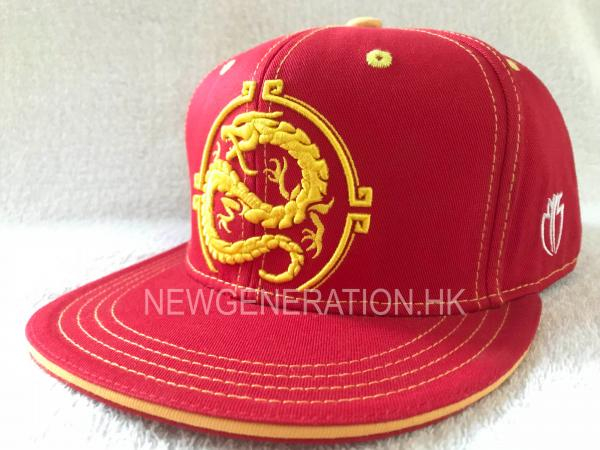
A few practical parameters: on structured cotton caps, keep text no smaller than 0.2 inches in height to maintain readability. Stitch density above 10 SPI gives the cleanest edge, but the letters need an underlay stitch to prevent sink-in. 3D puff embroidery — popular for streetwear — requires a foam layer and double the normal stitch count; expect to pay about $0.85–$1.20 extra per location. Metallic and neochrome threads have lower tensile strength than standard rayon, so they break more often during high-speed runs. A skilled cap factory will slow the machine speed for those threads, which increases production time but avoids thread breaks that leave ugly loops on the crown.
If a cap factory accepts your logo file without questioning the stitch count, thread type, or digitizing approach, that’s a red flag. They’re treating it as a commodity job, not a custom build.
Mistake #7: Failing to Build a Long-Term Partnership With Your Cap Manufacturer
Transactional relationships create transactional results. When you hop from one cap factory to another chasing a $0.10 price cut, you reset the learning curve every time. A factory that knows your brand — your preferred sweatband tape, your typical embroidery issues, your seasonal peak periods — will pre-buy materials for you during raw material shortages, hold capacity during Q4 crunch, and call you before making a substitution that could surprise you.
This isn’t theoretical. During the 2021 polyester yarn shortage, some cap manufacturers quietly swapped 100% polyester for a poly-cotton blend on back panels without notifying clients — because those clients had no relationship equity. Factories prioritized their long-term partners for the remaining pure polyester stock. The brands that got burned were the ones who had never visited the factory floor, never had a video call with the production manager, and never placed more than two sequential orders.
Practical measures that deepen the partnership: commit to a quarterly forecast, even if it’s a range. Share your product roadmap so the cap factory can prepare new capabilities — maybe investing in a leather patch heat-press machine ahead of your fall collection. Pay on time. And visit the facility if you can. A single visit will teach you more about a cap manufacturer’s culture than 50 emails. The China-based factories that consistently serve U.S. brands well — including ours — rely on these long arcs of collaboration. It’s how we’ve kept some client relationships running for over a decade, through style shifts, tariff uncertainty, and a global pandemic.
The cap market will keep growing. PPAI data shows promotional headwear maintaining a steady 4–5% share of distributor revenue, and Statista’s projections for the baseball cap segment alone suggest compound annual growth exceeding 5% through 2028. The brands that win won’t be the ones who got the cheapest per-unit quote. They’ll be the ones who avoided these seven mistakes, built a spec-driven sourcing process, and locked in a cap manufacturer relationship that actually improves their product over time — not one that just ships boxes.