NEWS

ALWAYS ON TOP

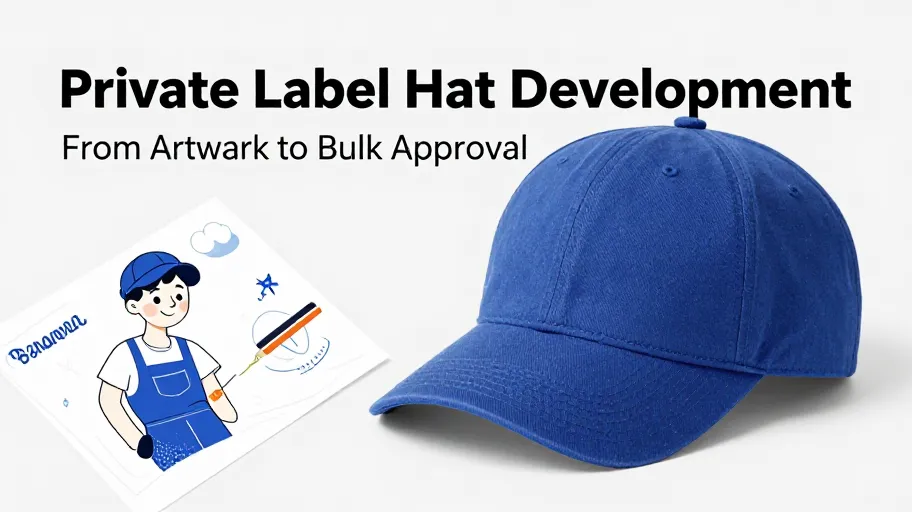
Private Label Hat Development: From Artwork to Bulk Approva

Content-production brief

FieldDetail
Search job Understand how private label hat development actually runs from a brand's artwork file to bulk production approval, and what to compare when choosing a private label hats manufacturer.
Reader Private label brand owners, category managers, and sourcing leads who plan to launch or refresh a headwear line under their own label.
Primary CTA Get the Development Brief
Decision framework A2B Four-Gate Approval Path (Artwork → Spec Lock → Pre-Production Sample → Bulk Approval)
Conversion barrier Buyers fear approving bulk after a sample that quietly drifted in colour, fit, or construction, with no documented sign-off trail to point back to.
Fact boundary Process and approval guidance only. No claims about MOQ, price, sample policy, lead time, capacity, certifications, clients, or factory capabilities — these must be confirmed with the actual manufacturer.

Signal and competitor rationale

InputHow it is treatedCaveat
Queue reason: knowledge-base priority Internal editorial signal that the topic fills a gap in New Generation's own content library before chasing external search demand. Treated as internal planning evidence, not external proof of market volume.
GSC data note Provisional same-day signal used to surface topics for the queue. Data is still being processed and may be backfilled or adjusted; it is used to detect the day's signal, not for stable period-over-period comparison.
Competitor analysis Not invented. No competitor facts, claims, or comparisons appear in this article. If competitor evidence is needed later, it must be supplied and verified before publishing.
Local NG knowledge base Used only to frame New Generation's role as a development partner. Capability claims are withheld pending business verification. Internal references are planning evidence, not external proof.

Pain map

Buyer concernDecision obstacleContent hookConversion opportunity
"Will my artwork survive translation into embroidery or printing?" Embroidery digitising, panel seams, and print scale all distort a flat logo file. A framework that names what to approve before bulk cuts metal. Offer the development Brief that structures the artwork handover.
"How do I stop colour drift between sample and bulk?" Dye lots, thread shade cards, and Pantone matching behave differently across materials. A gate-by-gate sign-off trail that locks colour evidence. The checklist CTA doubles as an approval record.
"What am I actually approving at each stage?" Brands conflate "sample looks fine" with "bulk is locked", then discover drift too late. Concrete approval questions per gate. Convert informed buyers who want documented approvals.
"Is this manufacturer comparable to alternatives?" No shared vocabulary for comparing private label hats manufacturers. A decision table that works across any supplier. The Brief becomes the comparison instrument.

Semantic and internal-link plan

Links below are candidates to confirm before publishing. Verify that each target page exists and that the anchor text matches the target's primary keyword before going live.

Anchor text (candidate)Target page to confirmReason
private label hats manufacturer Homepage or primary service page Primary keyword; supports the article's main entity.
custom headwear development Development service page Broader sibling topic for internal linking.
hat tech pack essentials Existing tech-pack article (if any) Deepens the "spec lock" gate.
pre-production sample approval PPS guide or FAQ page Reinforces the third gate.
embroidery digitising for caps Decoration-method article Supports artwork translation guidance.
bulk production sign-off Quality / QC page Anchors the final gate.

1. Article structure

Answer-first paragraph defining the four approval gates.
The A2B Four-Gate Approval Path framework, explained per gate.
Decision table comparing development paths a private label brand can take.
Concrete approval questions to use at each gate.
How to compare private label hats manufacturers on evidence, not claims.
Pre-production approval checklist (low-friction CTA).
FAQ — four natural buyer questions.
Primary CTA: Get the Development Brief.

2. Publishable article body

Private label hat development moves through four approval gates — artwork translation, spec lock, pre-production sample, and bulk approval — each designed to catch errors before they multiply in production. Choosing a private label hats manufacturer means evaluating how cleanly that factory moves your design through those gates, and how much documented evidence you receive at each step.

The A2B Four-Gate Approval Path
Most private label hat programmes do not fail at the factory. They fail in the silence between approvals — when a brand assumes something was locked and the manufacturer assumed it was still flexible. The A2B (Artwork-to-Bulk) path names four gates so that nothing travels forward without a recorded yes.

Gate 1 — Artwork translation. A flat logo file is not yet a hat. Embroidery needs digitising that accounts for stitch direction and panel curvature. Woven labels need a different file than screen prints. At this gate you approve the interpretation of your artwork, not the artwork itself. Confirm stitch type, thread palette mapping, placement coordinates, and maximum embroidery size that the panel can hold without puckering.

Gate 2 — Spec lock. This is where the hat becomes a measurable object. The tech pack records crown construction (5-panel vs 6-panel vs 7-panel), visor shape, closure type, sweatband material, and size range. Lock the billboarding — the visible space where your logo sits — and the seam allowance that affects it. A spec that is not written down is a spec that can drift.

Gate 3 — Pre-production sample (PPS). The PPS is the physical contract. It is the last object you approve before bulk cutting. Photograph it against your colour reference, weigh it, measure it, and keep it. If bulk does not match the retained PPS, you have grounds to pause; if it matches, you approve.

Gate 4 — Bulk approval. Before full production runs, a top-of-production sample or small batch pull confirms that the line is set up to match the PPS. This gate is about repeatability — can the factory hold the spec across the run, not just on one hero sample.

Decision table: choosing a development path

Development pathWhen it fitsWhat you approveWhere drift usually hidesWhat to document
Stock blank + decoration You need speed and the design is logo-led, not construction-led. Logo placement, thread/print colour, blank model. Blank colour vs Pantone; decoration scale on curve. Blank SKU, colour code, decoration file version.
Modified stock construction A stock base is close but the closure, sweatband, or labelling must change. Modified components, label artwork, placement. Component substitution between sample and bulk. Component spec sheet, approved substitute list.
Full cut-and-sew custom The silhouette, panels, or materials are unique to your brand. Pattern, material swatches, construction stitching, sizing. Pattern grading across sizes; material dye lots. Tech pack, swatch card, graded size set.
Private label rebrand of an existing shape You want exclusivity on decoration and packaging, not on shape. Woven/printed labels, hangtag, packaging, artwork. Label attachment method; packaging fit. Label artwork, packaging dieline, attachment spec.

This table is manufacturer-agnostic. It works whether you are comparing New Generation or any other private label hats manufacturer, because it asks what you must approve — not what the factory claims to deliver.

Approval questions to use at each gate
Use these as a sign-off script. If a manufacturer cannot answer them in writing, that itself is information.

Artwork translation

  • Which file format do you need for decoration, and what resolution?
  • How will the logo be digitised, and can I review the stitch file before it runs?
  • What is the maximum embroidery size this panel holds without distortion?
  • Which thread or ink system will you use to match my colour reference?

Spec lock

  • What construction (panel count, visor, closure) does the tech pack commit to?
  • What material and weight are specified for the crown, sweatband, and closure?
  • What is the size range and grading rule?
  • Which details are still open vs locked?

Pre-production sample

  • Does this PPS reflect the locked spec, including all labels and packaging?
  • Can I retain this sample as the bulk reference?
  • What is the tolerance for measurement and colour against the PPS?
  • If bulk deviates, what is the correction path before full run?

Bulk approval

  • Is the top-of-production pull drawn from the actual run, not a separate sample?
  • Does it match the retained PPS across colour, weight, construction, and labels?
  • What inspection level and acceptable quality threshold apply to the run?
  • What documentation accompanies the shipment for customs and compliance?

How to compare a private label hats manufacturer on evidence
When brands compare manufacturers, they often compare price first and process second. For private label work, invert that order. A manufacturer whose process produces clean approvals is cheaper in total landed cost than one whose low unit price hides rework, delays, or a bulk run you cannot approve with confidence.

Look for three kinds of evidence:

Documentation evidence. Does the manufacturer issue a tech pack you can read and correct, a PPS you can retain, and a sign-off record at each gate? A factory that only emails "sample looks good, please confirm" is not giving you evidence.

Material evidence. Ask for a swatch card, a colour reference, and a material specification before locking the spec. Material substitution is the most common source of drift between sample and bulk — and the hardest to prove after the fact if you did not retain a swatch.

Repeatability evidence. Ask how the manufacturer holds a spec across a run. Inspection level, in-line checks, and a top-of-production pull are process signals. Verify what is actually done, not what is promised.

None of the above requires the manufacturer to be the largest, the fastest, or the cheapest. It requires them to be documented. That is the comparison that protects your label.

Pre-production approval checklist
Use this as a gate-by-gate record before you sign off on bulk. It is deliberately short so it actually gets used.

 Checklist item
Artwork file version and decoration method confirmed in writing.
Digitised stitch file (or print file) reviewed and approved.
Tech pack issued with construction, materials, sizing, and closure specified.
Open items list closed — no "to be confirmed" remaining in the spec.
PPS received, photographed, measured, and retained as the bulk reference.
Colour matched against an agreed reference (swatch or code), with tolerance noted.
Labels, hangtags, and packaging approved on the PPS, not as a separate concept.
Top-of-production pull approved before the full run proceeds.
Shipment and compliance documents confirmed with the manufacturer.

If you would like this checklist pre-filled into a structured development Brief that you can hand to any manufacturer — New Generation included — you can request it below.

FAQ

How do I brief a private label hats manufacturer before sending artwork? Send a brief that states the hat style you want, the decoration method, the colour reference, the target market (which affects sizing and labelling rules), and any compliance documents you will need at customs. The clearer the brief, the less the manufacturer has to assume — and assumptions are where drift begins.

What should a pre-production hat sample confirm? It should confirm construction, materials, colour, decoration, sizing, labels, and packaging in one physical object. If any element is still a concept rather than the real item, the sample is not yet a PPS. Retain it as the reference bulk must match.

How do I prevent colour and spec drift between sample and bulk? Lock the colour to an agreed reference — a Pantone code, a thread shade, or a physical swatch — and record the tolerance. Retain the PPS. Approve a top-of-production pull against it. Drift survives in silence; documented approvals at each gate are what suppress it.

What documents should I keep for customs and compliance? Keep the tech pack, the approved artwork files, the PPS sign-off, material and label specifications, and any origin or composition documents your destination market requires. Confirm with the manufacturer which compliance documents they will provide, and verify that the documents match the goods before the shipment leaves.

If you are planning a private label headwear line and want to move from artwork to bulk approval without drift, request the development Brief. It structures your artwork handover, spec lock, and sample approval so every gate is documented.

[Get the Development Brief]

And before your next sample round, download the Pre-Production Approval Checklist above — copy it, fill it, and keep it as your signed-off record at each gate.

3. Optimisation record and delivery gate

Quality checkStatus
Primary keyword "private label hats manufacturer" used naturally in title, answer paragraph, H2,

Private Label Hat Development: From Artwork to Bulk Approval

SEO content-production brief

ItemDecision
Search job Help a brand turn an identity idea into an approvable hat-development brief.
Reader Founder, merchandiser or product developer launching a private-label cap or beanie.
Primary conversion Submit a development brief for a sample discussion.
Low-friction conversion Download a Private Label Hat Brief.
Differentiated framework The Four-File Handshake: reference board, specification sheet, sample approval sheet and bulk handoff sheet.
Main buyer anxiety Artwork may look right on screen but fail in construction, logo placement, labels or bulk consistency.
Evidence boundary The article teaches what to confirm. It does not promise MOQ, sample cost, production time, branded packaging options or compliance outcomes.

Why this deserves a new article

The current queue places private label hats manufacturer in a commercial-comparison cluster. Public competitor snapshots describe OEM/ODM and end-to-end development, but their public claims do not show a buyer how to carry an approval from an artwork file into bulk production. NG can differentiate by naming the handoff points and giving the reader a usable project method.

Pain → hook → conversion map

PainHidden decision barrierArticle mechanismCTA
“I have a logo but not a product brief.” Artwork is mistaken for a specification. Reference board vs specification explanation. Download Private Label Hat Brief.
“I do not want the sample and bulk order to drift.” Approval is not recorded. Sample approval sheet. Request a development review.
“I need labels and packaging, but do not know when to discuss them.” Branding details are raised too late. Bulk handoff sheet. Add branding fields to enquiry.

Semantic coverage

private label hats manufacturer, private label cap, custom labels, woven label, inside label, hangtag, packaging, hat tech pack, sample approval, bulk production, logo placement, embroidery, patch, reference board.

1. Article structure

  • Answer first: private-label development is a decision trail, not a logo upload.
  • The Four-File Handshake.
  • What belongs in each file.
  • The sample review meeting.
  • The bulk handoff.
  • FAQ and a single development-brief CTA.

2. Publishable article body

Private-label hat development starts with a brand idea, but it should not end with a logo file. A cap can look simple from the outside while still requiring decisions about silhouette, material, decoration, labels, packaging and approval ownership.

The practical goal is to turn those decisions into a trail that a product team and manufacturer can both follow. We call that trail the Four-File Handshake.

The Four-File Handshake

1. Reference board: define the direction

Use a reference board to show what you are trying to achieve. Include front, side and back images where possible. Mark the details that matter most: crown height, panel style, brim shape, closure, texture, colour direction and branding mood.

A reference board is not a final specification. It gives a manufacturer enough context to ask useful questions instead of guessing. If you like one hat’s shape but another hat’s embroidery, say so. The distinction helps avoid a sample that copies the wrong feature.

2. Specification sheet: turn preferences into decisions

The specification sheet, often called a tech pack or development brief, is where the project becomes more specific. It can be simple at the first stage, but it should identify the decisions that affect the sample:

AreaQuestions to settle before sampling
Style Is it a 5-panel, 6-panel, trucker, bucket hat, beanie or another construction?
Material What fabric feel, colour and finish are intended? What is still open for discussion?
Decoration Is the logo embroidered, printed, woven, patched or undecided? Where should it sit?
Branding Are inside labels, woven labels, hangtags or other private-label details required?
Packaging What should protect the product, and what branding needs to be considered?
Approval Who gives feedback, and who has final sign-off?

It is acceptable to mark a field as “to be confirmed.” The important thing is to make that uncertainty visible. Hidden assumptions are more likely to create rework than open questions are.

3. Sample approval sheet: record what the sample proves

A sample is useful only when everyone knows what to inspect. Before you review it, make a short approval sheet with the same fields used in the specification: construction, material, colour, decoration, labels and packaging.

For each field, choose a clear status: approved, revise, or needs discussion. Add a photo or a marked-up image when placement or proportion matters. If a change is requested, describe the change and the reason. A revision note such as “logo too high” is harder to execute than “compare logo placement against the marked front-panel image before the next approval.”

The sheet also separates two different questions: “Does this sample represent our intended product?” and “Are we ready to approve this detail for bulk?” They are related, but they are not the same decision.

4. Bulk handoff sheet: protect approved details

The final file carries approved decisions forward. It should list the final references, approved artwork, label and packaging instructions, and any points the team wants checked before bulk shipment.

This is not a claim that every project follows one fixed process. It is a practical way to make the project easier to review. If a material, label or decoration choice changes after sample approval, record it as a new decision rather than quietly replacing the old reference.

Where private-label projects usually lose time

Most delays do not come from one dramatic mistake. They come from small decisions that arrive too late: a logo file without size guidance, a label request raised after the sample is discussed, or two stakeholders giving different feedback.

You can reduce that friction by assigning an approval owner and a revision deadline before the sample is sent. The approval owner does not need to make every design choice alone. They do need to consolidate feedback into one clear response.

Ask a manufacturer questions that improve the brief

When you contact a private-label hat manufacturer, ask questions that expose gaps early:

  • Which parts of this reference need clarification before a sample can be discussed?
  • What information would make the decoration request easier to evaluate?
  • How should labels and packaging be documented alongside the product reference?
  • What will the sample review need to confirm before a bulk handoff is considered?

These questions are more useful than asking for a generic “best price.” They help you understand whether the conversation is becoming a project record or staying at the level of a sales promise.

Build a private-label brief before you request a quote

Gather your references, logo artwork, brand guidelines and a short list of open decisions. Then use a brief that lets a supplier respond to the actual product rather than a vague category name.

Primary CTA: Get the Private Label Hat Brief

Use the brief to organise the first conversation around product decisions, sample review and approval ownership. If you have an existing tech pack, attach it with your reference images and mark the fields that still need confirmation.

FAQ

Do I need a full tech pack before I contact a private-label hat manufacturer?

No. A clear reference board, logo file and list of open decisions can start a useful conversation. A more detailed specification becomes important as the project moves toward sampling and approval.

When should labels and packaging be discussed?

Raise them in the development brief, even if final artwork or packaging details are not ready. This keeps them visible while the sample and bulk handoff are being planned.

Can a sample approval replace a bulk inspection plan?

No. A sample approval records what was accepted for the sample. A bulk handoff should still identify the approved references and the points the team wants checked as production progresses.

3. Optimisation record

CheckResult
Intent Serves private-label buyers moving from concept to implementation.
Unique angle The Four-File Handshake gives a named, repeatable decision model.
Semantic coverage Covers development, labels, packaging, tech pack, sample and bulk approval in one coherent flow.
Conversion design Primary development-brief CTA, with a lower-friction downloadable version.
Evidence chain Development steps are framed as buyer controls, not as unverified NG service guarantees.
Required editor input Confirm actual private-label capabilities, files offered and enquiry URL.

4. Delivery gate

  • Product team checks that labels, decoration and packaging examples reflect actual NG capabilities.
  • No price, MOQ, lead-time, certification or sample-policy statement is added without current proof.
  • Add 2–3 verified product or process images with meaningful alt text.
  • Confirm internal links to tech-pack, sample-approval and relevant category pages.
  • Add published URL to the GSC 14/30/60-day review list.


Private Label Hat Development: From Artwork to Bulk Approval

SEO content-production brief

ItemDecision
Search job Help a brand turn an identity idea into an approvable hat-development brief.
Reader Founder, merchandiser or product developer launching a private-label cap or beanie.
Primary conversion Submit a development brief for a sample discussion.
Low-friction conversion Download a Private Label Hat Brief.
Differentiated framework The Four-File Handshake: reference board, specification sheet, sample approval sheet and bulk handoff sheet.
Main buyer anxiety Artwork may look right on screen but fail in construction, logo placement, labels or bulk consistency.
Evidence boundary The article teaches what to confirm. It does not promise MOQ, sample cost, production time, branded packaging options or compliance outcomes.

Why this deserves a new article

The current queue places private label hats manufacturer in a commercial-comparison cluster. Public competitor snapshots describe OEM/ODM and end-to-end development, but their public claims do not show a buyer how to carry an approval from an artwork file into bulk production. NG can differentiate by naming the handoff points and giving the reader a usable project method.

Pain → hook → conversion map

PainHidden decision barrierArticle mechanismCTA
"I have a logo but not a product brief." Artwork is mistaken for a specification. Reference board vs specification explanation. Download Private Label Hat Brief.
"I do not want the sample and bulk order to drift." Approval is not recorded. Sample approval sheet. Request a development review.
"I need labels and packaging, but do not know when to discuss them." Branding details are raised too late. Bulk handoff sheet. Add branding fields to enquiry.

Semantic coverage

private label hats manufacturer, private label cap, custom labels, woven label, inside label, hangtag, packaging, hat tech pack, sample approval, bulk production, logo placement, embroidery, patch, reference board.

1. Article structure

  • Answer first: private-label development is a decision trail, not a logo upload.
  • The Four-File Handshake.
  • What belongs in each file.
  • The sample review meeting.
  • The bulk handoff.
  • FAQ and a single development-brief CTA.

2. Publishable article body

Private-label hat development starts with a brand idea, but it should not end with a logo file. A cap can look simple from the outside while still requiring decisions about silhouette, material, decoration, labels, packaging and approval ownership.

The practical goal is to turn those decisions into a trail that a product team and manufacturer can both follow. We call that trail the Four-File Handshake.

The Four-File Handshake

1. Reference board: define the direction
Use a reference board to show what you are trying to achieve. Include front, side and back images where possible. Mark the details that matter most: crown height, panel style, brim shape, closure, texture, colour direction and branding mood.

A reference board is not a final specification. It gives a manufacturer enough context to ask useful questions instead of guessing. If you like one hat's shape but another hat's embroidery, say so. The distinction helps avoid a sample that copies the wrong feature.

2. Specification sheet: turn preferences into decisions
The specification sheet, often called a tech pack or development brief, is where the project becomes more specific. It can be simple at the first stage, but it should identify the decisions that affect the sample:

AreaQuestions to settle before sampling
Style Is it a 5-panel, 6-panel, trucker, bucket hat, beanie or another construction?
Material What fabric feel, colour and finish are intended? What is still open for discussion?
Decoration Is the logo embroidered, printed, woven, patched or undecided? Where should it sit?
Branding Are inside labels, woven labels, hangtags or other private-label details required?
Packaging What should protect the product, and what branding needs to be considered?
Approval Who gives feedback, and who has final sign-off?

It is acceptable to mark a field as "to be confirmed." The important thing is to make that uncertainty visible. Hidden assumptions are more likely to create rework than open questions are.

3. Sample approval sheet: record what the sample proves
A sample is useful only when everyone knows what to inspect. Before you review it, make a short approval sheet with the same fields used in the specification: construction, material, colour, decoration, labels and packaging.

For each field, choose a clear status: approved, revise, or needs discussion. Add a photo or a marked-up image when placement or proportion matters. If a change is requested, describe the change and the reason. A revision note such as "logo too high" is harder to execute than "compare logo placement against the marked front-panel image before the next approval."

The sheet also separates two different questions: "Does this sample represent our intended product?" and "Are we ready to approve this detail for bulk?" They are related, but they are not the same decision.

4. Bulk handoff sheet: protect approved details
The final file carries approved decisions forward. It should list the final references, approved artwork, label and packaging instructions, and any points the team wants checked before bulk shipment.

This is not a claim that every project follows one fixed process. It is a practical way to make the project easier to review. If a material, label or decoration choice changes after sample approval, record it as a new decision rather than quietly replacing the old reference.

Where private-label projects usually lose time

Most delays do not come from one dramatic mistake. They come from small decisions that arrive too late: a logo file without size guidance, a label request raised after the sample is discussed, or two stakeholders giving different feedback.

You can reduce that friction by assigning an approval owner and a revision deadline before the sample is sent. The approval owner does not need to make every design choice alone. They do need to consolidate feedback into one clear response.

Ask a manufacturer questions that improve the brief

When you contact a private-label hat manufacturer, ask questions that expose gaps early:

  • Which parts of this reference need clarification before a sample can be discussed?
  • What information would make the decoration request easier to evaluate?
  • How should labels and packaging be documented alongside the product reference?
  • What will the sample review need to confirm before a bulk handoff is considered?

These questions are more useful than asking for a generic "best price." They help you understand whether the conversation is becoming a project record or staying at the level of a sales promise.

Build a private-label brief before you request a quote

Gather your references, logo artwork, brand guidelines and a short list of open decisions. Then use a brief that lets a supplier respond to the actual product rather than a vague category name.

Primary CTA: Get the Private Label Hat Brief

Use the brief to organise the first conversation around product decisions, sample review and approval ownership. If you have an existing tech pack, attach it with your reference images and mark the fields that still need confirmation.

FAQ

Do I need a full tech pack before I contact a private-label hat manufacturer?
No. A clear reference board, logo file and list of open decisions can start a useful conversation. A more detailed specification becomes important as the project moves toward sampling and approval.

When should labels and packaging be discussed?
Raise them in the development brief, even if final artwork or packaging details are not ready. This keeps them visible while the sample and bulk handoff are being planned.

Can a sample approval replace a bulk inspection plan?
No. A sample approval records what was accepted for the sample. A bulk handoff should still identify the approved references and the points the team wants checked as production progresses.

3. Optimisation record

CheckResult
Intent Serves private-label buyers moving from concept to implementation.
Unique angle The Four-File Handshake gives a named, repeatable decision model.
Semantic coverage Covers development, labels, packaging, tech pack, sample and bulk approval in one coherent flow.
Conversion design Primary development-brief CTA, with a lower-friction downloadable version.
Evidence chain Development steps are framed as buyer controls, not as unverified NG service guarantees.
Required editor input Confirm actual private-label capabilities, files offered and enquiry URL.

4. Delivery gate

  • Product team checks that labels, decoration and packaging examples reflect actual NG capabilities.
  • No price, MOQ, lead-time, certification or sample-policy statement is added without current proof.
  • Add 2–3 verified product or process images with meaningful alt text.
  • Confirm internal links to tech-pack, sample-approval and relevant category pages.
  • Add published URL to the GSC 14/30/60-day review list.

Private Label Hat Development: From Artwork to Bulk Approval

Private-label hat development succeeds when you treat artwork, verification and approval as three separate gates — not one conversation. The ART-VERIFY-APPROVE framework gives each gate a documented checklist, so what you approve at sample stage is what you receive at bulk.


Content-Production Brief

FieldDetail
Search job "How do I develop private-label hats with an overseas manufacturer, from initial artwork through to bulk-production approval?"
Reader Private-label brand owners and sourcing managers evaluating manufacturing partners for custom headwear
CTA Download the Development Brief
Decision framework ART-VERIFY-APPROVE — a three-stage gate model that keeps artwork, verification and approval as distinct checkpoints
Conversion barrier Uncertainty about what happens between sending artwork and receiving bulk; fear of hidden costs, miscommunication and quality drift
Fact boundary No specific MOQ, price, lead time, sample policy, capacity, certification, test result, sustainability credential, client list, factory capability, legal compliance or performance outcome may be claimed. All references to New Generation are internal planning evidence, not external proof.

Signal & Competitor Rationale

InputRole in articleEvidence type
Queue reason: knowledge-base priority Confirms the topic addresses a gap in the internal content library rather than a verified search-volume spike Internal planning evidence
GSC data note: provisional data under processing May inform future keyword refinement; not cited as stable evidence in this article Internal planning evidence
NG knowledge base: private-label development workflow Informs the ART-VERIFY-APPROVE framework and the approval questions; not presented as third-party research Internal planning evidence

Pain Map

Buyer concernDecision obstacleContent hookConversion opportunity
"Will my artwork translate into a hat that looks right?" No shared vocabulary between designer and factory; colour, stitch and panel details get lost A concrete artwork-to-sample checklist that removes ambiguity The Development Brief template codifies that vocabulary
"How do I know the sample is reproducible at scale?" Sample looks fine; bulk drifts The APPROVE gate: bulk-approval questions that lock specifications before production The Brief becomes a living spec sheet both sides sign off
"Am I comparing manufacturers on the same criteria?" Each factory quotes different inclusions; hard to compare apples to apples A decision table with verifiable criteria, not marketing claims Reader uses the table to evaluate any manufacturer, including NG
"What if something goes wrong mid-production?" No documented escalation path The framework makes each checkpoint a documented decision, not a handshake The Brief captures sign-off points for accountability

Why Private-Label Development Breaks Down

Most sourcing problems between a brand and a private label hats manufacturer are not technical failures. They are communication failures that compound over time.

A typical sequence: a brand sends a flat illustration. The factory interprets panel count, stitching method and colour differently. A sample arrives. It looks close enough. The brand approves. Bulk production begins. Halfway through, the brand notices the visor shape has shifted, the embroidery density is lower than the sample, and the colour under warehouse lighting does not match the Pantone reference that was never formally documented.

None of these issues is a defect in isolation. Each is a gap in documentation — a decision that was implied rather than recorded. The ART-VERIFY-APPROVE framework exists to close those gaps before they compound.

The ART-VERIFY-APPROVE Framework

ART
Artwork
specification
Translate design into manufacturing spec
VERIFY
Sample
verification
Structured comparison against spec
APPROVE
Bulk
approval
Lock spec and accept accountability

ART — Artwork Specification Gate

Before any physical sample is cut, the artwork must be translated into a manufacturing specification that both sides can verify. This is not the same as sending a design file. It means documenting:

  • Panel count and panel map (how many fabric pieces, in what arrangement)
  • Stitch type and stitch density per zone
  • Embroidery or print method, thread count, and colour reference (Pantone or equivalent)
  • Visor shape profile (flat, pre-curved, sandwich, with a reference photo if needed)
  • Closure type and position
  • Label placement: size, content, and attachment method

If any of these fields is left blank, the factory will fill it with their default — and their default may not match your intent.

VERIFY — Sample Verification Gate

When the sample arrives, the verification step is not "does it look nice?" It is a structured comparison against the ART specification:

  • Does the sample match every field documented in the ART gate?
  • Where it deviates, is the deviation documented and accepted?
  • Has the factory confirmed that the sample is reproducible at scale with the same materials and methods?

A sample that looks acceptable but cannot be reliably reproduced at bulk is not a verified sample — it is a prototype. The distinction matters.

APPROVE — Bulk Approval Gate

Bulk approval is not a formality. It is the point where you lock the specification and accept accountability for the outcome. Before approving, document answers to the eight questions in the next section.


Decision Table: Evaluating a Private Label Hats Manufacturer

Use this table to compare any manufacturer on verifiable criteria, not marketing language.

CriterionWhat to verifyHow to document it
Artwork-to-spec process Does the factory translate your artwork into a written spec, or do they work from the image alone? Request a sample spec sheet before ordering
Sample-to-bulk consistency Can the factory confirm that the sample materials and methods will be used in bulk? Ask for a written sample-to-bulk commitment
Colour management Does the factory reference Pantone or an equivalent system, or do they match by eye? Note the colour reference system in the spec sheet
Communication cadence Will you receive documented updates at each gate, or only on request? Agree on a communication schedule before starting
Revision protocol If a sample needs changes, is there a documented revision round with a new spec sheet? Confirm the revision process and any associated terms
Quality documentation Does the factory provide a final inspection report before shipment? Request a sample inspection report format
Material traceability Can the factory identify the source and batch of key materials used in your order? Ask whether material lot numbers are recorded
Escalation path Is there a named contact and process if bulk production deviates from the approved spec? Document the escalation contact before production

No single row in this table is sufficient to choose a manufacturer. The purpose is to ensure you are comparing on the same dimensions — and that every dimension is verifiable.

From Artwork to Bulk: The Eight Approval Questions

Before you sign off on bulk production, document answers to these questions. If any answer is missing or vague, that is a gap that may surface as a quality issue later.

  1. Specification lock: Has the final spec sheet been signed off by both the brand and the factory, with no open items?
  2. Material confirmation: Are the exact materials (fabric, thread, visor board, closure, labels) documented and available for the full order quantity?
  3. Colour reference: Is every colour tied to a Pantone or equivalent reference, and has the factory confirmed they can match it at bulk?
  4. Stitch and embroidery density: Are stitch counts and embroidery densities documented per zone, and does the approved sample meet them?
  5. Size and fit: Are the measurements for each size documented, and does the sample measure within tolerance?
  6. Label compliance: Do all labels (brand, care, size, origin) meet the regulatory requirements of your target market?
  7. Inspection criteria: Is there a documented inspection standard (AQL level or equivalent) that will be applied before shipment?
  8. Escalation and accountability: If bulk deviates from the approved spec, is the process for resolution documented and agreed?

These questions are not specific to any one factory. They are the minimum documentation that protects both parties — the brand and the manufacturer — from miscommunication.

Private Label Hat Development: From Artwork to Bulk Approval

Private Label Hat Development: From Artwork to Bulk Approval

Developing a private label hat line requires bridging the gap between creative design and physical manufacturing. For overseas brands, the risk lies in the interpretation of artwork. A successful partnership with a private label hats manufacturer hinges on a rigorous approval process that documents every specification—from fabric weight to thread color—before mass production begins. By establishing clear quality gates at the sample stage, you ensure the bulk shipment matches your expectations.

Private Label Products, Private Label Cap Manufacturing, and its Features

Private Label Products, Private Label Cap Manufacturing, and its Features

Most retailers whether online or offline sour their products from suppliers. Few brands manufacture products on their own and sell them directly to consumers. Many companies sell their products without a name or brand unless they use private label products.

Private-Label Product Manufacturing and Baseball Caps

Private-Label Product Manufacturing and Baseball Caps

A private-label product is manufactured by a contract or 3rd-party manufacturer but sold under the retailer's brand name. As the retailer, he/she specifies everything about the product – what goes in it; how it's packaged, what the label looks like – and pay to have it produced and delivered to the store.

Providing quality custom hats and innovative hat design solutions

When it comes to sourcing high-quality hats for your business, finding a reliable cap manufacturer is essential to ensure both excellent craftsmanship and creative solutions. At New Generation, we take pride in being a trusted cap factory, offering tailored services that align with your business needs. From customized hats to innovative hat design, we deliver products that stand out in the competitive market.

Revolutionize Your Brand with Custom Sports Caps: Exclusive Insights into Personalized Hat Design

When it comes to setting your brand apart in the competitive world of sports apparel, nothing speaks louder than innovation and customization. As a leading cap manufacturer and cap factory, New Generation understands the power of brand differentiation through personalized hats. In this article, we will dive into the creative world of custom sports caps and how you can leverage the trend of customized bucket hats to catapult your brand to new heights.

Revolutionize Your Brand with Custom Sports Caps: Key Insights from a Premier Cap Manufacturer

In the competitive arena of B2B marketing, brands are constantly searching for innovative methods to differentiate themselves and engage their target audience. At New Generation, a premier cap manufacturer, we understand that investing in custom sports caps and personalized hats can be one of the most effective strategies. These tailored solutions not only enhance your brand visibility but also align perfectly with the evolving preferences of consumers. Let’s delve into how embracing creativity customized hats can drive your business forward.

Single-Origin vs. Multi-Country Cap Manufacturing: Why Quality Control Matters

In the globalized supply chain of 2026, many large-scale cap manufacturers have adopted a multi-country production model. While moving production across different borders might offer slight tax advantages or lower raw labor costs, it often introduces a critical "invisible cost": fragmented quality control. For B2B buyers seeking premium customized hats, the choice between a multi-country setup and a focused, single-origin cap factory is the difference between brand consistency and a logistical nightmare.

At New Generation (NG), we have intentionally remained focused on our high-end production base in China. This Single-Origin approach is not about limiting scale—it is about doubling down on Concentrated Quality Control and High-Efficiency Communication.

Snapback Cap Manufacturer For Custom-Made Caps

Snapback Cap Manufacturer For Custom-Made Caps

Snapback caps are extremely popular for their exclusive styles. These caps look amazing and can dramatically enhance the wearer’s personality. Instead, custom Snapback caps are preferable by consumers as they can be personalized in a detailed manner to fit customers’ expectations. Seek the help of a professional Snapback Cap Manufacturer to obtain customized Snapback caps.

Snapback Cap Manufacturer Online- Get The Best Deal

Snapback Cap Manufacturer Online- Get The Best Deal

Undoubtedly, Snapback caps are highly popular. A professional Snapback Cap Manufacturer produces these caps to fit your head perfectly. They are easy to use and comfortable. Especially young people use Snapback caps widely across the world. You can buy these attractive caps in large amounts too as they are inexpensive.

Snapback Hat Manufacturers For The Best Deal

Snapback Hat Manufacturers For The Best Deal

Custom snapbacks are all the rage these days and thanks to Snapback Hat Manufacturers. These caps come with premium quality and stylish looks that make these units special and the best part is the adjustable strap. You can easily adjust it as per your head size.

Solve Your Branding Challenges with Custom Sports Caps and Personalized Hats: The Key to Effective B2B Marketing

For businesses in the B2B space, standing out in a crowded market can be a daunting challenge. Traditional marketing strategies no longer cut it; companies are now looking for fresh, innovative ways to connect with their target audience. One often-overlooked but powerful tool in this effort is customized hats and personalized hats. These customized hats not only help in boosting brand visibility but also offer a tangible connection to your audience.In this article, we'll delve into how hat design and offering personalized hats or custom sports caps can address common branding challenges and provide a strong, lasting impact on your business growth.

Source Premium Customized Hats & Baseball Caps:Partner with a Professional Cap Factory for Your B2B Needs

For B2B buyers, retailers, and brand managers in the promotional products and apparel industry, sourcing headwear is a significant undertaking. It's not just about finding a product; it's about securing a reliable partner capable of delivering consistent quality, innovative designs, and scalable production. The challenges are multifaceted: managing complex supply chains, ensuring stringent quality control, achieving cost-efficiency without sacrificing craftsmanship, and ultimately, providing end-clients with products that enhance their brand image. If your current supply chain for customized hats is falling short in any of these areas, it's time to take decisive action and evaluate a partnership with a dedicated cap manufacturers.


Sport and Versatile: Exploring the World of Baseball Caps

Baseball caps have evolved from their humble beginnings as a symbol of sport to become a fashion must-have in recent years. These versatile accessories possess an enduring charm and effortlessly inject a touch of casual coolness into any ensemble, captivating the attention of fashion enthusiasts worldwide. However, it is the trend of personalized hats that has truly revolutionized the way we perceive and wear these sporty staples.

Stay Cozy and Stylish with Fisherman Beanies: The Perfect Headwear

Fisherman beanies have long been a beloved headwear choice, offering both comfort and style. In recent years, the trend of customizing these classic hats has gained momentum, allowing individuals to unleash their creativity and personalize their fashion statement. This article delves into the world of customized fisherman beanies, exploring how they have become the perfect headwear for those seeking a unique expression of style.

Stock Sample or Custom Prototype? Questions to Ask Before You Order Cap Samples

A free cap sample should include the actual construction method you intend to mass-produce, the decoration technique applied to your artwork, the materials and trims you specified, a labeled packaging example, and any accompanying documents — so you can evaluate craftsmanship, approve decoration execution, and compare suppliers against the same benchmark before committing to a production order.


Content-Production Brief

FieldDetail
Search job Confirm what a free cap sample should contain so buyers can evaluate craftsmanship and decoration before placing a production order.
Primary keyword free hats samples
Reader New brands and price-sensitive sourcing teams running their first headwear buy; they have not yet established a supplier benchmark.
Search intent 采购准备 — preparation before procurement: comparing sample offers and avoiding commitment mistakes.
CTA Download the sample confirmation checklist.
Decision framework SAMPLE — six components to verify inside any free cap sample.
Conversion barrier Buyer cannot tell a token cap from a representative pre-production sample, so "free" feels risky rather than useful.
Fact boundary No claims about MOQ, price, sample policy, lead time, capacity, certifications, sustainability, named clients or factory capability. Use verify, compare, document, confirm, approve.

Signal & Competitor Rationale

SignalInternal evidence onlyHow it informs this article
GSC queue reason Fresh keyword: 4 impressions, 2 clicks, rank 12.0. Tentative data pending GSC processing. Two clicks on four impressions signals a real curiosity gap about what free samples actually include; rank 12 places us on page two, so the page must lead with a clear answer-first paragraph to earn the click and the dwell.
Local NG knowledge base New Generation is a China-based custom headwear manufacturer for overseas brands, importers, wholesalers and corporate buyers. Used only to ground the sourcing-adviser tone; not extended into any capability or performance claim.
Competitor facts Not supplied. No competitor data is invented; comparison framing stays generic and supplier-neutral.

Note: GSC figures are tentative and may be back-filled or adjusted; they are used to detect today's signal, not for stable period-on-period comparison.

Pain Map

Buyer concernDecision obstacleContent hookConversion opportunity
"Is the free sample real production quality or just a sales showpiece?" Cannot tell the difference without a structured inspection. The SAMPLE framework teaches them exactly what six things to verify. They download the checklist to run the same inspection on every supplier.
"What should I ask the supplier so I am not surprised later?" Lack of vocabulary for construction, decoration and packaging. Eight pre-written approval questions they can paste into email. The checklist gives them the same questions in a reusable format.
"Can I compare three suppliers fairly?" Each supplier sends samples in different formats. A decision table aligns comparisons on identical criteria. The checklist forces the same criteria on every incoming sample.
"Am I being pushed toward a paid sample when a free one would do?" New brands cannot judge sample-policy trade-offs. The framework distinguishes a stock token from a pre-production sample. They feel equipped to negotiate rather than rushed.

Use the SAMPLE Framework to Inspect What You Receive

A free sample is only useful if it is the same kind of cap you plan to reorder at volume. When you open the package, work through the SAMPLE checklist:

S
Specifications
A
Artwork
execution
M
Materials
P
Packaging
L
Lead-time
signals
E
Evaluation

S — Specifications

Panel count, crown structure, visor shape, closure type and sizing. These should match the style code on your quotation, not a generic substitute.

A — Artwork Execution

Embroidery stitch density, print registration, patch alignment and color match to your Pantone callouts. Decoration is where most production disputes start, so inspect it under daylight before reading any paperwork.

M — Materials

Fabric weight and hand feel, sweatband material, eyelet ventilation and button construction. Touch matters; product photographs do not convey it.

P — Packaging

Polybag or box, insert board, carton fill ratio and label position. Packaging drives landed cost and damages as much as the cap itself.

L — Lead-Time Signals

Not the schedule itself, but whether the sample arrived with a dated packing list, a referenced tech pack and a named contact. These signals indicate how the supplier will run your production order.

E — Evaluation

Wear the cap for a day, photograph it under natural light, re-check the decoration after handling, and document any deviation from your tech pack in writing.

If any letter in SAMPLE is missing or vague, that is the area to interrogate before you order.

Decision Table: Which Kind of Sample Are You Actually Holding?

Sample typeWhat it provesWhat it does NOT proveWhen it is appropriate
Stock token (off-the-shelf cap) The supplier exists; basic construction quality; general hand feel. Your decoration, your colors, your tech pack, your sizing. First contact, when you only want to feel fabric weight.
Sales sample (customized but not from your run) The supplier can execute your decoration technique on a similar style. Exact color match, exact materials, packaging for your order. Comparing decoration quality across two or three suppliers.
Pre-production sample (built from your tech pack) The cap your production run will replicate. Volume consistency, bulk packaging, large-batch color variance. Final approval before mass production begins.

A "free hats samples" offer that sends only a stock token is not wrong — but it is not enough to approve a production order. The goal of this framework is to help you tell the difference and ask for the right kind of sample at each stage.

Approval Questions to Ask Before You Order

Send these to your supplier before you commit. The quality of the answers tells you as much as the cap itself.

  1. Specifications. "Is this sample built to the panel count, closure and sizing in the quotation, or is it a generic substitute?"
  2. Artwork. "Was this decoration produced from our artwork file, and can you share the stitch count or print file you used?"
  3. Colors. "What Pantone references did you match to, and how do you handle color variance in bulk?"
  4. Materials. "Can you document fabric weight, sweatband material and country of origin for the main fabric?"
  5. Repeatability. "Will the mass-produced cap use the same materials and decoration process as this sample?"
  6. Packaging. "Does this sample include the polybag, insert and carton configuration we would actually ship in?"
  7. Documentation. "Can you provide a tech pack, a packing list and a named contact for the production order?"
  8. Deviations. "If anything in this sample differs from our spec, please list it before we approve."

A supplier that answers all eight in writing is signaling an approval-ready workflow. A supplier that deflects is telling you something too.

How to Compare Free Hats Samples from Multiple Suppliers

New brands often request three samples at once, then struggle to choose because each arrives in a different format. To compare cleanly:

  • Lock the spec before you request. Send the same short tech pack to every supplier — same panel count, same closure, same decoration technique. If you change the spec between requests, the comparison is invalid.
  • Photograph each sample under the same light. Daylight next to a window, top-down and side profile. Color memory is unreliable; side-by-side photos are not.
  • Score each letter of SAMPLE on a 1–3 scale. 1 = below expectation, 2 = meets, 3 = exceeds. The totals will reduce bias toward whichever cap arrived first.
  • Read the paperwork, not just the cap. The supplier who attached a tech pack and a packing list is usually easier to work with at volume than the one who sent a prettier cap with no documentation.
  • Negotiate from the gaps. If a supplier scored low on Materials but high on Artwork, ask them to revise the material specification before you approve. The gaps are your leverage.

The checklist below operationalizes this — same criteria, every sample, every supplier.

Red Flags Worth a Follow-Up Question

None of these automatically disqualify a supplier, but each is worth a written follow-up before approval:

  • The sample arrives with no packing list, no tech pack reference and no named contact.
  • Decoration is described only as "logo" with no stitch count, print file or patch dimensions.
  • Colors are matched "by eye" with no Pantone reference recorded.
  • The cap differs visibly from the style code on the quotation, with no explanation.
  • Packaging is described as "standard" with no carton or polybag specification.
  • The supplier declines to put answers in writing and prefers to "discuss by call."

A short, polite written follow-up on any of these protects you far more than a lower unit price ever will.

Frequently Asked Questions

Are free hats samples really free?

"Free" usually refers to the unit price of the cap. Shipping, custom decoration setup, or expedited freight may still apply. Ask for an itemized sample quote so you know what is waived and what is billed before the sample ships.

How many samples should I request before ordering?

For a first-time buy, comparing two to three suppliers on the same spec is usually enough to surface quality and communication differences. Beyond three, decision fatigue tends to set in and the comparison gets harder, not easier.

Can a free sample include my own logo and colors?

It depends on the supplier's sample policy. Some suppliers send a customized sales sample at no charge; others charge a setup fee that is credited toward your production order. Confirm in writing which policy applies before you request.

What if the sample looks good but I am still nervous about bulk quality?

Request a pre-production sample built from your final tech pack before mass production begins. This is the cap your run will replicate, and it is the last practical chance to approve or revise.

Do I need to return the sample?

Most suppliers do not require returns on free samples. If they do, confirm return shipping responsibility before the sample ships, so it does not become a surprise cost later.

Before You Place the Order

A free cap sample is not a gift — it is evidence. Treat it like a test: spec it before you request it, inspect it against the SAMPLE framework, document deviations in writing, and compare every supplier on the same criteria. The suppliers who survive that process are the ones worth a production order.

Download the Sample Confirmation Checklist

A one-page SAMPLE scoring sheet, the eight approval questions, and a side-by-side comparison table you can reuse for every headwear buy.

Download the Sample Confirmation Checklist →

Short on time? Start with the eight approval questions only — copy, paste, send, and keep the rest of the framework for when you are ready to compare suppliers head-to-head.

Stop Beanie Production Delays Before They Cost Your Business

A complete Beanie Tech Pack Checklist prevents costly revisions and aligns your brand with reliable cap manufacturers China. This isn’t paperwork—it’s profit protection through precision.

Stop Beanie Production Errors Before They Cost You Thousands

A missing tolerance spec can cost you $185K and a season. The Beanie Tech Pack Checklist fixes that. Here’s how to lock in fit, fabric, and compliance—so your factory delivers right the first time.

Stop Beanie Sampling Errors Before They Delay Your Winter Launch

A complete Beanie Tech Pack Checklist for Private Label Buyers slashes sampling errors by up to 70%. That means faster approvals, lower costs, and consistent quality—so your winter launch hits shelves when demand peaks.

Stop Burning Cash on Cap Samples: How Precision Tech Packs Save Your Launch

Sending unclear specs to a cap manufacturer China partner? You're not just risking bad samples—you're burning time and cash. A full tech pack changes everything by locking in precision before production starts.

Stop Costly Manufacturing Errors Before They Torch Your Launch

One typo in your tech pack can torch $15K and kill your launch. We’ve seen it happen. This checklist fixes that. No fluff—just what works.

Stop Crooked Embroidery: Master the Tech Pack That Chinese Factories Actually Understand

Most brands lose thousands on misaligned embroidery and warped brims because their tech packs don’t speak the factory’s language. This guide shows you how to build a production-ready hat tech pack that cuts sample rounds, speeds up time-to-market, and keeps quality consistent across Chinese factories.

Stop Factory Guesswork: How Precision Hat Tech Packs Slash Delays and Costs

A detailed hat tech pack slashes miscommunication with snapback manufacturers, cutting sample revisions by up to 70%. That means faster launches, lower costs, and fewer headaches across global cap factory networks.

Stop Factory Guesswork: Master Tech Packs That Cut Headwear Production Delays

Accurate tech packs cut sampling time by up to 60% when working with headwear manufacturers china. This guide delivers a proven framework to eliminate miscommunication, reduce lead times, and scale production confidently.

Stop Factory Miscommunication: The Complete Tech Pack Solution for Beanie Buyers

Miscommunication with cap manufacturers in China kills timelines and budgets. A complete Beanie Tech Pack Checklist for Private Label Buyers fixes that—fast. Here’s how.

Stop Gambling on Cap Factory Quality: The Data-Driven Selection Method Top Brands Use

Choosing a cap factory in China shouldn’t mean gambling on quality. This buyer scorecard replaces guesswork with measurable KPIs—so you get fewer defects, faster delivery, and real ROI. Here’s how top brands are doing it.

Stop Gambling on Chinese Cap Factories: The Quality Proof That Actually Matters

Choosing a cap manufacturer in China shouldn’t be a gamble. Ignore the brochures, skip the staged tours, and focus on what actually matters: verified quality systems and audit trails that predict real-world performance.

Stop Gambling on Chinese Cap Manufacturers—Source with Data, Not Hope

Choosing a cap manufacturer in China shouldn’t mean gambling on glossy photos. We cut through the hype with measurable criteria that separate real production power from empty promises—so you can source with confidence, not hope.

Stop Gambling on Custom Cap Production: The Hidden Costs of Cheap Manufacturers

Picking the wrong custom cap manufacturer means wasted time, returns, and angry customers. This checklist cuts through the noise—focus on fabric, construction, and branding that actually last. No fluff.

Stop Gambling on Quality: How a Solid Hat Tech Pack Transforms Confusion into Consistency

I've audited over 40 cap manufacturers china across Guangdong and Zhejiang. The brands that get burned on offshore production don't get burned because the factory was bad. They get burned because the instructions they sent could mean five different things to five different people on the same factory floor. A proper hat tech pack doesn't make you more creative. It makes you more precise. And precision is the only thing standing between a launch date and a write-off. Here's what that looks like when two European brands learned it the hard way.

Stop Guessing at Cap Manufacturing: The Data-Driven System That Prevents Costly Surprises

Choosing the right cap manufacturer in China doesn’t have to be risky. A structured buyer scorecard cuts through the noise, turning vague promises into measurable results. Here’s how top brands make smarter decisions—fast.

Stop Guessing at the Factory: How Precision Hat Tech Packs Save Brands from Costly Rework

A complete hat tech pack cuts rework costs by up to 40% and gets headwear to market faster. It's the backbone of scalable, consistent production across global factories. Getting your headwear production specs right from the start transforms the cap sampling process from a 6-month ordeal into a 2-round validation.

Stop Guessing on China Hat Orders: How Tech Packs Eliminate Costly Factory Misunderstandings

Over 40% of U.S. headwear brands suffer production delays when sourcing from China. It’s rarely a factory issue; it's a spec gap. We break down how hat tech packs and professional factory alignment turn vague sketches into retail-ready consistency.

Stop Guessing with Chinese Factories: The Tech Pack That Prevents Costly Headwear Mistakes

A precise hat tech pack reduces miscommunication with headwear manufacturers china by up to 70%. Discover how to build one step-by-step for professional-grade results and faster time-to-market.

Stop Guessing, Start Specifying: How Complete Tech Packs Save Your Hat Production

Skipping details in your hat tech pack? That’s why your samples are off, deadlines are slipping, and margins are shrinking. Here’s how to fix it—before the next round of rework.

Stop Guessing: How Precision Hat Tech Packs Eliminate Costly Cap Factory Errors

Most sampling delays in a cap factory come from guesswork—not bad designs. A real hat tech pack eliminates ambiguity, so your team builds it right the first time. Here’s how leading snapback manufacturers are saving weeks and thousands.

Stop Hat Drop Disasters Before They Stitch

Guesswork kills small-batch hat brands. Sapphire Crystal Inspection: Dimensions and smart MOQ planning cut rework by up to 40%, so you ship faster and keep customers happy.

Contact Us

+(86) 755 2830 2782

From 8:00 AM to 20:00 PM, UTC/GMT +6h

info@newgeneration.hk

SHUZIGUIGU INDUSTRIAL PARK 89 HENGPING ROAD HENGGANG, LONGGANG, SHENZHEN CHINA

The Manufacturer

About New Generation Headwear

New Generation Headwear is a Professional Custom Cap Manufacturer in China.

Cap Sampling Process

Cap Manufacturing Process

How To Custom Hat

Facebook

Instagram

汽水音乐mumu模拟器谷歌邮箱telegramtodesk易翻译