


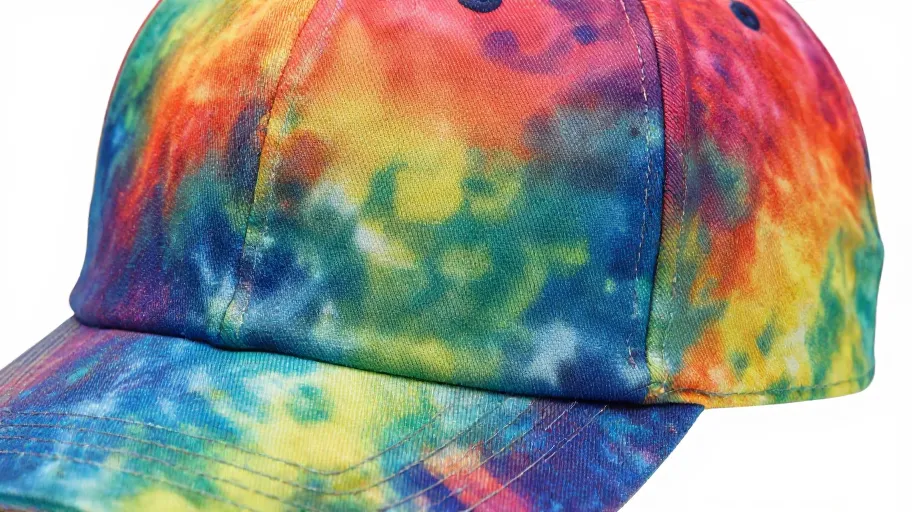
Sublimated hats succeed or fail long before a sample is sewn: the decisions that matter most are whether your artwork suits sublimation, whether the chosen fabric accepts the print, and whether the panel placement has been confirmed with the actual material. Resolve those three questions first, then request samples against a written, approved specification.
Why artwork and fabric questions come before sampling
Buyers comparing suppliers of sublimated hats tend to focus on the visible output — a photo-rendered logo, an all-over graphic, a gradient that embroidery could never reproduce. But the variable that actually determines whether a sample matches your intent is the interaction between artwork and fabric. Sublimation print bonds dye to the material itself, so the fibre content, surface texture and colour of the base fabric all influence how the final design reads.
New Generation, a Shenzhen-based OEM/ODM manufacturer of custom caps and headwear, lists sublimation print among its logo options alongside flat embroidery, screen printing and woven labels. Critically, the company states that artwork feasibility must be confirmed for the actual fabric and panel — a point that should shape how you brief any supplier, not just this one.
That single sentence carries two practical implications for procurement teams. First, artwork that looks feasible in a design file is not confirmed feasible until it has been assessed against the specific fabric and panel it will be applied to. Second, any pre-production conversation that does not cover fabric and panel placement is incomplete, no matter how polished the mock-up looks.
The Artwork–Fabric Feasibility Framework
Use this four-step framework to structure your pre-sampling communication with any manufacturer:
- Artwork audit. Classify your design: flat spot colours, gradients, photographic imagery, fine line work or text-heavy layouts. Each behaves differently under sublimation compared with embroidery or screen printing.
- Fabric selection. Identify the candidate fabric for the cap — for example, whether the panel carrying the print is a polyester-based performance fabric or a cotton-rich material — and ask whether sublimation is feasible on that specific fabric.
- Panel placement. Confirm which panel or panels will carry the print, since feasibility and appearance can differ between the crown front, side panels, back panels and any trim pieces.
- Written confirmation. Require the supplier to confirm feasibility in writing for the actual fabric and panel combination before sampling begins. Treat mock-ups as proposals, not approvals.
The value of the framework is that it converts a vague question — "can you do sublimated hats with our design?" — into a checkable, documentable exchange. If a supplier cannot answer steps 2 and 3 specifically for your project, that is a signal to keep comparing options.
Decision table: matching logo methods to artwork types
The New Generation logo options page lists flat embroidery, screen printing, woven labels and sublimation print. Use this table as a starting comparison, then confirm feasibility for your actual fabric and panel before approving anything:
| Artwork type | Candidate method(s) | Key question to put to the supplier |
|---|---|---|
| Simple logo, limited spot colours | Flat embroidery, screen printing | Which method gives the cleaner edge on the chosen fabric? |
| Fine text or small detail | Flat embroidery or sublimation print | What is the minimum legible size for each method on this fabric? |
| Gradients and multi-colour blends | Sublimation print | Is this fabric suitable for sublimation, and on which panel? |
| Photographic or full-coverage imagery | Sublimation print | Can the artwork be reproduced across the intended panels without visible seams or colour shifts? |
| Brand mark needing a structured, raised effect | Flat embroidery, woven labels | How will the label or embroidery be attached and positioned? |
| Mixed designs (photo panel + embroidered logo) | Combination | Which methods can be combined on one cap, and in what sequence? |
Do not treat any row as a guarantee. The approved fact from the supplier is that feasibility must be confirmed for the actual fabric and panel — so every row ends in a question, not an assumption.
Fabric and panel questions to ask before sampling
Because sublimation interacts with the material itself, your fabric questions deserve as much rigour as your artwork brief. Put these to each supplier on your shortlist:
- Which fabrics in your range accept sublimation print, and which do not?
- For our intended design, which panel placement do you recommend, and why?
- Does the fabric colour or surface texture affect how our artwork will appear after sublimation?
- If we want sublimation on one panel and embroidery on another, are both feasible on the same cap construction?
- What artwork file format and resolution do you need to assess feasibility accurately?
- Will feasibility be confirmed against the actual fabric swatch or the final production fabric?
That last question matters more than it appears. A feasibility assessment done against a substitute material tells you less than one done against the fabric you will actually order. Ask directly which material the assessment will be based on, and document the answer in your project file.
Pre-sampling approval checklist
Use this checklist before releasing artwork for sampling. Complete it for each supplier you are comparing:
- Artwork files supplied in the format and resolution the supplier requests
- Design classified (spot colour / gradient / photographic / mixed)
- Candidate fabric identified and named in the brief
- Target panel(s) for the sublimation print specified
- Any combined methods (e.g. sublimation plus embroidery) listed with their positions
- Supplier has confirmed in writing that the artwork is feasible on the actual fabric and panel
- Any colour-matching expectations discussed and recorded
- Current sample policy, costs and timelines requested directly from the supplier and noted in your comparison sheet
The final checkbox is deliberately open. Sample policies, fees, shipping arrangements and timelines vary and change; confirm the supplier's current policy directly rather than relying on older quotations or third-party summaries.
What a good supplier response looks like
When you send a brief under this framework, a reliable manufacturer will respond with specifics, not generalities. Expect answers tied to your named fabric and named panel — for example, confirmation that a given design is or is not feasible on the material you specified, and a clear statement of which logo method the supplier recommends for each element of your design. New Generation's own framing — that artwork feasibility must be confirmed for the actual fabric and panel — is a useful benchmark: if a prospective supplier's reply never mentions your fabric or your panels, push back and ask again.
Keep every confirmation in writing and file it alongside your artwork versions. When samples arrive, you will then be comparing the sample against a documented specification rather than a memory, which makes approval conversations faster and disputes rarer.
FAQ
Can sublimation print be combined with embroidery or woven labels on the same cap? The logo options page lists flat embroidery, screen printing, woven labels and sublimation print as available options. Whether they can be combined on a single cap — and in what sequence — depends on your design and construction, so submit both the artwork and the intended panel layout and ask the supplier to confirm feasibility for your specific build.
Which fabrics work with sublimation on caps? That must be confirmed with the supplier for the fabric you intend to use. Ask which fabrics in their range accept sublimation print, whether your chosen fabric is among them, and whether the assessment will be done against the actual production material.
Do I need special artwork files for sublimated hats? Ask each supplier for their required file format and resolution. As a general preparation step, supply your artwork in the highest-quality version you hold, clearly labelled with any colour references, and let the supplier confirm what additional files they need for feasibility assessment.
How do I compare quotes between sublimation and embroidered versions of the same design? Request each method's feasibility confirmation separately, then ask for current pricing, MOQ and lead time for each option directly — these figures change and were not stated here. Comparing like-for-like written confirmations per method keeps the comparison honest.
Start your project review
Submit a cap brief, reference image or logo for project-specific review, and have the feasibility of your artwork assessed against the actual fabric and panel you intend to use.
Before you send it, run this quick check: confirm your artwork files are export-ready, note your candidate fabric and target panels, list any combined logo methods, and write down the questions above you most need answered. A complete brief gets a more useful feasibility response — from any supplier you approach.
#cap manufacturers china, #headwear manufacturers china, #cap factory








