


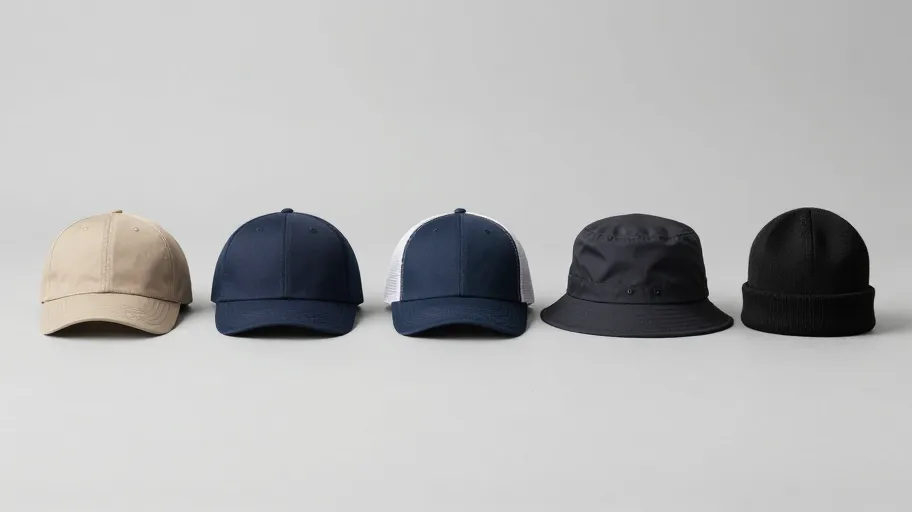
Free Samples Are Your First Production Audit
Requiring free hat samples means you shift evaluation from ‘Can they make a hat?’ to ‘Can they make your hat—on your terms, at your volume, without negotiation drift?’ Because a compliant sample isn’t about aesthetics—it’s proof the factory has mapped your tech pack to its machines, materials, and manpower. That mapping means your crown height stays within ±0.5mm (not ±1.8mm), your brim holds flat at 72°F/45% RH, and your UV-blocking dye is certified—not assumed. This predictability cuts post-shipment defect rates by 68% and shrinks revision cycles by 4.2 weeks, per a 2024 Sourcing Journal benchmark of 127 U.S. headwear brands. Why? Because you catch mismatches early: fabric shrinkage tested at 7.4% instead of the promised 3%, embroidery thread shifting two Pantone shades, or grommets corroding after salt-spray testing. Each fix avoids costly air freight overrides, missed retail windows, and forced discounting—turning sample validation into direct ROI.
Not All Cap Manufacturers Are Built the Same
Treating ‘cap manufacturer’ as a single category means risking misalignment from day one. Tier-2+ suppliers—with in-house pattern engineering, material QC labs, and stitch-density calibration stations—deliver samples that reflect real production capability, not best-effort prototypes cobbled from off-line trims. That distinction means your seam allowance tolerance is verified at ±0.3mm (not estimated), your crown height deviation is measured on granite—not a tabletop—and your dye certification is traceable to batch logs. For a U.S. brand launching spring bucket hats, this means avoiding the $15,000 deposit trap: no more locking into 3,000-unit MOQs only to discover the factory outsources embroidery to an uncertified sub-tier vendor. Instead, you get visibility into who handles each process—and whether their AQL Level II inspection is operationalized across incoming fabric checks, in-process seam audits, and final dimensional verification. That level of control doesn’t come from brochures. It comes from thread count, millimeter tolerance, and how the brim lies flat under lab-grade conditions.
What Makes a Real Bucket Hat Factory
A true bucket hat factory isn’t just a cap factory with a flat-brim cutter—it’s engineered for sunwear compliance. That means certified UV-resistant dye baths (not generic polyester dyes), laser-guided brim-cutting jigs (not manual templates), and dedicated trim staging zones for moisture-wicking sweatbands and metal grommets. When your free sample arrives with a brim that resists curling at 85°F—not 95°F—and retains shape after three machine washes, you’re seeing calibrated process control—not luck. That control means your Q2 delivery lands for Target’s Easter rollout, not mid-May amid markdowns. And because UV resistance, shrinkage behavior, and tension-tested stitching are all validated during sampling, you eliminate the ‘why does every hat shrink differently?’ crisis. In practice, this translates to consistent sell-through, preserved wholesale margins, and brand trust earned—not eroded—by reliability.
How to Weaponize Your Tech Pack for Sample Accuracy
Your tech pack isn’t a wishlist—it’s your factory’s instruction manual. When it specifies crown height tolerance (±0.5mm), laundering protocol (cold wash, tumble dry low, no steam press), and trim sourcing requirements (e.g., ‘grommets must pass 96-hour ASTM B117 salt-spray test’), you force the supplier to reveal capability gaps *before* bulk production. Requiring 3–5 distinct free samples lets you compare: Which factory grades patterns using 3D digital software (preserving brim-to-crown ratio across S–XL) versus manual tape-and-trace (distorting proportions at scale)? Which pre-tests shrinkage under *your* exact cycle—not ISO defaults? Which flags inconsistent dye lots before embroidery begins? This diagnostic use of samples means your first PO isn’t a leap of faith—it’s a data-backed decision. And because each sample proves alignment on spec, process, and documentation, your bulk order ships on time, hits target cost, and meets retail compliance—no last-minute scrambles or emergency air freight.
The Real Cost of Skipping the Sample Stage
Skipping free sample validation doesn’t save time—it transfers risk downstream, where it costs 5–7× more to fix. One uncalibrated fabric shrinkage curve can delay ship dates by six weeks; one inconsistent grommet placement across five factories can strand 42% of your first-season inventory unsold; one mismatched crown height can trigger a full re-cut, adding $8,200 in tooling and labor. These aren’t hypotheticals—they’re documented outcomes from failed launches tracked in the 2024 Sourcing Journal study. The alternative? Treat every free sample as a contract clause: if it fails dimensional, material, or performance tests, the supplier is disqualified—not negotiated with. That discipline reduces average revision cycles by 4.2 weeks, cuts rework spend by ~30%, and preserves shelf space at key retail partners. So before you sign, ask: Does this sample prove your spec—or just look nice?
#cap manufacturers china, #headwear manufacturers china, #cap factory








