

How Pre-Sampling Pantone Specs Prevent Costly Cap Color Rework
Specifying Pantone references before sampling cuts cap color rework by up to 70% because it replaces subjective visual negotiation with objective, factory-grounded color discipline from Day 1. That means your cap manufacturer runs pre-dye spectral analysis against the approved TCX reference—not waiting for a rejection email to begin troubleshooting. So instead of three airfreighted sample rounds, you get consistent dye batches validated in 72 hours. Because when color is anchored to measurement—not memory—you stop paying to fix it, and start getting paid for nailing it.
The cost isn’t theoretical: the 2024 CapSource Global Production Audit found that deferring Pantone specs until pre-production review triggered an average of 3.8 physical re-sampling rounds per style. Each round burned $4,800–$6,200 in freight, lab technician hours, overtime labor, and lost shelf placement windows—especially damaging for Q1 or holiday launches. That’s not inefficiency; it’s preventable leakage.
This isn’t about vendor capability—it’s about specification rigor. 68% of spec sheets omit lighting condition (D65 vs. A) and substrate notes—even though Pantone Solid Coated (SC) and Textile Cotton (TCX) render measurably different hues under those conditions. When a U.S. brand sends a scanned ‘PMS 185 C’ from an uncalibrated monitor to a factory lit by fluorescent shop lights, they’re not sharing a color—they’re launching a $19,200 negotiation. And negotiations over color happen in DHL invoices, not pixels.
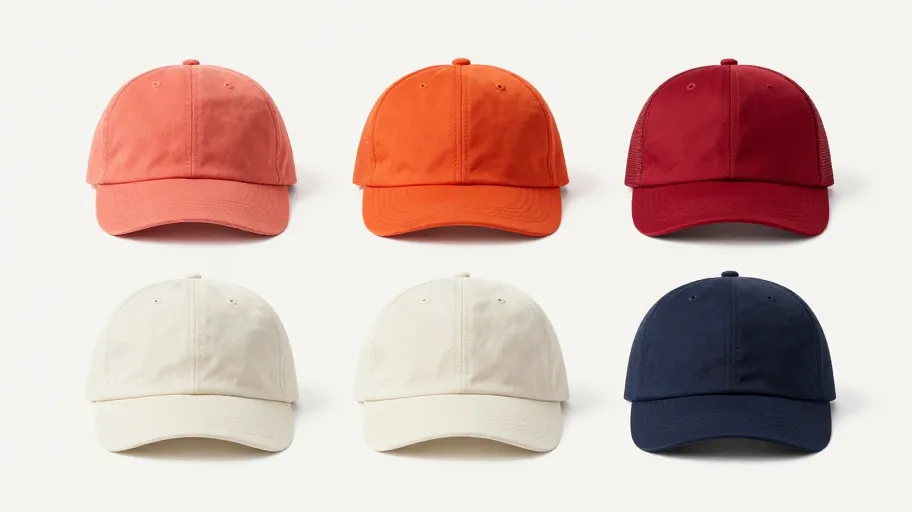
Take the mid-tier activewear brand preparing for Q1 2027: they approved coral in Adobe RGB on a MacBook Pro, sent ‘PMS 1795 C’, and got samples rejected as ‘too orange’. Round 3 cost $19,200 and 37 days. What changed in Round 4? They shipped a physical TCX swatch, specified D65 lighting, and confirmed the factory’s X-Rite eXact was calibrated on November 12. The fourth sample passed—on first try. That shift—from reactive correction to proactive assurance—is the operational inflection point.
Three Non-Negotiables for Pre-Sampling Pantone Discipline
None of this requires AI, new software, or capital investment—it demands rigor in specification discipline. Yet that discipline delivers outsized leverage: a 2026 benchmark across 12 apparel brands showed that enforcing pre-sampling Pantone protocols reduced total color-related delays by 63%, accelerated line approvals by 22 days on average, and achieved 41% higher on-shelf accuracy for holiday-season caps. In a category where 82% of consumers cite color as their top purchase driver (2025 McKinsey Apparel Consumer Pulse), that’s not process optimization—it’s demand capture.
- Reference the right library—and say why: Using TCX for cotton twill means your cap factory matches color on fabric—not paper—because TCX is formulated for textile substrates and renders accurately under D65 lighting. Using SC for embroidery thread means thread hue aligns with label printing, because SC is calibrated for coated surfaces. Specifying ‘TCX’ explicitly—not just ‘PMS’—means your supplier knows whether to measure on greige fabric, dyed yardage, or finished goods.
- Lock lighting and measurement context: Requiring D65 illumination means color assessment happens under standardized daylight conditions—so ‘PMS 185’ means the same thing in Ho Chi Minh City and Houston. Stating ΔE ≤ 1.0 for spectrophotometer validation (vs. ΔE ≤ 1.5 for visual evaluation) means your team knows exactly how tight tolerance must be—and avoids costly ambiguity like ‘as close as possible’.
- Validate the factory’s measurement chain: Confirming use of a current-generation spectrophotometer (e.g., X-Rite eXact or Datacolor 600) with NIST-traceable calibration logs means your supplier measures color reproducibly—not just visually. Requiring master swatch verification every 90 days means their reference standard hasn’t faded or drifted—so your ‘approved’ color stays approved across production runs.
When Pantone is your starting line—not your finish line—you stop paying to fix color, and start getting paid for nailing it.
#cap manufacturers china, #headwear manufacturers china, #cap factory