
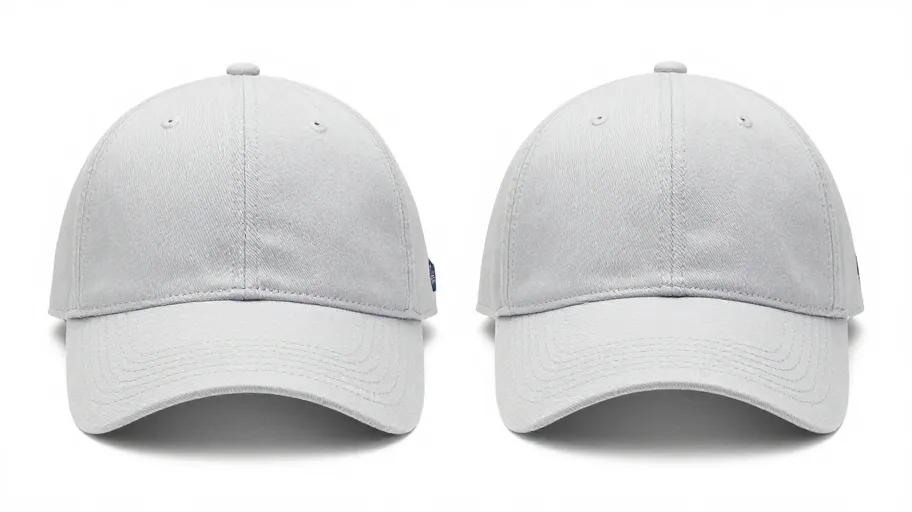
When comparing a high profile vs low profile cap, the real question is not which shape is "better" but which crown height, panel construction, front structure and visor shape belong in your written brief — because those four items, recorded before sampling, are what determine whether the first prototype matches the cap you imagined. New Generation, a Shenzhen-based OEM/ODM cap manufacturer, asks buyers to record exactly these four points before sampling, and offers high, middle and low crown profiles. This article shows you how to fill in that brief.
What "profile" means in a manufacturing brief
To a consumer, crown height is an aesthetic preference. To a factory, it is a measurable structural decision that affects pattern drafting, panel geometry, front-panel reinforcement and how a logo sits on the finished cap. If your brief says only "structured cap" or "modern fit," the sample team must guess the crown height — and a guess on profile tends to cascade: a higher crown changes the front panel curve, which changes where an embroidered logo can sit, which changes the visor relationship.
That is why the useful move is to stop describing the cap with adjectives and start specifying it with the four shape points below. Middle profile is also a legitimate, specifiable option — it belongs in your comparison, not as a fallback.
Decision table: high vs low profile by sourcing scenario
Use this table to frame the decision for your brand or for internal approval. It describes considerations, not outcomes; confirm the actual sample against your reference image before approving production.
| Consideration | High profile | Low profile |
|---|---|---|
| Front-logo presentation | Taller front panel offers more vertical space for larger front embroidery or a patch | Smaller front area; suits compact marks, small embroidery or minimal branding |
| Overall silhouette | Pronounced, angular crown line | Flatter, closer-to-head crown line |
| Common association in buyer briefs | Sports-style, structured, statement headwear | Contemporary, unstructured or relaxed-style headwear |
| Corporate programmes | Works when the cap itself is the statement piece | Works when the cap must feel understated alongside a uniform |
| Wholesale assortment logic | Serves buyers seeking a bold silhouette | Serves buyers seeking a versatile everyday silhouette |
| Middle profile option | Between the two; worth specifying explicitly when neither extreme matches the reference image | Between the two; specify the intended balance rather than leaving it open |
The honest caveat: silhouette preference is brand-specific and market-specific. Do not assume your target market's preference from a category label — put a reference image in the brief and let the physical sample settle the question.
The other three points of the shape brief
Crown profile is only the first of the four items New Generation's shape process asks buyers to record. A complete brief covers:
Panel construction. Six-panel and five-panel caps distribute material differently and produce different front shapes. A six-panel cap has a centre seam at the crown top and a distinct front panel; a five-panel cap offers a wider, uninterrupted front area. If your logo is wide, panel construction and profile must be decided together.
Front structure. Structured front panels hold shape on and off the head; unstructured fronts soften and relax with wear. Structure interacts with profile — a high profile with minimal structure will read differently from a high profile with firm reinforcement. State what you want the cap to do when it is set down on a table.
Visor shape. Curved, flat and intermediate visor silhouettes each change how the whole cap reads. A flat visor on a high-profile structured crown produces a very different impression from a curved visor on a low-profile unstructured body. Specify the visor explicitly; never leave it to the sample team's interpretation.
Approval questions to send before sampling
Before you request a prototype, put these questions in writing to the supplier. They are designed to surface assumptions early:
- Which crown profile options can be specified for my design — and can I see how the same logo sits on high, middle and low profiles?
- Given my logo dimensions and artwork, does your team recommend a profile and panel construction pairing — and why?
- How will the front structure I choose affect the appearance of my embroidery or patch?
- Can the visor shape I have specified be combined with my chosen profile without compromise?
- What will the prototype include, and what should I check and approve on it before production?
- What are your current minimum order, pricing, sampling and lead-time terms for my specific specification?
The last two questions matter because sampling and commercial terms are project-specific. Nothing in this article should be read as a statement of the supplier's current sample policy, cost structure or production timeline — confirm those directly, in writing, for your brief.
FAQ
Can I mix profile and unstructured construction? Yes — profile and front structure are separate brief items, which is precisely why the shape brief separates them. Specify the combination you want, and ask the supplier to confirm feasibility for your specific design rather than assuming it.
Should a wholesale assortment offer both profiles? That is an assortment decision, not a shape decision. The practical sourcing question is whether both can be specified within one programme with consistent branding. Ask the supplier directly whether your logo and materials can be carried across multiple profiles.
Is a middle profile worth specifying? It is one of the listed profile options, and it exists for buyers whose reference image sits between the extremes. If "somewhere in between" describes your reference, write "middle profile" in the brief instead of leaving profile open.
What reference material makes a brief stronger? A clear image of a cap whose silhouette you approve, plus your logo file and a note on which element — silhouette, logo placement, visor — matters most to you. This lets the supplier flag conflicts between your four shape points before a prototype is made.
Who decides the final profile — me or the factory? You do. The factory's role is to translate your four-point brief into patterns and to flag feasibility issues. Approve the profile on a physical sample, not on a rendering alone.
Submit your cap brief for project-specific review
If you have a reference image, a logo, or even a rough description of the cap you want to build, send it to New Generation for a project-specific shape review. The team will work through crown profile, panel construction, front structure and visor shape with you before sampling — so your first prototype is judged against a written specification, not a guess. Submit your cap brief, reference image or logo →
Before you write to us, complete this five-line shape brief:
- Crown profile: high / middle / low (or "match reference image")
- Panel construction: stated, or "recommend for my logo"
- Front structure: structured / unstructured / to discuss
- Visor shape: curved / flat / intermediate / to discuss
- Reference image and logo file attached
A brief with these five lines filled in is enough to start a substantive conversation about your project — including the commercial terms, which are confirmed per project.
#cap manufacturers china, #headwear manufacturers china, #cap factory