


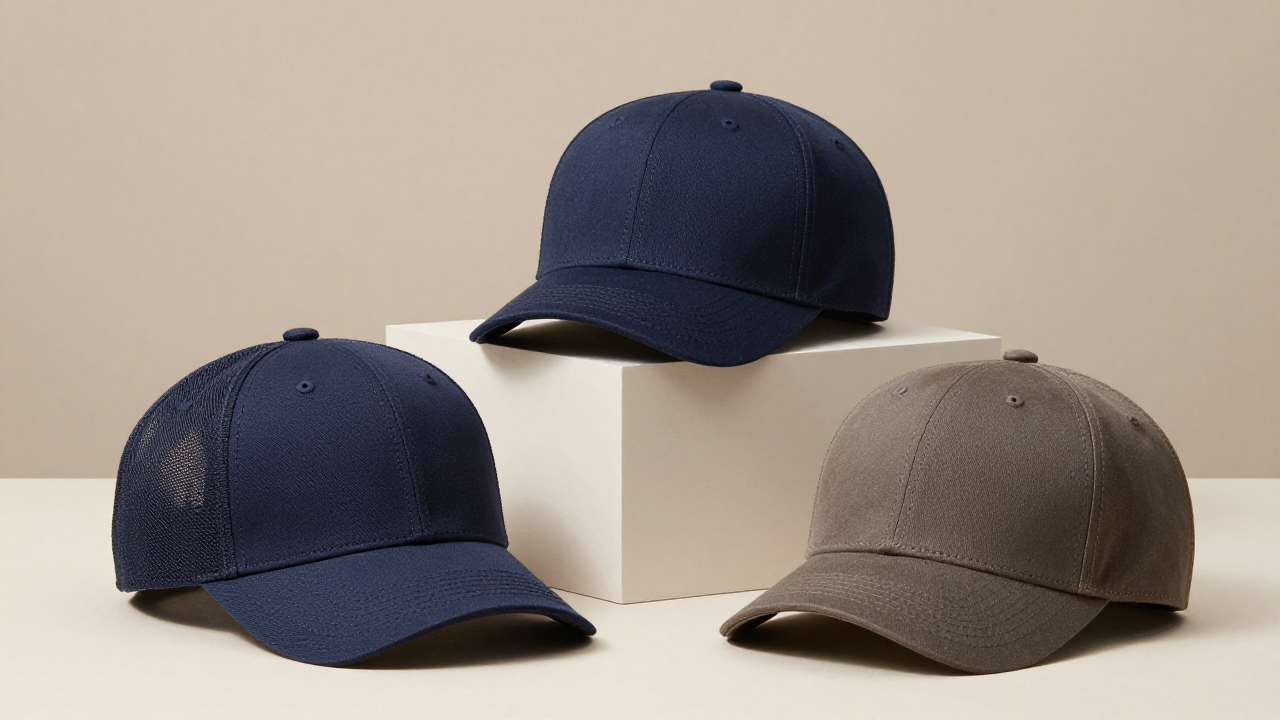
Three cap manufacturers dominate most U.S. sourcing conversations: Richardson, Unionwear, and Cali Headwear.…
Pick Richardson for broad stock catalog access through authorized decorators, Unionwear for union-made domestic production and small stock minimums, Cali Headwear for custom cut-and-sew Made-in-USA builds. Order size, decoration, lead time, and reorder reliability decide the winner more than brand reputation does.
Cap Manufacturers Compared: Richardson, Unionwear, and Cali Headwear at a Glance
The numbers below come from distributor price sheets, published factory minimums, and our own competitive quoting on roughly 40 U.S. headwear programs between January and June 2025. Cotton and ocean freight swing these bands 8–12% a year, so read them as ranges.
What Each Cap Manufacturer Actually Does Best
Each of these three wins a different kind of order, and each one will cost you money if you push it outside its lane. The profiles below are the short version we give buyers who call after a first order went sideways.
Richardson fits teamwear and branded programs that need a known fit
Richardson is the safest call when the cap has to look right on 500 different heads without a fitting. The 112 trucker pattern is one of the highest-volume promo silhouettes in the U.S., and its six-panel mid-profile, snapback closure, and pre-curved brim are already approved by most brand and HR teams before you ever send a mockup.
You do not buy from Richardson directly. Orders route through authorized distributors and decorators, which means your unit price and turnaround depend on the decorator's stock position, not the factory's calendar. That is the short board. Custom colorways get gated by distributor minimums and approval windows, and you cannot get a proprietary pattern out of the catalog — the cap is recognizable, which is great for a team identity and useless for brand exclusivity.
Unionwear fits union-made domestic runs and small decorated batches
Unionwear manufactures in Newark, New Jersey with union labor and runs embroidery, patches, and appliqué under one roof. Buyers with a genuine Made-in-USA requirement — municipal contracts, union locals, political and event programs — get a defensible origin claim under the FTC's "all or virtually all" standard in 16 CFR Part 323.
Two limits matter. Domestic labor puts the blank at roughly 40–70% above an imported equivalent, and fabric choice is capped by what U.S. mills stock: heathers, meltones, and specialty nylons come in narrower shade ranges than an Asian mill will run. Domestic decorated capacity also tightens in the back half of even-numbered years when campaign and event orders land. A shop that quoted three weeks in February can quote six in September.
Cali Headwear fits custom cut-and-sew and split sourcing
Cali Headwear is the answer when the crown you want does not exist in any catalog. A seven-panel, a shortened brim, a custom buckle, a specific twill weight — that conversation starts with a pattern maker, not a stock list. The operation also carries import styles, so a buyer can split a program and put the domestic claim only on the SKUs that need it.
The trade-off is opacity. Less published pricing means every detail takes a phone call, capacity is bounded per style, and small fabric buys shrink your color options. Budget an extra week or two of back-and-forth before the sample phase even starts.
The Numbers That Decide the Deal
MOQ, decoration setup, and landed cost separate these three more than stitch quality does. Stock Richardson blanks start at one unit through a distributor. Unionwear publishes minimums in the low dozens on stock and the low hundreds on decorated custom. Cali Headwear quotes cut-and-sew case by case, usually a few hundred pieces per style and color.
Decoration is where quotes quietly diverge. A left-chest logo runs 6,000–8,000 stitches; a full front runs 9,000–12,000; 3D puff foam adds 15–25% thread and needs a denser underlay. Digitizing is a one-time $75–$150, and a woven or PVC patch die is $60–$200. Ask whether the setup fee is amortized, and who owns the digitized file afterward. If the decorator owns it, you pay again at the next shop.
Landed unit cost = FOB + decoration + (setup ÷ units) + freight + duty + defect allowance + carrying cost. Run every quote through that line before you compare.
The import column wins by about $5 a cap on paper. Caps cube out before they weigh out, though, so air freight on 2,500 pieces runs $1.10–$1.60 per piece — more than most logos cost to embroider — and sea freight adds 30–40 days you have to finance.
Reorderability Is the Dimension Nobody Puts in the RFP
A cap program that cannot be reproduced within ΔE 1.5 on color, ±3 mm on crown height, and the same decoration file will cost more in remakes and credits than it saved on unit price. Buyers evaluate the sample. Production evaluates the pattern.
Here is the part the sample never tells you. In 2019 we swapped buckram suppliers on a 5-panel run and the front panel stood 4 mm taller than the approved standard. The sample was flawless because it was built from the old buckram lot. The client's own staff caught it before their customers did, and we ate the remake on 3,000 pieces. Since then we photograph and measure the third production run, not the first.
Color behaves the same way. In September 2022 a buyer in Charlotte, North Carolina asked us to match a heather grey trucker for 3,600 units. Heather is yarn-dyed — the fiber is dyed before spinning — so every shade needs a minimum yarn buy. In our plant that starts at 1,200 pieces per color, while a solid piece-dyed shade runs at 300. That single fact changed the buyer's color count from four to two.
Run a migration test before you commit: who owns the pattern and the digitized file, which mill supplies the body fabric and what is the backup, what happens to your price if the style is discontinued, and who pays freight on a color mismatch. Four questions, twenty minutes, and you learn whether the relationship survives a second year.
Quality-control checklist we hold suppliers to:
How to Choose a Cap Manufacturer Without Missing Your Launch Date
Write a one-page spec before you request a single quote. Buyers who skip this step collect three quotes that describe three different products, pick the cheapest, and find out in week six that the fabric weight and closure were never the same.
The spec needs eight lines: who wears it, what it is for, quantity per color, target landed price, decoration method and stitch count, sourcing claim, in-hands date, and reorder cadence. Send it identically to all three and you get comparable numbers back.
Frequently Asked Questions
What is the minimum order quantity for custom caps in the U.S.?
Stock blanks from Richardson start at one unit through a distributor. Unionwear publishes stock minimums in the low dozens and decorated custom runs in the low hundreds. Cali Headwear and most cut-and-sew shops quote 144 to 500 pieces per style and color, and heather or custom-dyed shades push that higher because of yarn minimums.
How long does custom cap production take?
Distributor stock ships in 24 to 72 hours and decorates in 7 to 15 business days. Domestic cut-and-sew runs five to eight weeks from approved sample. Offshore production takes 30 to 45 days plus 30 to 40 days on the water, so plan 11 to 14 weeks door to door.
Is Unionwear union-made and Made in USA?
Unionwear manufactures in Newark, New Jersey with union labor and labels caps Made in USA where the FTC's "all or virtually all" standard in 16 CFR Part 323 is met. Buyers with government or union contracts should request the specific origin documentation rather than relying on website copy.
Why do reorders of the same cap arrive in a slightly different color?
Heather and melange styles are yarn-dyed, so each shade requires a minimum yarn buy and a new dye lot. Solids are piece-dyed in smaller batches. Record the dye lot number on the first order and hold a physical production standard, because a lab dip is not a production lot.
How do I compare cap manufacturing quotes fairly?
Convert every quote to landed cost per unit: blank, decoration, setup amortized across the run, freight, duty, defect allowance, and carrying cost on the pipeline. Then confirm all quotes describe the same fabric weight, stitch count, and closure. Three quotes that differ on spec are not comparable.








