
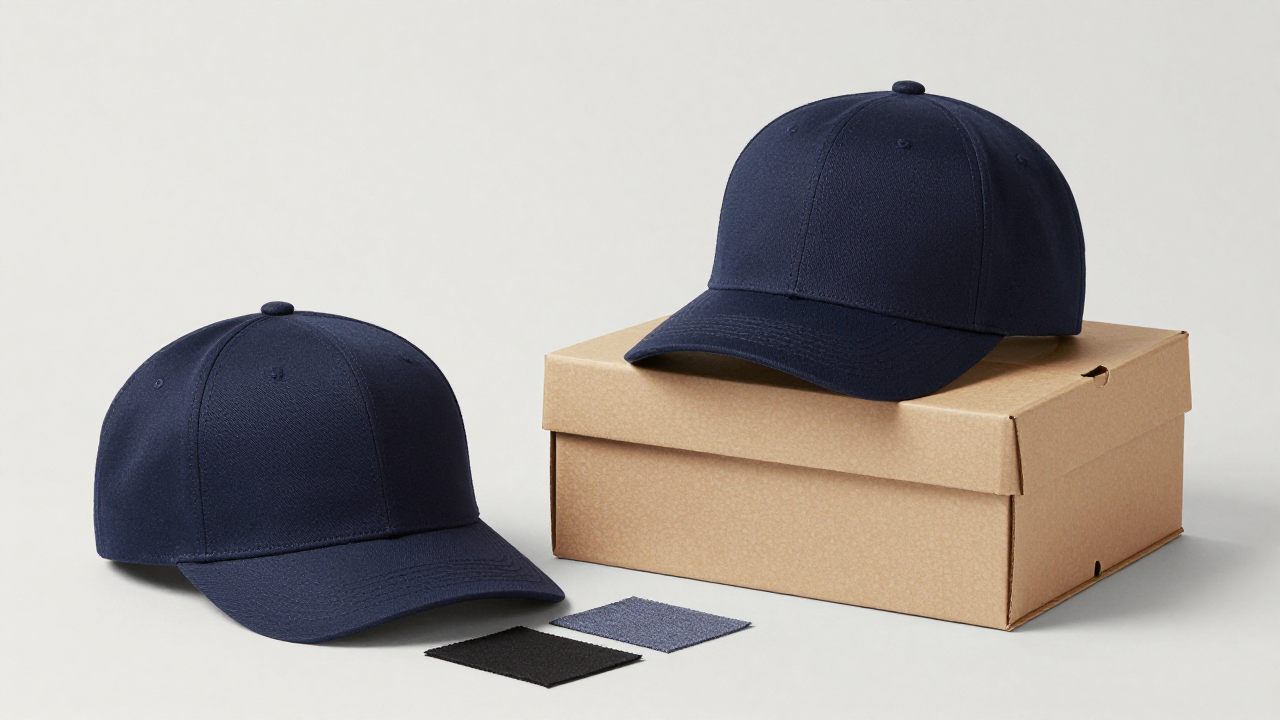
When you choose a cap factory, the factor that decides the outcome is repeatability — whether that factory can reproduce your approved sample at volume, with the same stitch density, dye lot and…
crown height, on the ship date it committed to. Price and lead time are negotiating points. Repeatability is the deal.
What Actually Matters When You Vet a Cap Factory
The email landed at 2:40 a.m. on a Tuesday in October 2023. A buyer in Charlotte, North Carolina had 18,000 caps on a truck for a college bookstore chain, and the front panels were embroidered 3 millimeters off-center. She had approved the sample in July. Four thousand two hundred pieces went into a dumpster behind a third-party inspection warehouse in Shenzhen.
The factory's reply, verbatim: "The sample was perfect."
It was. That's the trap. A sample proves a shop can make one cap. A purchase order asks for eighteen thousand with the same thread tension, same hands, same machine settings on a Tuesday in October while three other clients are also shipping. Most sourcing disasters in headwear start exactly there, nowhere near the price.
Where the Money and the Risk Sit in Cap Production
Most caps are embroidered flat, before assembly. Panels go onto the machine as fabric rectangles, the logo gets stitched, and only then is the crown sewn, blocked on a heated press for 12–15 seconds at 115–125°C, and finished with the sweatband and closure. That sequence explains a lot of grief later.
Artwork that crosses a panel seam will distort. A 3D puff logo has to have its foam laid before the crown exists. Designers who send a wrap-around mark and expect it to sit flat on a finished six-panel get a surprise in the sample photos — we've rebuilt patterns for exactly this reason more than once since 2008.
Quality control is where cheap money goes missing. A facility that inspects at final packing catches defects after the twill is already cut. One that inspects panels before sewing catches the same defect at roughly a fifth of the cost.
Four Dimensions That Decide Whether a Factory Can Deliver
You can screen a headwear supplier in about 90 minutes with four questions, and none of them is about price.
Can the Line Hold Your Run Size Without Swapping Machines
Ask how many embroidery heads they run and what daily output looks like on a decorated six-panel. A floor with 20 six-head machines on one shift turns out roughly 2,400–3,000 finished caps a day. At 6,000 units across two colorways, you need to know whether that books one week or four.
Then ask for MOQ per colorway, not per order. A "500-piece minimum" frequently means 500 total. Two-color launches die on that misunderstanding.
Where the Twill, Buckram and Mesh Actually Come From
Request the fabric weight in oz/yd² and the mill name — not "premium cotton." Six-panel twill sold into the U.S. market typically runs 7.5–10 oz/yd². Under 7 oz, it reads thin in hand and pills at the sweatband inside a season.
Ask separately who supplies the buckram and the mesh. Few shops buy all three from one mill, so a claim of single-mill sourcing deserves a follow-up question. If your retail buyers care about chemistry, request the OEKO-TEX Standard 100 certificate number and verify it in the public database rather than accepting a PDF attachment.
How Quality Is Measured, Not Described
"100% inspection" is a sentence, not a system. Ask for AATCC 61 (colorfastness to laundering) and AATCC 16 (lightfastness) reports, then ask the number that matters most: what Delta E tolerance do you hold between panels of the same order?
Delta E is the color-difference value. A tight shop holds it at or below 1.0. Between 1.5 and 2.0 is ordinary. Above 2.0, two panels of the same "black" read as two different blacks under store lighting, and no amount of photography fixes that on a shelf.
Who Owns Your Order at 11 p.m. Your Time
Ask who answers when something breaks. Sample turnaround of 7–10 days is standard, and a pre-production sample with your woven label should be routine — not a favor you negotiate. A factory that cannot name your account owner, or that only replies inside its own business hours with no escalation path, will cost you more in missed emails than in unit price. This is the dimension buyers skip, and it's the one that shows up in the claim.
How to Compare Two Headwear Quotes Side by Side
Identical spec sheets can produce quotes 40% apart, because the numbers underneath are rarely identical. Match every quote against the same four rows below.
These are 2026 FOB ranges from cut-and-sew shops in China, before duty and freight.
One line item deserves its own note. 3D puff is where two quotes on the same spec sheet can differ by $0.60 a cap, and the gap is machine time, not foam cost.
Which Numbers Does the Quote Leave Out?
Ask a supplier what stitch density the price assumes and you'll usually get a pause. Embroidery is priced on stitch count, and stitch count is a function of density — stitches per inch along the path.
A 2.5-inch logo at 8 stitches per inch runs around 7,500 stitches. The same logo at 11 stitches per inch passes 10,000. The extra 3,000 stitches cost roughly 45 to 70 seconds of machine time per cap; on 5,000 pieces that's 60 to 95 machine hours. Factories know this arithmetic cold. Quotes get built at 8. Samples get built at 11.
In late 2022 we watched it play out on a Texas order — 4,000 caps for a brewery outside Austin, artwork with a fine serif that needed density to hold its shape. The approved sample measured 11 stitches per inch. The bulk run measured 7.5. Nobody lied. The sample room simply ran a different setting than the line. The correction cost the buyer a re-embroidery on 1,100 caps.
Put the number in the purchase order: minimum 10 stitches per inch, verified on 20 pieces per lot, measured with a stitch counter, not eyeballed.
The second number is who made your sample. Sample rooms run on a different clock — two to four senior operators, one-off pieces, hand-trimmed, pressed, shot under good light. The production line runs on quotas. Ask for a mid-run sample: cap 200 of the actual run, pulled off the line, not the sample room. Facilities that resist that request are telling you something useful.
Red Flags, and the Shipping Math Nobody Runs
A refusal to walk the production floor on a live video call ends the conversation for us. So does a bulk lead time shorter than the sample lead time — that means your order is planned onto a machine already booked. And "we can do any color" with no Pantone matching fee is a tell, because color matching costs money and a shop that doesn't charge for it isn't doing it.
A quote that lands 15% under every other bid usually moved one of two things: the fabric loss rate is excluded (cut-and-sew runs 8–12% waste on twill), or the twill is lighter than the spec sheet claims.
Freight has its own arithmetic. A 40-foot high cube holds roughly 35,000 caps packed 100 per carton. Below about 8,000 units you're in LCL, where your cartons sit under other people's freight and crowns arrive crushed. Landed cost is not FOB plus freight. It's FOB + freight per unit + duty under HTS heading 6505 + 3–4% of FOB for brokerage and inspection. Headwear duty rates moved repeatedly between 2018 and 2025; a 10-point swing on a $4 cap is 40 cents, which is the entire margin on a $9 wholesale price.
Pick A if You Need Speed, Pick B if You Need Range
Buy through a sourcing agent if your run is under 1,500 units and your artwork is already final. Buy direct from a cut-and-sew factory if your pattern is custom, your colorway is yours, or you plan to reorder this year.
Choose Option A — an agent or trading company — if you need 800 caps in five weeks, a stock blank with your logo is acceptable, and you'd rather hold one invoice than one relationship. Expect to pay 12–18% over factory cost. On small runs, that premium is cheap insurance against a floor you've never seen. Choose Option B — a direct cap factory with its own embroidery room — if your logo crosses a panel, needs 3D puff, or sits on a Pantone you own. You'll pay for the pre-production sample and for the video walk, and in return you get a line that knows your block, your density and your Delta E tolerance six months from now.The open question is the one nobody asks in the first meeting: when this order goes wrong in month eight, who is flying to that floor — you, or someone whose name you can't pronounce yet?
Frequently Asked Questions
What is a typical MOQ for a custom cap factory?
Most cut-and-sew headwear factories in China set minimums at 500 pieces per colorway, with 300 for simpler six-panel builds. Stock blanks with a printed or embroidered logo can drop to 100–200 pieces. Confirm whether the minimum applies per order or per color before you commit.
How long does custom cap production take from sample approval?
Plan 7–10 days for sampling, then 25–35 days for bulk after you approve the pre-production sample. Add 12–18 days of ocean transit to a U.S. port and about a week for customs release and inland delivery. Air freight cuts transit to 5–7 days at four to six times the cost.
How much should I expect to pay per cap in 2026?
FOB pricing from Chinese cut-and-sew shops runs about $2.50–$4.00 for a standard embroidered six-panel, and $4.00–$6.50 for 3D puff with custom trim. Freight, duty under HTS 6505 and brokerage typically push landed cost 25–40% above FOB.
How do I check quality before the bulk order ships?
Book a third-party inspection at AQL 2.5 for major defects and 4.0 for minor, and write stitch density, Delta E tolerance and crown height into the purchase order. Request a mid-run sample pulled from the line. A man-day of inspection in Guangdong or Fujian costs $250–$350.
What is the difference between stitch count and stitch density?
Stitch count is the total number of stitches in a logo. Stitch density is stitches per inch along the path, which controls how solid the fill reads. Two quotes with matching stitch counts can deliver different results if density differs. Specify density in the PO, not just count.