


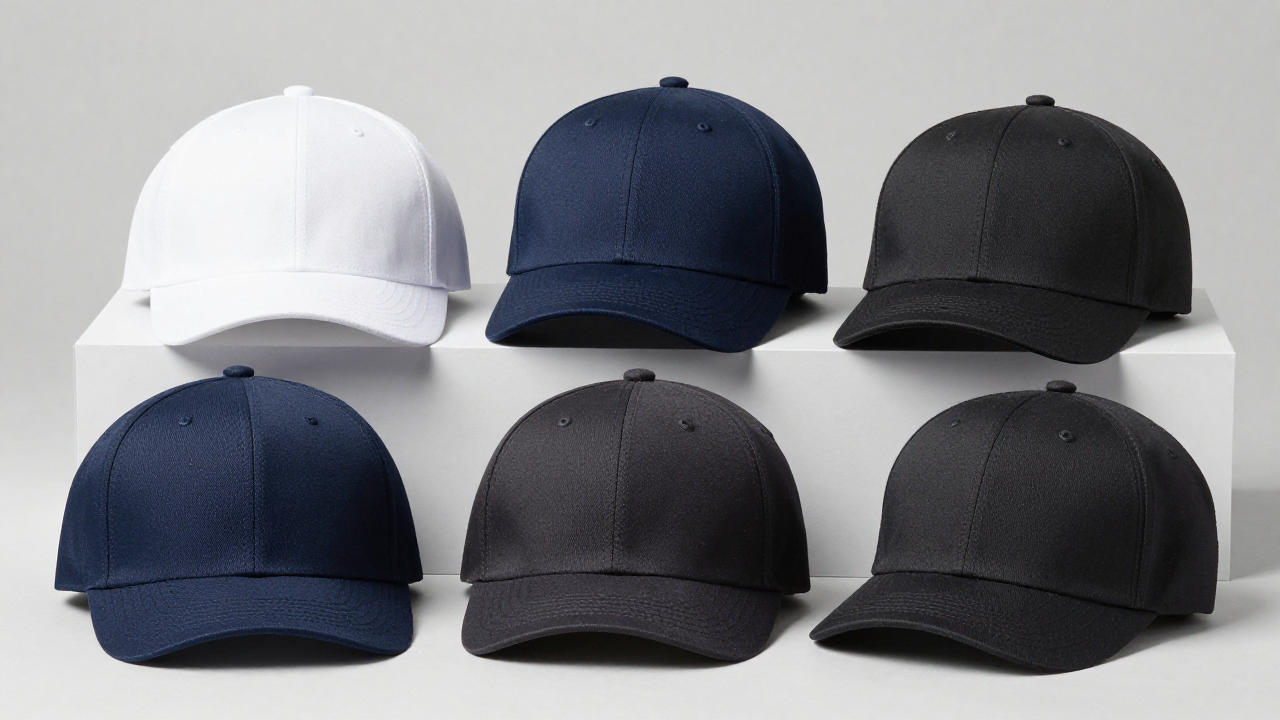
Most cap factory failures start in the same place. Supply chain management gets handled as a purchasing chore when it is really a design problem.…
Teams that plan fabric lots, capacity and compliance before the first purchase order survive freight spikes and tariff changes. Everyone else spends the year firefighting, and firefighting is always the expensive option.
Treating your supply chain like a purchasing department
Treating the supply chain as a purchasing department is the single most expensive mistake in headwear manufacturing, because it multiplies across every order you will ever place. A bad design decision costs you one run. A bad supply chain decision costs you the margin on nine months of production.
In practice it looks like this. Three vendors quote the same tech pack, the buyer picks the lowest FOB, and nobody asks where the cotton twill comes from, whether the embroiderer has a second machine, or how much of that price quietly assumes freight stays at 2023 levels.
Why it keeps happening
Quotes are comparable. Supply chains are not. A spreadsheet shows dollars per piece; it does not show whether the mill can repeat a Pantone 19-4052 dye lot in March, or whether the snapback closures are in a Georgia warehouse or on a boat near Okinawa. Procurement software rewards unit price, so unit price is what gets optimized.
There is a career incentive buried in here too. The person who negotiates 22 cents off a cap gets a line in the quarterly review. The person who reserves capacity for Q4 gets nothing, because nobody ever sees the disaster that didn't happen.
What it actually costs
In June 2021 we signed a twelve-month program for a collegiate-licensing brand out of Eugene, Oregon: 90,000 six-panel cotton twill caps at $4.85 DDP landed, delivery spread across four quarters. We modeled 31% gross margin and won the bid against two other factories on price.
By August, a 40HQ from Ningbo to Los Angeles had gone from roughly $2,100 to $11,400. Each container held about 14,000 caps flat-packed, so our per-unit freight moved from $0.15 to $0.81, and 90,000 units times $0.66 is $59,400 gone. Cotton cost moved the other direction on us too — we had not locked yarn. When the program closed we had lost $186,000 on a contract we could not renegotiate, because the fixed price was the reason we won it.
The number that hurt more was invisible. Those machines ran for a year at negative margin while we turned down two smaller streetwear accounts that would have paid 21-22% and paid in 30 days. Capacity is finite. A bad contract occupies the same embroidery heads as a good one.
What we do instead
We quote FOB by default now and let the buyer own freight risk. That cost us two deals in 2022 and I would make the same call again. When a client insists on landed pricing, freight is indexed quarterly with a documented trigger, in writing, before the PO.
Before any quote leaves the building, four questions get answered.
Quality control that only happens at the finish line
Final inspection catches defects. It does not prevent them. A cap factory running AQL sampling at the packing table has already paid for every defect in fabric, labor and freight — it just finds out late.
The trap is that inspection is easy to buy. A third-party inspector costs a few hundred dollars a day and produces a signed report, which feels like control. Real QC lives earlier in the process: lab dip approval before bulk dyeing, a physical sew-out before the embroidery run, closure torque checks, a shrinkage wash on the first cut.
Here is the number that should bother you. Under ISO 2859-1 at general inspection level II, AQL 2.5 on a 20,000-piece lot means a 315-piece sample where you accept up to 14 major defects. Scale that to the lot and you have contractually agreed to ship somewhere near 900 defective caps, on a good day, with a clean report in hand.
We shipped 3,000 units in August 2023 with the front embroidery in the wrong thread weight because we approved a digital render instead of a physical sew-out. The Pantone was correct on screen and wrong on polyester mesh. Chargeback plus air reship came to $11,400 on a $27,000 order.
The fix is unglamorous: no bulk embroidery without a signed physical sew-out, in-line checks at 30% and 70% of the run, and one in-line inspection per 5,000 units — not one per shipment.
Why do cap factory lead times slip so often?
Lead times slip because the quoted number describes sewing, while the ship date is decided by three other processes: fabric weaving and dyeing, embroidery sample approval, and trim import.
A six-panel cap is 8 to 12 separate components, and the critical path almost never runs through the sewing floor. It runs through the woven label supplier in a different province, or the custom metal slider that needs 35 days and a mold fee nobody mentioned.
Quotes default to "45 to 60 days production" because that is true for a repeat order with stock fabric. First-run orders with a custom dye lot and custom trims routinely land at 85-100 days, plus 30-35 days ocean transit to a US warehouse. A three-week slip in June turns into an air-freight decision in September, and air freight on caps runs $6 to $9 per unit — often half the FOB.
Ask for the critical path, not the lead time. "Which component has the longest lead on this build?" The honest answer tells you whether you are waiting on fabric, trims or decoration. Then buffer the longest item by 15%, not the average.
Sleeping on compliance until the container ships
Compliance is the cheapest problem to solve in the sample room and the most expensive one to solve at the port. Almost every customs disaster in headwear was visible in the tech pack six months earlier.
Buyers assume CPSIA covers children's caps, California Prop 65 covers the enamel on a metal eyelet, and UFLPA cotton documentation is purely the importer's headache. Since 2022, CBP has been detaining apparel shipments and demanding traceability back to the gin. The importer's headache becomes your chargeback.
What it costs: a detained 40HQ runs $3,000 to $5,000 a month in demurrage and detention, and a missed season on top. A CPSC-accepted lab test on a kids' cap runs a few hundred dollars. One buyer asked us in 2022 to relabel a youth cap as adult to skip the test. We refused, they were annoyed for a week, and the test cost $650.
Get the cotton declaration with mill name and lot number at PO stage, not at booking. And never reuse one declaration across two programs — that is the fastest way to turn a routine exam into an audit.
Building one spec sheet for every buyer
A golf brand and a skate brand will both sign off on a six-panel cotton twill cap, and both will be unhappy with the same spec. Reusing a spec sheet is the quietest mistake on this list because nothing fails — the product just sells at 60% of forecast.
Crown height, brim length, closure type and fabric weight are the four variables that decide whether a cap feels right. A structured 4-inch crown with a plastic snapback reads as team apparel. The same decoration on an unstructured 3.5-inch crown with a brass slider reads as boutique. Buyers specify decoration precisely and leave geometry to the factory, then wonder why the sample feels off.
On the direct-to-consumer programs we fulfill, fit complaints outnumber color complaints by roughly 3 to 1. That ratio does not move much across price points.
The efficient answer is to build two or three fit blocks — unstructured dad hat, structured mid-crown, performance — and let buyers customize fabric, decoration and trim inside a block. You get variety without re-engineering the pattern every season.
What a cap factory should verify before every purchase order
A pre-production checklist beats a post-mortem every time. This is the list New Generation runs before any PO is confirmed, and each row has a specific answer we want plus a red flag that means walk away.
Frequently Asked Questions
What is the most common mistake when sourcing from a cap factory?Undervaluing supply chain planning. Buyers compare unit price across quotes and ignore fabric ownership, capacity reservation and trim lead times, which is where most delays and cost overruns actually originate. Price is the least predictive number on a quote sheet.
How much should custom caps cost in 2026?Standard six-panel cotton twill with one embroidered logo typically runs $3.20 to $5.50 FOB at 1,000 to 5,000 units, depending on fabric weight, decoration stitch count and trim. Premium materials, leather straps, or 3D puff embroidery push pricing toward $7 to $9.
How long does custom cap production take?Repeat orders with stock fabric and trims take 45 to 60 days. First-run orders with a custom dye lot and custom trims run 85 to 100 days, plus 30 to 35 days ocean freight to the US. Add three weeks for sample approval if the design is new.
What MOQ should I expect from a cap factory?Most Chinese headwear manufacturers set 500 to 1,000 units per colorway for a custom build, with lower minimums available if you accept stock fabric and stock trim. Below 300 units, per-unit pricing usually rises 30-40% because setup costs dominate.
How do I verify quality before placing a bulk order?Order a physical pre-production sample and pay for a third-party inspection of it, then require the factory to run in-line checks mid-production rather than only final inspection. Ask for the AQL level and sample size in writing before you agree.








