


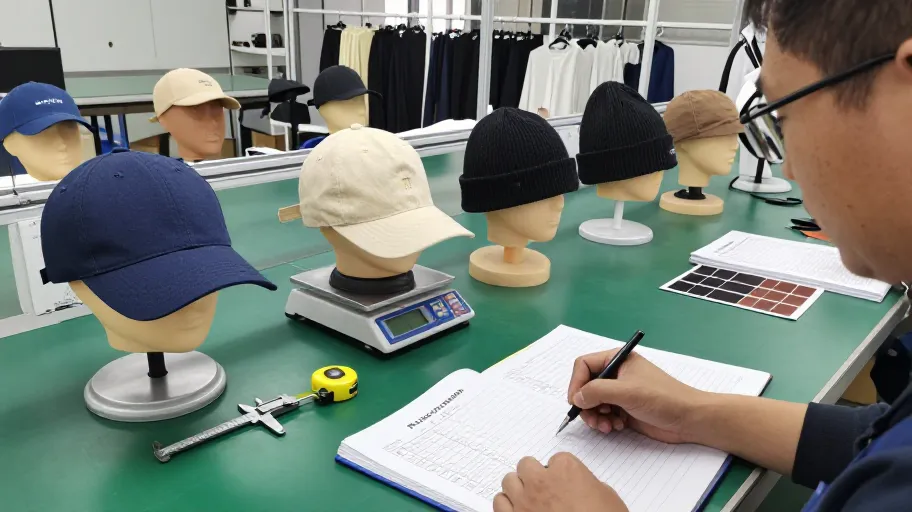
When comparing the best hat manufacturers in China for your programme, the decisive evidence is not the brochure — it is what you record during fit and compatibility checks. This article sets out the Fit & Compatibility Record, a five-part framework that documents measurements, wear behaviour, component compatibility and construction consistency, so your approval decision rests on verifiable evidence rather than memory.
Why fit and compatibility records decide sourcing outcomes
Procurement teams evaluating headwear suppliers tend to focus on what is easy to see: product photos, catalogue breadth and sales responsiveness. What separates a reliable supplier relationship from a frustrating one, in practice, is documentation — specifically, whether the fit and compatibility of the product were recorded formally before production approval.
The reason is straightforward. A cap is an assembled product. The crown shape depends on panel construction, the closure interacts with the sweatband, the brim stiffness interacts with the embroidery placement, and the fabric reacts differently to structured versus unstructured building. When these elements are tested together and written down, you have a reference. When they are not, any discrepancy between what you approved and what you receive becomes a matter of competing recollections.
A written fit and compatibility record changes that. It gives both parties a shared reference, it makes comparisons between candidate suppliers meaningful, and it gives your team something concrete to review before releasing production.
The Fit & Compatibility Record: a five-part framework
Use this framework with every shortlisted manufacturer, and use the same format for each one so results are comparable.
1. Measurement record. Document every relevant dimension of the sample you receive: head circumference adjustment range, crown height, brim length and brim curve, sweatband depth and closure type and position. Record how each was measured (which points, which tool) so your numbers and the factory's numbers refer to the same thing. A measurement without a method is not a record.
2. Wear test record. Put the sample on people who resemble your end customers. Record observations on fit stability, comfort points of contact, how the adjustment mechanism behaves across the size range, and whether the crown retains its intended shape in wear. Note who wore it and what they observed. This is internal planning evidence for your decision — not a laboratory result.
3. Component compatibility record. Headwear components interact. Record whether the fabric you specified works with the construction method proposed, whether the closure attaches cleanly to the chosen material, whether embroidery or patch placement affects the crown's shape, and whether the sweatband material behaves as intended alongside the inner construction. If your design combines elements the factory has not combined before, say so in the record and note how it was verified.
4. Construction consistency record. Compare more than one sample from the same supplier where possible, and record whether the two match: same crown height, same brim curve, same stitching alignment, same closure placement. Consistency between samples is the closest evidence you can gather at this stage about what to expect later — but it remains evidence to verify in production, not a promise.
5. Sign-off record. When you approve, record what you approved: which sample, which measurements, which materials, which components, on which date, agreed by whom. Both sides should hold the same document. This sign-off record is what you will refer to if the bulk run raises questions.
Decision table: what to record and how to verify it
| Record element | What to write down | How to verify before approval | Red flag to note |
|---|---|---|---|
| Measurements | Each dimension plus the measurement method used | Measure the sample yourself; compare against the factory's spec sheet | Spec sheet terms that don't match your measurement method |
| Wear test | Fitter names, observations, any discomfort or shape-loss notes | Test on multiple wearers across your size range | One sample tested by one person, once |
| Component compatibility | Fabric, closure, sweatband, decoration — and whether they were tested as an assembly | Ask to see or hold an assembly that matches your combination | Components verified only individually |
| Construction consistency | Differences between repeat samples from the same supplier | Request more than one sample and compare directly | Supplier reluctant to provide repeat samples |
| Sign-off | Sample ID, dimensions, materials, date, agreeing parties | Confirm both sides hold an identical signed record | Verbal-only approval, no shared document |
Approval questions to put to every shortlisted manufacturer
Bring these questions to the table with each candidate supplier, and record the answers in the same file as your fit record:
- Which exact sample does the bulk run reference, and can we both hold an identical, dated record of what was approved?
- How will you confirm that production units match the approved sample, and what evidence will you share with us at that point?
- If any component in our design has not been assembled in this combination before, how will that combination be verified before mass cutting?
- What documentation format do you use for measurement specs, and can we agree on a shared measurement method before sampling begins?
- Who on your side owns the fit record, and who do we contact if a production question refers back to it?
How a supplier responds to these questions is itself evidence. A manufacturer who engages with the documentation process gives you something to compare; one who deflects gives you something to weigh as well.
Common recording mistakes procurement teams make
Recording only the sample, not the method. A list of numbers without a measurement method invites two different readings of "crown height". Agree the method first.
Testing components in isolation. A closure that attaches cleanly to one fabric may behave differently with another sweatband or an internal tape. Test the assembly.
Approving verbally. An email thread is not a sign-off record. One document, held by both sides, referenced by sample ID.
Comparing suppliers in different formats. If each factory reports fit in its own template, you cannot compare them. Standardise your record format across all candidates — the Supplier Scorecard is built for exactly this.
Treating the record as finished at approval. The fit record is a living reference. If production raises a question, the record is where the conversation starts.
FAQ
Does recording fit data slow down the sourcing process? It adds work at the sampling stage, but it is work you would otherwise do later, under pressure, during a dispute. A record made calmly before approval is worth considerably more than a reconstruction made afterwards.
Should we record fit data for a simple promotional cap, or only for premium headwear? For any headwear where fit affects acceptance. Even a straightforward promotional cap has a closure, a sweatband and a crown shape, and each of those can vary between sample and production. The depth of detail can scale with the project; the habit of recording should not.
What if a supplier resists sharing its spec sheet or measurement method? Record that resistance itself in your comparison file. You are not obliged to accept a supplier's format, but a shared measurement method is the minimum condition for a meaningful fit record. Without it, you are comparing words, not measurements.
How do we use the fit record if the bulk shipment differs from the approved sample? You start from the record, not from recollection. Review the recorded dimensions and the sign-off document with the supplier, identify which specific elements differ, and ask how the difference arose and how it will be addressed. The record does not guarantee an outcome — nothing does — but it defines the conversation and removes ambiguity about what was approved.
Is the Fit & Compatibility Record a substitute for formal testing or certification? No. This framework is an internal sourcing and approval tool. It documents your own observations and agreements with the supplier. Any compliance, safety or performance testing is a separate matter to confirm directly with your supplier and relevant bodies, and nothing in this record should be presented as such testing.
Primary CTA
Download the Supplier Scorecard. It puts the five-part Fit & Compatibility Record, the decision table and the approval questions into one working document, standardised across every candidate manufacturer on your shortlist — so your comparison of China headwear suppliers rests on evidence you can hold, share and defend.
Low-friction checklist CTA
Not ready to compare suppliers yet? Start with the one-page fit-check checklist inside the Scorecard: the five record elements, the minimum questions to ask, and the red flags to note. Download the Supplier Scorecard and run your next sample review against it.
#cap manufacturers china, #headwear manufacturers china, #cap factory








