


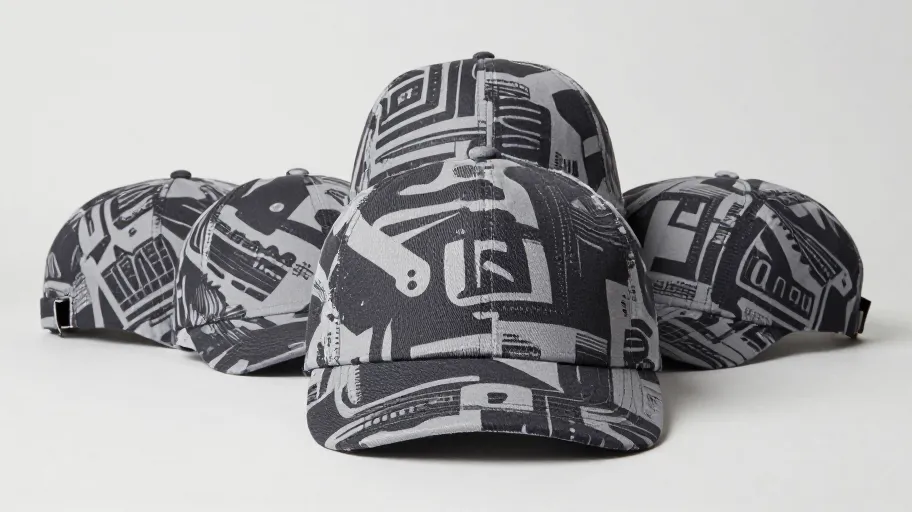
A 5 panel cap is a headwear construction built from five fabric panels — one broad front panel, two side panels and two top panels — rather than the six-panel structure with a center seam across the front. For B2B buyers, the practical difference is a larger, uninterrupted front area that suits bold printed artwork, and a lower crown profile. The right sourcing decision comes from documenting construction specs, approving a physical sample, and signing off written terms before production: the SPEC–SAMPLE–SIGN approach.
5 panel vs 6 panel: a comparison for sourcing decisions
Neither construction is better in the abstract. The right choice depends on decoration method, brand positioning and how the cap will be worn. Use this decision table to frame the comparison before you approach a supplier.
| Decision factor | 5 panel cap | 6 panel cap | What to confirm with your supplier |
|---|---|---|---|
| Front surface | Single uninterrupted front panel | Two front panels split by a center seam | Whether artwork placement crosses any seam |
| Decoration fit | Suits large-format prints, heat transfer and full-bleed artwork | Suits embroidered logos placed off-seam or structured fronts | Which decoration methods the supplier supports for your artwork |
| Crown shape | Lower, shallower profile with a rounded top | Structured, higher crown with visible seam | Crown height and interlining options per spec sheet |
| Typical market positioning | Streetwear, skate, lifestyle and promotional prints | Sport, corporate uniform and classic branded caps | Whether the supplier runs both constructions |
| Closure and sizing | Depends on chosen closure (snapback, strapback, fitted) | Same range of options | Available closure types and size range |
| Pattern complexity | Fewer panels to align in sewing | More seams, more alignment points | Stitch density and seam finishing standards |
This table is a comparison framework, not a claim about any factory's capability. Ask your supplier which constructions they currently run and for reference spec sheets you can review.
Spec sheet: document before you quote
A written spec sheet protects both sides. Before requesting pricing, document the following with your supplier — each item becomes a line in your purchase file:
- Construction: 5 panel, with panel layout diagram.
- Fabric and composition: base fabric, weight, finish and colour references (e.g., Pantone codes you supply).
- Crown profile and interlining: structured or unstructured, and lining material.
- Closure type and adjustment range.
- Brim: pre-curved or flat, material, and whether topstitching count is specified.
- Decoration: method, placement measurements, artwork files and colour standards.
- Sweatband and eyelets: material, colour, metal or stitched eyelets.
- Labelling: woven label, printing, placement and any compliance labelling required in your destination market.
- Packaging: individual polybags, tagging, carton markings.
Where you would otherwise assume a default — fabric weight, stitch count, tolerance bands or size gradings — write the number into the spec sheet instead. Confirm the current policy directly for any commercial term attached to these options.
Sample approval: the SPEC–SAMPLE–SIGN framework
The framework has three gates. Do not move to the next gate until the previous one is documented.
Gate 1 — SPEC. Both parties sign the same spec sheet. Any change after this point is a revision, recorded with a date and version number.
Gate 2 — SAMPLE. You receive and inspect a physical sample against the signed spec. Inspect under your own lighting conditions, on real heads if possible, and compare fabric, colour, stitching, decoration and finish against the specification. Photograph everything and record deviations in writing.
Gate 3 — SIGN. You approve in writing, referencing the spec version and sample identifier. The approved sample becomes the reference standard for the production run and for any inspection you commission later.
Concrete approval questions to ask
- Which spec version does this sample represent, and can you confirm it matches the signed sheet?
- How will production units be checked against the approved sample, and what inspection documentation will I receive?
- If production differs from the approved sample, what is the agreed correction process?
- Can I appoint a third-party inspector to compare goods against the approved sample before shipment?
- What artwork file format and colour reference do you need so the sample colour matches my brand standard?
Do not rely on verbal assurances. Every answer should be captured in writing, and commercial terms — sample terms, cost terms, timelines — should each be confirmed in your written exchange. Confirm the current policy directly for each of these.
Pre-production checklist
Use this checklist before you authorise production:
- Signed spec sheet with version number and date
- Physical sample inspected and photographed against spec
- Colour approved under your own lighting, against your colour reference
- Decoration method, placement and size documented with measurements
- Artwork files finalised and acknowledged by the supplier
- Labelling and packaging requirements written into the spec
- Written approval referencing spec version and sample ID
- Inspection arrangement agreed in writing
- All commercial terms documented — confirm the current policy directly for each
- Shipping marks and documentation requirements for your destination market confirmed
Frequently asked questions
Is a 5 panel cap better for printing than a 6 panel cap? The single front panel gives an uninterrupted surface, which makes large or full-bleed prints easier to place without crossing a seam. Whether that suits your brand depends on your artwork and positioning. Compare both constructions with your supplier before deciding.
What closure options work with a 5 panel cap? Snapback, strapback, fitted and elastic constructions can all be discussed. Ask your supplier which closures they run for this construction and document the chosen option, with its adjustment range, in the spec sheet.
How do I know the production run will match the sample? The approved sample becomes your reference standard. Insist on written confirmation that goods will be checked against it, agree an inspection step before shipment, and keep photographs of the approved sample for any dispute.
Should I order a sample of both 5 panel and 6 panel constructions? If your brand is undecided, comparing physical samples of both constructions is a sound step. Frame it as a decision cost, not an expense, and confirm the current policy directly for sample arrangements.
What documents should I keep after approval? Keep the signed spec sheet, sample approval record, photographs, artwork files and all written confirmations. Together they form your reference file for the production run and any inspection.
Take the next step
If you are comparing constructions and preparing to approach suppliers, request a structured brief that covers specs, samples and approvals in one document.
[获取采购 Brief]
Not ready to talk? Download the one-page pre-production checklist above and use it to structure your next supplier conversation.
[Download the pre-production checklist]
#cap manufacturers china, #headwear manufacturers china, #cap factory








