
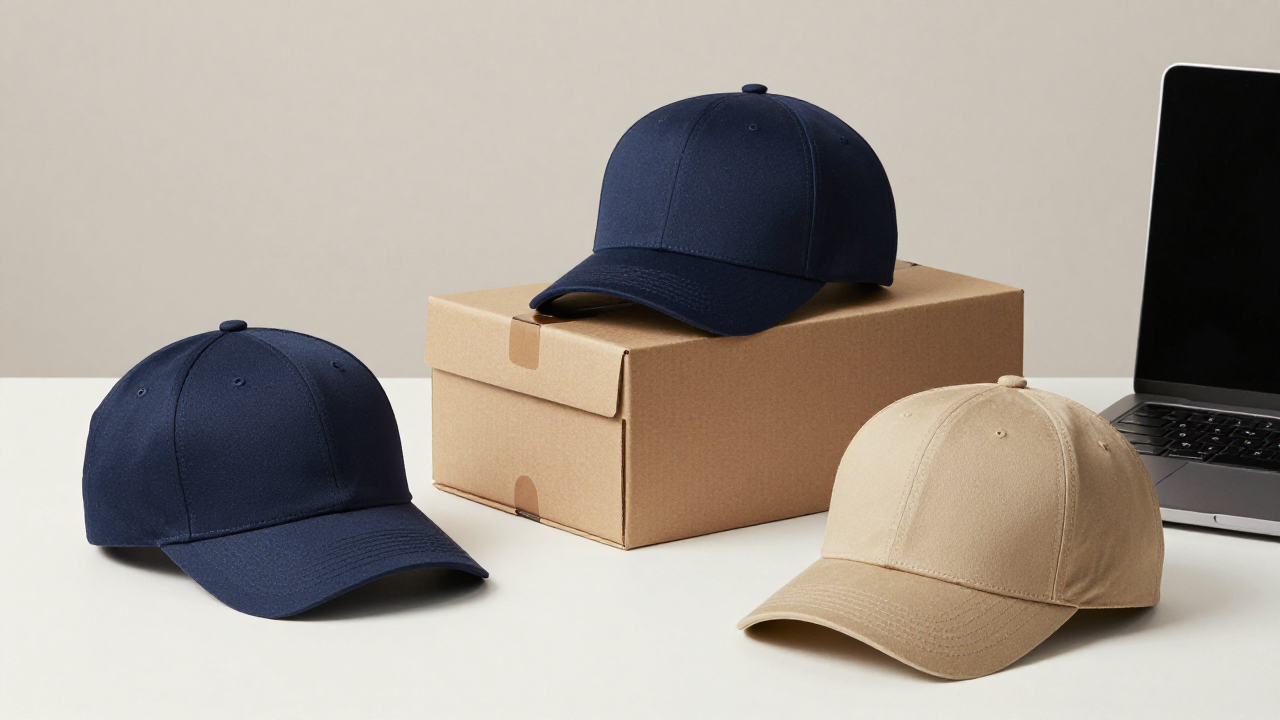
Before placing a custom cap order, ask seven questions of every cap manufacturer on your shortlist: factory type, construction experience, MOQ and full landed cost, sample and inspection evidence,…
artwork ownership, production milestones, and reorder terms. Buyers who skip these questions lose more to rework and missed launch dates than they ever save on unit price.
What Should You Ask Cap Manufacturers Before Placing a Custom Cap Order?
Choosing among cap manufacturers locks in four things you cannot renegotiate afterward — product quality, landed cost, launch timing, and whether the factory can repeat the order six months later. U.S. buyers typically pick from four supplier types: domestic cut-and-sew factories, blank-cap decorators, overseas OEM suppliers, and private-label partners that blend the last two. Published MOQs run from roughly 50 pieces on some decorated-blank programs to 300–500+ pieces for full cut-and-sew headwear, which is why a quote that doesn't name style, color, fabric, and decoration method is a placeholder rather than a price.
The buyer brief that separates a clean order from a painful one fits on a single page: cap style (6-panel baseball, 5-panel trucker, dad hat, snapback, bucket, performance), fabric and weight, logo files with stitch counts and Pantone numbers, quantity by colorway, in-hand date, and target retail price. Add the market the caps ship into. A $19.99 hat sold at a U.S. music festival and a $44 hat on a DTC site need different trims, packaging, and compliance paperwork. We've watched buyers send the same brief to eleven factories, get eleven wildly different quotes, and conclude the market was chaotic. The market was fine. The brief was vague.
How Do You Verify a Cap Manufacturer's Experience and Factory Capability?
Verify a cap manufacturer with four checks: confirm whether the supplier is a direct factory, trading company, or decorator; confirm the factory actually runs your construction; request date-stamped production photos plus two U.S. references; and confirm open capacity in your production month before paying a deposit.
The failure mode is predictable. In March 2022, a Portland, Oregon streetwear label (call it Northline Supply) placed a 4,000-piece dad hat order through a supplier that presented itself as a factory. Crowns came back at 3.4 inches instead of the 4.0 inches specified, and front embroidery sat 3.2mm off center on roughly 40% of the run. The "factory" was a two-person trading office that had subcontracted to a shop set up for structured trucker hats, not unstructured dad hats. Northline's June drop slipped three weeks; rework and air freight ran near $11,000.
Construction experience is not transferable. A plant that sews crisp 6-panel snapbacks with buckram-backed fronts is not automatically good at soft-crown dad hats, and a knit-cap line says nothing about performance caps with laser-perforated side panels. Ask for photos of your specific construction in comparable fabric and a comparable decoration method — 3D puff embroidery behaves differently than flat stitch, and a woven patch behaves differently than a heat-transfer label.
A live video walk-through during your production month settles the factory-versus-trader question faster than any certificate. We've run cut-and-sew in China since 2008, and the tell is always the same: a real factory can pan the camera to the Tajima or Barudan embroidery line running your order under its own roof. A trader improvises.
What Is the MOQ, Unit Price, and Full Landed Cost for Custom Caps?
Custom cap MOQ ranges from about 50 pieces for low-minimum decorated blanks to 300–500+ pieces for full cut-and-sew production, and landed cost typically runs 1.6x to 2.2x the FOB unit price once freight, duty, and domestic handling are added.
Here is the mistake that repeats every quarter. In August 2023, a promotional distributor in Austin, Texas won a 1,200-piece trucker hat program on a $3.85 FOB quote from an overseas supplier. Landed cost closed at $6.20 per cap after ocean freight, Section 301 duties, brokerage, and drayage. A Dallas decorator had quoted $5.95 all-in on domestic blanks with a 12-day turnaround. The Austin distributor lost the renewal at the first reorder.
MOQ is never one number. Ask for minimums by exact style, by color, by fabric, by logo method, by size run, and by branded component — custom woven labels, custom snaps, and custom sweatbands each carry their own floor. That last one trips up more buyers than any other line item.
Require a written quote covering the full stack, not just the cap:
Tariff treatment on Chinese-made headwear has changed more than once since 2018. Any landed-cost model older than 90 days is a guess, so ask your customs broker to re-run the numbers before you sign a purchase order.
How Do Cap Manufacturers Prove Fit, Materials, and Logo Quality?
A cap manufacturer proves fit and quality with three physical artifacts: a development prototype, a decoration strike-off on the actual fabric, and a signed pre-production sample with measurements and Pantone references attached. Digital mockups prove nothing about crown depth, brim curve, or embroidery density.
In July 2024, an e-commerce seller approved a 3D puff embroidery spec at 2.5mm height based on a flat PNG. Production arrived at 1.8mm with roughly 6,400 stitches against a target of 9,800. The caps were wearable. They were also visibly cheaper than the sample photos the seller had already run in paid social, and the ad account had spent $23,000 by the time the first returns came in.
Inspect these on the physical sample before you approve anything: crown depth and front panel height, brim depth and curve (2.5–3 inches is the common U.S. range), closure range on snapbacks and strapbacks, seam alignment at the panel joins, fabric weight (mid-weight cotton twill usually lands at 8–10 oz per square yard), color accuracy against the Pantone reference at a ΔE tolerance of 2.0 or tighter, embroidery stitch density at 8,000–12,000 stitches for a standard front logo, patch adhesion and edge finishing, and interior work — grosgrain sweatband stitching, taped seams, and how the label is attached.
Then build an approval master: measurements with tolerances, Pantone numbers for every color including thread, artwork version and file name, label placement, packaging spec, and a written revision limit of two rounds. Ask whether inspection happens at material receiving, inline during production, and at final packing, and request the checklist. AQL 2.5 is a reasonable default for headwear; anything sold to buyers under 12 also needs CPSIA tracking labels and third-party testing evidence.
When Can the Cap Manufacturer Deliver Samples, Bulk Production, and Reorders?
Sample timelines run roughly 3–15 days and bulk production needs 24–30 days for decorated blanks or 8–14 weeks for full custom cut-and-sew, plus 18–35 days of ocean transit to a U.S. port. Budget 5–10 additional days for customs clearance and inland delivery.
Buyers get burned by collapsing these stages into one promised date. In October 2021, a Columbus, Ohio buyer received 12 pallets of caps at the Port of Long Beach on schedule, then watched them sit for 19 days because the FOB terms left drayage unbooked and nobody had assigned the task. The caps missed a Black Friday retail window by eight days and went to a liquidator at 40% of plan.
Separate the schedule into its real parts: artwork confirmation, material sourcing (custom jacquard, specific Pantone fabric, or imported hardware can add 2–3 weeks), sampling, revisions, buyer approval, bulk production, inline and final inspection, packing, and shipping. Then ask the factory for the latest approval date that still hits your in-hand date. That single question surfaces hidden buffer in a way that "what's your lead time" never does.
Reorder terms deserve the same scrutiny. Confirm how long the factory reserves your fabric and dye lot, what a reorder MOQ looks like after the first run, whether rush fees are per-order or per-unit, which Incoterms apply (FOB versus DDP changes who owns port risk entirely), and in writing, who is responsible for delays caused by material shortages versus carrier issues.
What Are the Biggest Mistakes Buyers Make When Choosing Cap Manufacturers?
The most expensive mistake buyers make with cap manufacturers is selecting on the lowest FOB unit price without calculating landed cost and defect risk. The second most expensive is approving digital artwork instead of a physical embroidered or patched sample.
Five patterns show up again and again, and each one is avoidable with a single question:
That last signal is the one buyers underweight most. In our experience, a vendor's response time to a technical question in the quoting phase predicts delivery reliability better than any reference call. Sloppy pre-sale engineering rarely becomes disciplined post-sale production.
Frequently Asked Questions
What is the best cap manufacturer for a small U.S. brand?
For a small U.S. brand, the best cap manufacturer is usually a domestic blank-cap decorator or an overseas factory offering a 50–144 piece program, not a full cut-and-sew plant. Compare three vendors on sample quality, written landed cost, and documented on-time delivery before comparing unit price.
How much do custom caps cost in 2026?
Custom caps in 2026 typically land at $6–$12 each for decorated blanks at 144 units, and $9–$22 landed for full custom cut-and-sew depending on fabric, trim, and decoration. Air freight, low quantities, and multi-color or 3D puff embroidery push costs toward the top of those ranges.
How many caps should a first order include?
A first cap order should cover realistic 90-day sell-through plus 10% for damages and samples. Most U.S. brands testing a new design order 144–288 caps, which clears typical decorated-blank minimums without tying up capital in a design that has not sold yet.
How long does custom cap production take from artwork approval to U.S. delivery?
Custom cap production takes 24–30 days for decorated blanks and 8–14 weeks for full cut-and-sew after artwork approval, plus 18–35 days of ocean transit and 5–10 days for customs and inland delivery to a U.S. warehouse. Air freight cuts transit to 3–7 days at roughly 3x the cost.
How can a buyer tell whether a cap manufacturer is a direct factory or a trading company?
Ask for a live video walk-through of the sewing floor during your production month, the entity name on the business license, and footage of the specific embroidery machine your decoration requires. Trading companies rarely can show a Tajima or Barudan line running your order under their own roof.