
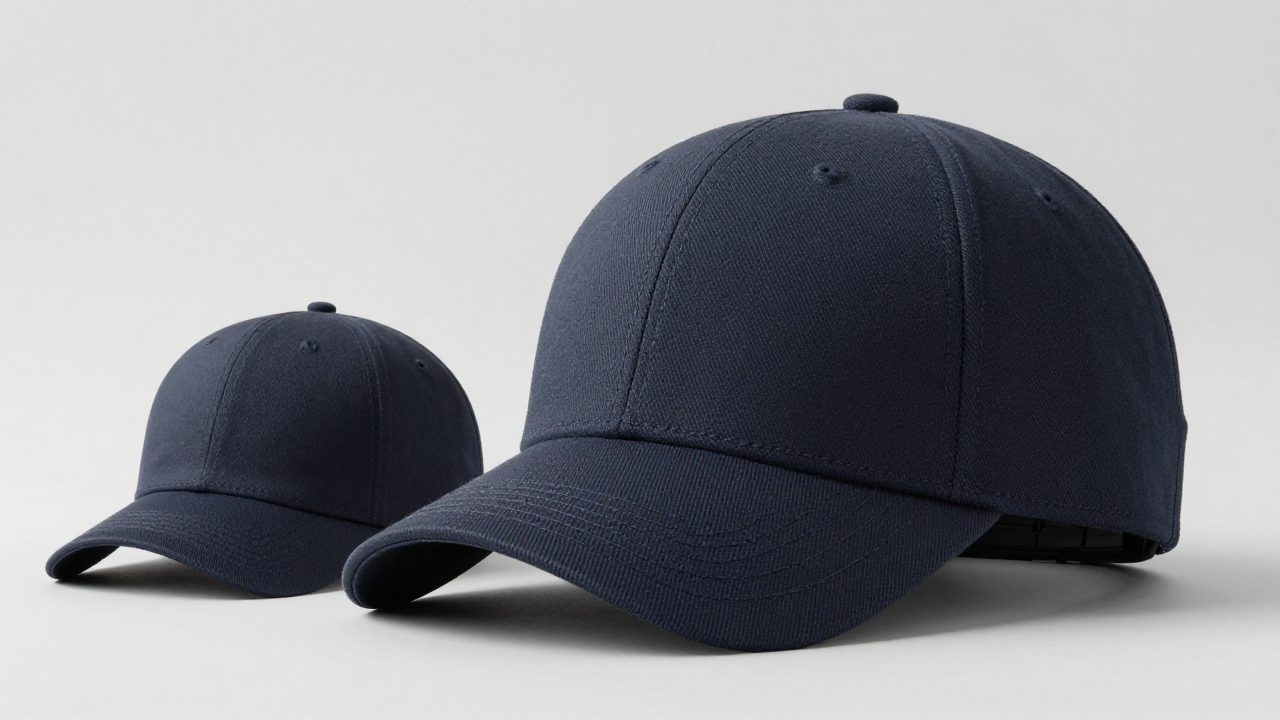
Custom caps cost $3.20 to $6.80 per unit FOB at 500 to 1,000 pieces in 2026, before freight and duty. A six-panel cotton twill cap with a 9,000-stitch front logo sits mid-band.…
Woven labels, custom lining, or a metal slide closure push the same cap past $7.
How Much Does It Cost to Produce Custom Caps in 2026?
Most cap manufacturers quote the crown and stay quiet about trim. That silence is where two quotes for "the same cap" diverge by 40%.
Fabric sets the floor. A 100% cotton twill at 10.5 oz runs $0.30 to $0.50 per cap above a 8 oz poly-cotton blend, and the heavier twill holds structured front panels without buckram stiffener. Unstructured crowns are cheaper to build and cheaper to ship because they compress flat in a carton — roughly 30% more units per container.
Decoration is the second lever:
Then the landed number, which is where buyers get hurt. In February 2023 a streetwear label in Nashville asked us to hit $4.20 per cap landed on 4,000 units. The first container cleared at $6.85 per cap. Nothing about the cap changed — we had both modeled duty at the base MFN rate and left the Section 301 line off the sheet. Section 301 duties on Chinese headwear have moved between 7.5% and 25% depending on HTS line and exclusion status, and those rates get revised, so confirm the current figure with a customs broker rather than trusting any quote sheet. Merchandise Processing Fee (0.3464%) and Harbor Maintenance Fee (0.125% on ocean freight) stack on top. That gap cost the buyer $9,600 and cost us the reorder.
Air freight runs four to six times ocean rates. On a 400-piece test drop it is worth it. On 8,000 pieces it eats the margin you built the program for.
How Do You Choose the Right Cap Manufacturer for Custom Designs?
Choose a cap manufacturer by auditing four things before you wire a deposit: sample turnaround time, in-house embroidery capacity, how the factory controls Pantone drift between dye lots, and whether MOQ is counted per design or per colorway. A factory that subcontracts embroidery will miss your ship date before it misses your quality bar.
Sample turnaround tells you more than any factory tour. Ten working days on a custom cap with a new artwork is a healthy number. If a supplier quotes 25 days for a sample, the same queue will apply to your bulk order in peak season.
Ask directly: how many embroidery heads run in this building? A plant with six single-head machines and 300 Tajima-style multi-heads is a different animal from a trading office that routes everything to a subcontractor in another province. We run our own embroidery floor, and we still lose orders to trading companies quoting $0.15 lower — until the buyer's second drop arrives in the wrong shade.
The dye-lot question is the one nobody asks. In August 2022 a buyer in Portland, Oregon approved a sample that looked perfect. Bulk landed roughly a shade and a half darker. Root cause: the sample was cut from leftover stock fabric, the bulk ran on a fresh dye lot. Measured Delta E came in at 2.4 — visible to the eye but inside most factories' unwritten "close enough" range. We now cut sample and bulk from the same dye lot on any order under 3,000 pieces, and we write a Delta E tolerance of 1.0 into the purchase order. Ask your supplier what their written tolerance is. If the answer is verbal, that is your answer.
On MOQ, the phrasing matters. "200 pieces" means nothing until you ask 200 per design or 200 per colorway. Four colorways at 200 each is 800 units. Some factories quote the first number and invoice the second.
Why Are Cap Manufacturers Rethinking Custom Designs in 2026?
Cap manufacturers are rethinking custom designs in 2026 because order sizes collapsed while decoration setup got cheap. Transfer and DTG decoration now break even at 50 to 100 pieces, and DTC brands that placed one 20,000-piece order in 2019 run six to ten micro-drops a year. Factories still quoting 5,000-piece minimums never see those RFQs.
The buying pattern shifted underneath the factories. TikTok Shop drops, Shopify preorder campaigns, and Amazon's made-to-order tools all reward small first runs with fast replenishment. A brand testing a new market wants 150 caps in three colorways, not a pallet of black.
Headwear resists automation in a way that flat apparel does not. Crown stitching, eyelet setting, and closure riveting are still hand-fed on most lines. A January 2026 news cycle made the point sideways: a Chinese bottle-cap manufacturer publicly deflated AI hype by arguing that pre-digital stamping processes can't simply be automated. Cap assembly sits in the same category, which is exactly why setup costs — not machine speed — drive your unit price.
What did get cheap is short-run decoration. Direct-to-garment printing on structured caps, single-head embroidery with quick-change hoops, and laser-cut patch appliqué all let a factory take a 100-piece order without losing money. We added DTG capability in 2021 for this reason and it now carries about a fifth of our order count at a third of our average order value.
What Are the Key Steps for Implementing Custom Designs in Cap Manufacturing?
Implementing a custom cap program takes five stages across 90 to 120 days: fit and market validation, a graded tech pack, fabric and trim lock, two sample rounds maximum, then a pre-production run at 5% of order quantity before bulk. The pre-production run is the step buyers cut first and regret most.
Fit validation means wearing the sample for a full week, not judging it on a table. Unstructured five-panels behave differently on a 7 3/8 head than a 7 1/8, and the closure style changes how the back panel drapes.
The tech pack is where money gets saved or lost. It needs the crown height in inches, panel count, bill length and curve radius, closure type, sweatband material (cotton twill versus moisture-wicking poly), stitch density per logo, embroidery placement measured from the center seam, and thread color codes in Pantone TCX. Vague tech packs produce three sample rounds and a blown launch date.
Lock fabric and trim before you approve artwork. Thread, taping, and eyelets ship on different lead times than fabric, and a metal closure that arrives two weeks late holds the whole run.
Two sample rounds is the ceiling. If a third is needed, the tech pack was wrong, not the sample.
The 5% pre-production run costs you maybe $200 on a 4,000-piece order and catches the hoop misalignment, the puckered seam, and the shade shift before you have 4,000 of them. We started insisting on it in 2020 after a run of 3,000 caps came off the line with the front logo 4mm off-center. Nobody caught it in the sample because the sample was hooped by hand by a supervisor.
How Do Custom Designs Benefit Cap Manufacturers and Retail Buyers?
Custom caps return more per unit than any other basic in the headwear category. A blank six-panel wholesales near $2.40; that same cap with a 9,000-stitch logo and a woven label retails at $32 to $38 in US DTC channels against a landed cost around $5.50. Gross margin lands between 78% and 84% before ad spend and platform fees.
Sell-through tells the same story. A blank cap in a retail assortment turns maybe twice a year. A licensed or team-branded cap tied to a season or a school calendar turns four to six times, because the buyer has a reason to replace it.
Sports teams are the clearest example. Youth league and high school programs in the US reorder on a fixed annual rhythm tied to spring and fall seasons, and a program that gets the fit right on the first order tends to stay for four or five years. The reorder cadence, not the first order, is the business.
How Can Brands Avoid Common Mistakes in Custom Cap Design?
The expensive mistakes in custom cap programs are predictable: artwork that collapses below 2 inches wide, 100% polyester specified on an unstructured crown, samples approved under office lighting, no dye-lot tolerance written into the purchase order, and freight treated as a rounding error. Each one is cheap to prevent and costly to fix.
One more, and it is the one I see least discussed: buying the cheapest closure. A plastic snap saves about $0.25 per cap and fails at roughly 60% of the cycle count of a metal slide. On a $35 retail cap, that $0.25 buys you returns and one-star reviews.
Frequently Asked Questions
How long does custom cap production take?
Custom cap production takes 35 to 45 days after sample approval, plus 30 to 35 days of ocean freight from China to a US port. Air freight cuts transit to 7 to 10 days at four to six times the cost. Rush programs at 20 to 25 days exist but usually cap out around 1,500 pieces.
What is the minimum order quantity for custom caps?
Most cap manufacturers set MOQ at 100 to 300 pieces per colorway, not per design. Custom dye lots, jacquard taping, and metal closures push MOQ to 500 to 1,000 pieces because the mill runs a full batch. Under 100 pieces, heat transfer on stock blanks is the realistic route.
Are custom caps profitable for DTC brands?
Yes. At a $5.50 landed cost against a $35 retail price, a custom cap carries about $29.50 in gross profit before ad spend and platform fees. Inventory depth is the constraint: six colorways at 300 pieces each ties up roughly $9,900, so most brands launch with two shapes.
What decoration method works best for orders under 200 pieces?
Heat transfer. Embroidery digitizing and machine setup run $75 to $150 per logo, which adds $0.75 to $1.50 per cap at that volume. Transfer setup runs $90 to $150 flat with no per-piece penalty, and 3D puff embroidery at 200 pieces rarely justifies the tooling.