


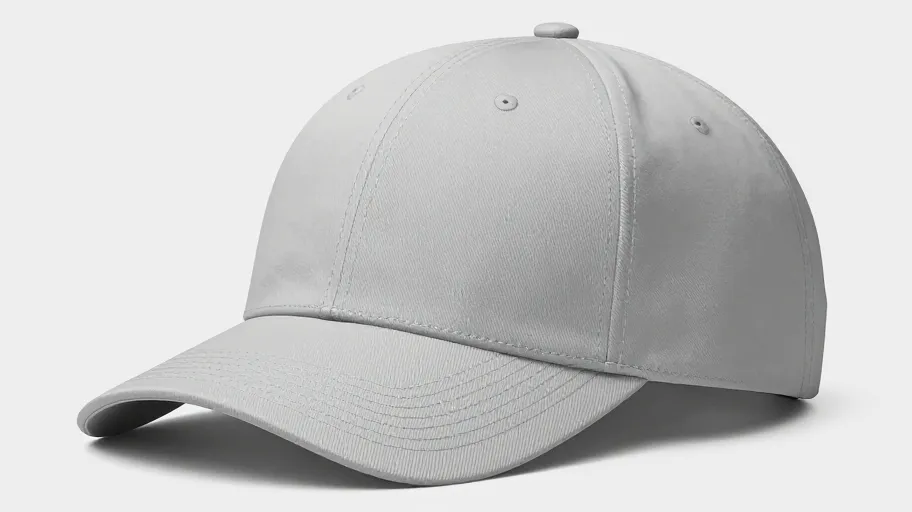
Most brands lose thousands and months by skipping one step before contacting a cap manufacturer in China. Here’s what to include in your baseball cap tech pack to get it right the first time — and why precision beats luck every time.
Why factories need more than sketches and vibes
Sending mood boards or voice notes to a cap factory is like handing a chef a photo of lasagna and saying “make this” — without ingredients, measurements, or steps. Chinese cap manufacturers aren’t designers. They’re precision executors. When instructions are vague, they fall back on default templates built for mass-market hats, not your brand’s vision. That mismatch means rejected samples, delays, and hidden costs. A detailed tech pack replaces guesswork with clarity so your cap manufacturer builds exactly what you want — not what they assume.
Panel count and crown shape define fit and style
The number of fabric panels in a cap’s crown directly affects its silhouette, volume, and structure. A 6-panel design creates a taller, structured look common in premium streetwear, while 5-panel caps run lower and slimmer. Getting this wrong changes the entire aesthetic. Specifying panel count means your sample matches your brand’s identity from day one, because the factory won’t substitute based on inventory. Include seam alignment details too — center-back seams matter for logo placement and symmetry.
Closure type impacts sizing and comfort
Whether you choose a snapback, adjustable strap, or elastic fit determines who can wear your cap comfortably. Plastic snapbacks with #3 rivet spacing offer five size adjustments and a clean finish. Metal buckles add durability but increase cost. Elastic fits work for kids or unisex styles but limit branding space. Defining closure specs upfront means faster approvals, because there’s no back-and-forth over functionality. It also ensures consistency if you later scale to a second cap factory in China.
Buckram stiffness shapes long-term performance
Buckram is the stiff fabric inside the front panel that keeps your cap’s face from sagging. Medium-weight buckram holds shape without feeling rigid. Full-panel vs. partial placement changes drape and breathability. If unspecified, factories often use lighter grades to cut costs — leading to floppy fronts after wash cycles. Calling out thickness and coverage means your cap maintains its structure over time, because quality isn’t left to interpretation. This matters for customer retention: nobody repurchases a hat that loses its form.
Stitching density affects durability and look
Stitches per inch (SPI) determine how tightly seams hold together. 8 SPI is standard for clean topstitching that resists unraveling. Going lower risks weak seams; going higher adds unnecessary cost. Using UV-resistant #69 thread prevents fading under sunlight — critical for outdoor brands. These details mean fewer defects in bulk production, because structural integrity is locked in during sampling. One lifestyle brand reduced seam failures by 90% just by specifying thread type and stitch count in their tech pack.
Washing standards control shrinkage and feel
An enzyme wash softens fabric and gives vintage character, but without clear parameters, results vary wildly. Defining the wash cycle and setting a maximum 2% shrinkage means every batch feels consistent, because dimensional stability is measurable. Adding a softener rinse boosts hand-feel without compromising fiber strength. This level of detail prevents post-production surprises — like caps arriving too small or logos cracking after laundering. It also supports sustainability claims when paired with water usage data.
Quality checkpoints prevent bulk disasters
Include measurable QC steps like seam pull-tests (minimum 15 lbs force) and embroidery density (stitches per square inch). These benchmarks mean problems are caught before shipping, because every unit can be audited against the same standard. One brand avoided a 10,000-unit recall by requiring pre-shipment lab tests for colorfastness and pilling resistance. Traceable specs also satisfy retail buyers at Nordstrom or REI, who demand proof of compliance. Your tech pack becomes legal-grade documentation — not just a reference file.
One tech pack, endless future efficiencies
Every approved tech pack becomes a reusable template. Launching a new colorway? You only update fabric codes. Expanding into trucker hats? Start from the same base construction. This means faster development cycles, because you’re not rebuilding from scratch. Teams spend 70% less time on revisions when core specs are already validated. For brands scaling across multiple cap manufacturers in China, it ensures uniformity without constant oversight. What starts as cost avoidance becomes a scalable product engine.
#cap manufacturers china, #headwear manufacturers china, #cap factory








