



Outdated tech packs cause costly mistakes on the cap factory floor. Switching to structured, data-rich documentation minimizes sampling delays, prevents fabric waste, and gets designs into storefronts faster. Real-world data from leading cap manufacturers proves that clear specifications are the foundation of profitable headwear production.
Why Production Delays Keep Happening in Cap Factories
Inconsistent technical sketches leave too much room for interpretation. When a factory receives loose tech notes instead of exact blueprints, errors are inevitable. For example, a U.S. streetwear brand recently faced a six-week delay when their supplier stitched 12,000 snapbacks with a flat 8mm brim curve instead of the requested 10mm pre-curved shape. The issue? The hat tech pack lacked a clear cross-section measurement callout.
Production data indicates that over 70% of headwear quality defects originate in this pre-production phase. Without a standardized specification lock, communication gaps widen across different languages and time zones, turning a minor front-end oversight into a massive container of unsellable merchandise.
Experienced sourcing managers now rely on a strict pre-production checklist before signing off on bulk orders. Evaluating key parameters—such as panel crown height, embroidery backing thickness, and stitch density per inch—directly impacts first-run yield rates. Implementing a rigid tech pack verification process cuts sampling revisions by nearly half and accelerates final sample approvals.
When design details are locked in through clear digital workflows, factory floor errors drop significantly. A premium lifestyle brand managed to reduce their sampling rounds from five to just two, cutting their overall time-to-market by nearly 60 days. This level of clarity gives brands true control over their manufacturing timelines.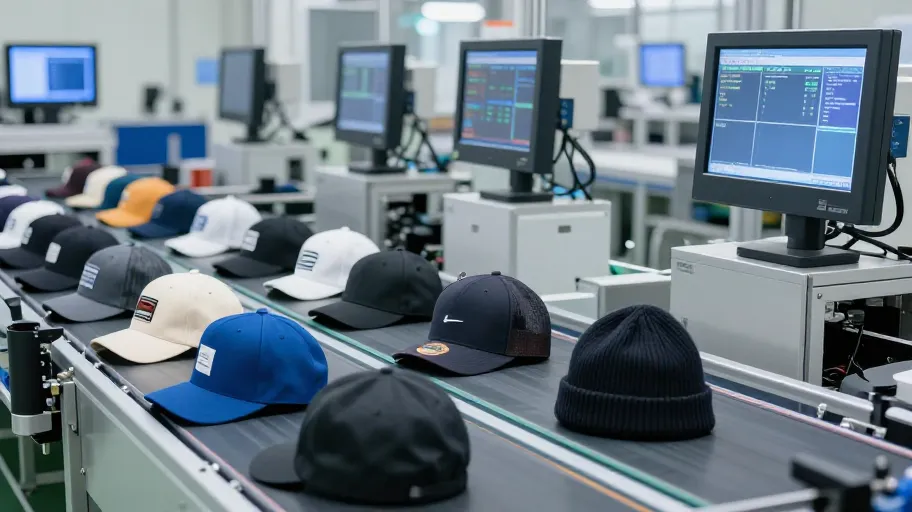
What Sets Modern Hat Tech Packs Apart
A reliable hat tech pack is no longer just a static PDF attachment sent over email. It serves as a live, centralized blueprint. Whether your production team is coordinating across mainland China, Vietnam, or head offices in Los Angeles, every party must access identical version histories to prevent spec drift.
Legacy spreadsheet templates fail because they hide crucial updates within long email threads. In contrast, modern headwear specification systems embed high-resolution video annotations for seam taping, precise dimensional tolerances for the buckram stiffener, and live Bills of Materials (BOM). This prevents old component versions from accidentally entering the cutting room.
The industry is moving toward advanced 3D digital prototyping. Simulating fabric panel tension, crown alignment, and snap closure placement on a 3D model allows a snapback manufacturer to catch crown buckling issues before a single yard of twill or wool blend is cut.
Fixing structural issues during the digital design phase eliminates downstream bottlenecks. Factories utilizing these precise blueprints report a notable drop in fabric scrap rates and fewer idle sewing lines. Precision at the start creates a predictable, highly efficient production run.
How Snapback Manufacturers Calculate Real ROI
Upgrading to professional-grade documentation delivers a clear return on investment within the first few production cycles. It reduces costly remake loops and avoids emergency air freight fees caused by factory misunderstandings.
One mid-sized supplier saved an estimated $180,000 in a single year by eliminating fabric overruns and rush shipping charges. These losses usually stem from the hidden costs of poor communication—constant back-and-forth emails, sample remakes, and missed delivery windows that retail buyers penalize heavily.
Clear documentation solves this by integrating 3D visuals, precise material origin tracking, and verified measurement tolerances. This speeds up factory approval cycles because workshop managers spend less time guessing and more time running the sewing machines.
Beyond daily efficiency, standardized tech packs make social compliance and sustainability audits much simpler. With material compositions, chemical compliance certificates, and supplier approvals embedded directly into the documentation, factories can drastically reduce the time spent preparing for factory audits.
The practical benefit is clear: faster delivery times, lower overhead, and stronger trust between brands and factories. Investing in accurate specifications optimizes every stage of the sourcing and assembly process.
Keywords: cap manufacturers, cap factory, hat tech pack, snapback manufacturer








