
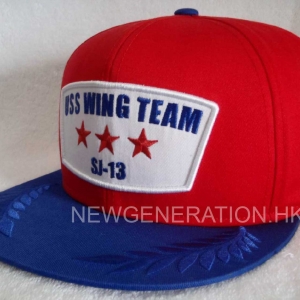
Successfully planning a project for custom hats low moq requires shifting your mindset from "ordering inventory" to "managing a supply chain validation process." To minimize financial risk, you must strictly define your level of customization, prepare precise technical specifications, and negotiate a pilot production phase that allows for quality verification before committing to larger volumes. This approach ensures you control cash flow while securing market-ready products.
Content-Production Brief
| Component | Detail |
|---|---|
| Search job | Provide a procedural guide for planning a custom headwear production run with manageable minimum order quantities. |
| Reader | New brands and overseas corporate buyers sourcing from Shenzhen manufacturers. They lack deep factory experience and fear cash flow traps. |
| CTA | Get an Inquiry Brief |
| Decision framework | The "Prototype-to-Production" Matrix: A phased approach separating material verification from volume scaling. |
| Conversion barrier | Fear of hidden costs, inability to verify quality before bulk commitment, and confusion over what "Low MOQ" actually entails (e.g., stock vs. custom). |
| Fact boundary | No specific MOQ numbers, prices, lead times, or client names. Treat all production specifics as variables for supplier confirmation. |
Signal & Competitor Rationale
| Evidence type | Implication for content |
|---|---|
| Queue reason: knowledge base priority | The business needs foundational content that establishes authority for new buyers. The article must focus on "how-to" education rather than aggressive selling. |
| GSC data note (pending) | Search signals indicate intent for "preparation" rather than immediate purchasing. The content must address the planning phase to capture top-funnel traffic. |
| Local NG knowledge base | Internal evidence suggests clients struggle with the trade-off between customization level and minimums. The content must explicitly distinguish between stock decoration and full custom manufacturing. |
Pain Map
| Buyer concern | Decision obstacle | Content hook | Conversion opportunity |
|---|---|---|---|
| Cash flow risk | "I can't afford 500 units of a design that might not sell." | Explain the "Batching Strategy" for testing designs. | Offer a structured Brief to clarify costs. |
| Quality uncertainty | "Low MOQ might mean low quality." | Define quality verification checkpoints (Pantone, stitching). | Drive engagement to request specific quality standards. |
| Supply chain opacity | "I don't know what I don't know about materials." | Material selection checklist (fabric weight, closure types). | Capture leads by offering to review material choices. |
Defining Your Customization Level
For new brands and corporate buyers, the term "Low MOQ" (Minimum Order Quantity) is often misunderstood. It is not merely a small number; it is a supply chain strategy that involves trade-offs between customization depth, unit cost, and speed. When sourcing from Shenzhen, the manufacturing hub for global headwear, success depends on how well you communicate your constraints and technical requirements to the cap factory.
The first step in planning without guessing is to categorize what "custom" means for your project. In OEM/ODM manufacturing, customization exists on a spectrum. Understanding where you sit on this spectrum dictates the MOQ.
- Stock Decoration: This involves purchasing pre-made base hats (blanks) and applying your logo via screen printing, heat transfer, or embroidery. This generally offers the lowest possible entry threshold because the raw materials are already produced.
- Semi-Custom: Here, you select a factory's existing silhouette but customize the fabric, color, or labeling. This requires the factory to source or dye specific materials for you, which typically triggers a higher minimum than stock blanks due to material run lengths.
- Full Custom (OEM): This involves creating a new mold, developing a unique shape, or using custom yarns. This is the deepest level of customization and traditionally carries the highest MOQs.
To plan effectively, you must verify if your brand identity can be achieved through Stock Decoration or Semi-Custom solutions before insisting on Full Custom manufacturing. This decision alone can determine project feasibility.
The Prototype-to-Production Framework
To remove uncertainty, use the Prototype-to-Production Matrix. This framework separates the project into distinct phases, ensuring you do not pay for bulk production until the prototype meets your standards.
Phase 1: Technical Specification
Before contacting a supplier, document your requirements. Guesswork leads to expensive mistakes. You need to define:
- Profile: Dad hat, trucker, bucket, or beanie?
- Material: Cotton twill, polyester blends, or performance fabrics?
- Closure: Snapback, buckle, or stretch-fit?
- Artwork: Vector files (AI or PDF) are essential. Note the dimensions and location of the logo.
Phase 2: The Pre-Production Sample (PPS)
Never approve a project based on a digital photo alone. You must require a physical pre-production sample. This sample confirms the stitching density, the color accuracy of the fabric (Pantone matching), and the overall fit. This phase is where custom hats low moq planning is critical—you are negotiating the cost and speed of this specific validation step.
Phase 3: Pilot Batch
Instead of jumping to your ideal annual volume, negotiate a pilot run. This serves as your first commercial order. It allows you to test the market with a lower risk while establishing a production history with the factory.
Strategic Batching for Volume Efficiency
One of the most effective ways to navigate MOQ requirements is through "Strategic Batching." Cap manufacturers often set minimums based on the efficiency of their machinery and dye lots. You can leverage this by grouping your requirements.
- Color Grouping: If you require three different hat colors, ask the factory if they can be dyed in the same lot or if the fabric is sourced from the same supplier. Sometimes, using the same base fabric color but different thread colors for logos can streamline the process.
- Style Consolidation: Reducing the variety of base styles can lower your per-unit minimum. For example, ordering 500 units of one style is generally easier and cheaper than ordering five different styles of 100 units each.
- Decoration Consistency: Keeping the logo size and placement consistent across different hat colors allows the factory to set up the embroidery machines once, saving time and potentially reducing setup fees.
Decision Table: Trade-Offs in Low-MOQ Sourcing
When planning your project, use this table to decide where you can be flexible to achieve your volume goals.
| Priority option | Customization depth | Lead time | Unit cost | Best for |
|---|---|---|---|---|
| Speed to market | Low (Stock Blanks) | Fastest | Higher | Events, promotional giveaways, trend testing. |
| Brand uniqueness | High (Custom Yarns/Molds) | Longest | Lowest (at high volume) | Established brands launching flagship collections. |
| Balanced approach | Medium (Semi-Custom) | Moderate | Moderate | Growing brands needing specific colors/fits without huge inventory. |
Critical Approval Questions for Your Supplier
To move from planning to execution without guessing, you must ask the following questions. Do not assume the factory will volunteer limitations.
- Material sourcing: "Do you source these specific fabrics in-house, or is there a longer lead time for raw material procurement?"
- Sampling costs: "Is the cost of the pre-production sample credited back to the bulk order if we proceed?"
- Tolerance standards: "What are your accepted dimensional and color tolerance variances for a run of this size?"
- Quality assurance: "Can you provide a quality control checklist that will be used during the production of my order?"
- Scalability: "If this pilot run sells out, what is the turnaround time for a repeat order, and will the price tier change?"
Pre-Production Checklist
Before signing off or issuing a purchase order, ensure you have the following confirmed:
- Vector Artwork: Confirmed in .AI or .EPS format.
- Pantone Codes: Defined for both fabric and thread colors.
- Size Chart: Verified against the target market (e.g., US vs. EU sizing).
- Sample Approval: Written sign-off on the physical pre-production sample.
- Packaging Specs: Instructions for individual polybagging or retail boxes.
Frequently Asked Questions
Does "Low MOQ" mean I can order just one hat?
Generally, no. In a B2B manufacturing context, "Low MOQ" refers to a minimum threshold significantly lower than industry standards (which might be thousands of units). It typically refers to small batches ranging from dozens to a few hundred units, depending on the customization level.
Why is the unit price higher for smaller orders?
Manufacturing involves fixed costs. Setting up embroidery machines, preparing patterns, and sourcing fabrics take the same amount of time regardless of whether you produce 50 or 5,000 hats. Smaller orders spread these fixed costs over fewer units, resulting in a higher per-unit price.
Can I mix different styles to reach the MOQ?
This depends on the factory's policy. Some manufacturers allow "assortment" where you can mix colors of the same style to reach a total count. Mixing entirely different styles (e.g., beanies and bucket hats) is rarely counted toward a single MOQ because they require different materials and machinery setups.
How do I handle shipping costs for small orders?
For smaller batches, air freight or express courier services are often the only viable options to meet deadlines, though they are more expensive per kilogram than sea freight. Planning your logistics timeline is as important as planning the production.
What if the sample looks different from the bulk order?
This is why a "Golden Sample" is vital. You must retain a physically signed sample from the factory. When the bulk production arrives, you compare it against the Golden Sample, not just a digital photo. Ensure your contract specifies penalties or remedies for significant deviations from the approved sample.
Get Your Inquiry Brief
Navigating the complexities of custom hats low moq requires a partner who understands the balance between quality and quantity. Don't leave your brand's reputation to guesswork.
Get Your Inquiry Brief →Ready to validate your specifications? Download our Low-MOQ Project Checklist to ensure you have every detail covered before your first production run.