


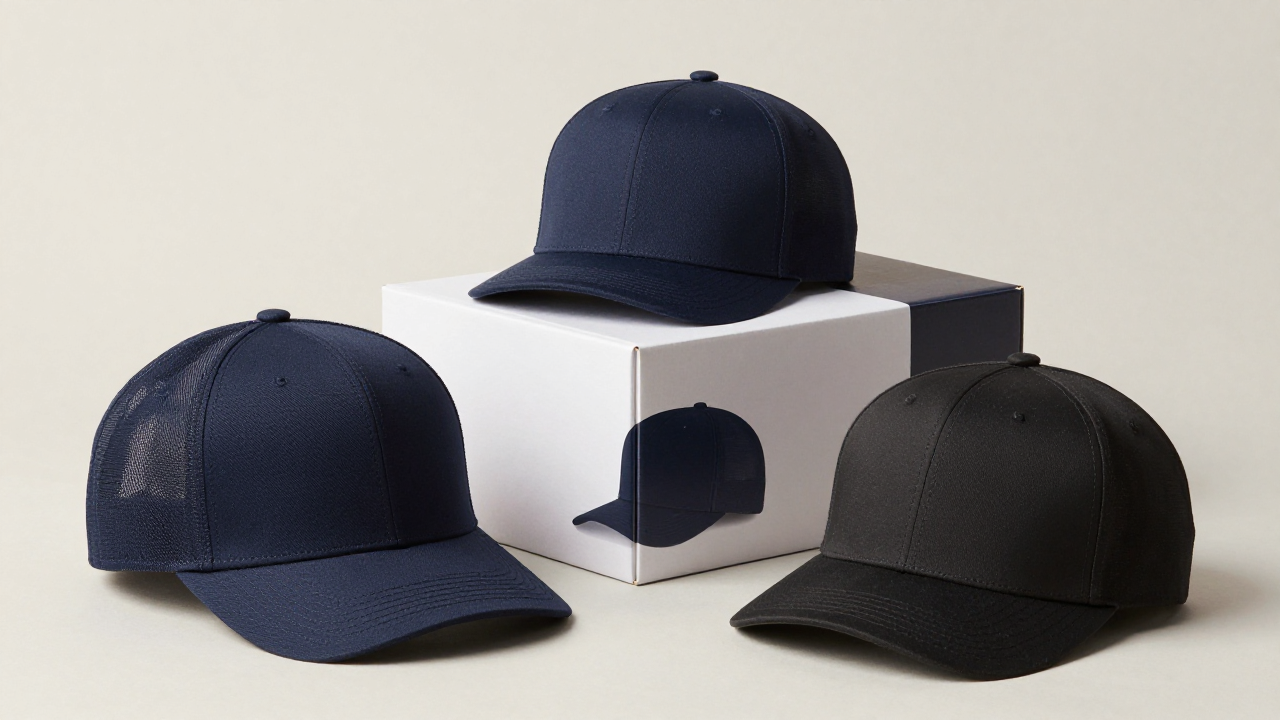
A functioning cap production line costs between $280,000 and $900,000 to build on US soil and roughly $140,000 to $400,000 to set up in Asia.…
Launching private label through an existing cap manufacturer runs $12,000 to $90,000. Typical payback lands somewhere between 28 and 52 months.
What Does It Actually Cost to Set Up Cap Manufacturing in 2026?
That spread is wide because "cap manufacturing" covers two very different businesses. A six-head Tajima embroidery machine alone runs $48,000 to $65,000 new. Ten industrial sewing machines at $2,800 apiece, a heat press for the back closure, a die for your custom buckle, 9,000 square feet of floor, and a cutting table get you to the low end. Add an in-house screen print line and a second embroidery head bank and you're at the ceiling.
The private-label route is cheaper because you're renting someone else's capital. You pay for patterns, digitizing, samples, and the first purchase order.
Per-unit math at 3,000 pieces typically lands at $2.10 to $3.40 FOB for a structured cotton twill cap with a 9,000-stitch front logo. Domestic production of the same cap runs $7.50 to $11.00 — the gap is labor, not material. A US cut-and-sew operator costs $16 to $22 an hour fully loaded; an inland Chinese line runs $2.80 to $4.20 an hour loaded.
Which Costs Do Cap Manufacturers Hide From the First Spreadsheet?
Hidden costs typically equal 18% to 34% of first-year spend on a cap program. Almost none of them appear in the vendor quote a buyer receives in January.
Here's the pattern we see from the manufacturing side. A buyer compares three quotes, picks the middle one, and builds a margin model on the FOB number. Five cost categories then show up later.
Maintenance and consumables. Needles, bobbins, backing, and thread cones run $0.04 to $0.09 per cap in consumables alone. Machine servicing on a six-head embroidery unit is $1,800 to $3,000 a year if you keep it honest, more if you don't. Downtime. A single head strike costs 20 to 40 minutes of machine time. At roughly 60 caps an hour, one thread break event that cascades across heads can wipe out 40 caps of output. Factories running at 92% uptime versus 78% uptime produce a 14-point margin difference on the same equipment. That's the number nobody quotes. Migration cost. Switching cap manufacturers mid-program means new pattern digitizing, new sample approvals, sometimes a new buckle die. Budget 6 to 10 weeks and $2,000 to $5,500 in re-tooling. In April 2023 a brand in Columbus, Ohio, moved a 14,000-piece annual program from one factory to another to save $0.22 a unit. They spent $4,100 on re-sampling and lost nine weeks of a spring window. The unit savings were worth $3,080. Labor turnover. Trained cap sewers are the hardest hire in cut-and-sew. Replacing one costs 6 to 11 weeks of reduced line speed while the new operator builds up to rate. Freight and duty volatility. A 40HQ from Ningbo to Los Angeles quoted $14,800 in March 2021. The same lane quoted $2,300 in October 2023. Section 301 duties on Chinese headwear have ranged from 7.5% to 25% depending on the HTS line since 2019, and the $800 de minimis exemption that small sellers leaned on closed for Chinese-origin goods in May 2025. Anyone modeling a flat landed cost across a 12-month horizon is guessing.How Do You Calculate ROI on Cap Manufacturing Accurately?
Use contribution margin, not gross margin, and divide against total capital deployed — equipment plus inventory plus the cash trapped in the supply chain.
The formula in plain text:
ROI = (Annual net contribution from the cap program − Annual equipment depreciation) / Total capital deployed × 100And for payback:
Payback months = Total capital deployed / Monthly net contributionA worked example from a private-label launch we supplied in 2023. A Denver brand put $14,200 into patterns, digitizing, and sampling, then placed a 9,000-piece order across four colorways at $3.05 FOB, which landed at $4.62 a unit after freight and duty — $41,580. They added $18,000 for launch photography, a 3PL onboarding fee, and paid sampling on two rejected colorways. Total capital deployed: $73,780.
Year one they sold 6,300 units at an average of $29. Landed cost on those units was $29,106. Fulfillment and shipping averaged $4.40 an order, or $27,720. Payment processing at 2.9% plus $0.30 came to $7,188. Returns at 5.8% cost $10,600 in product and freight. Paid acquisition ate $34,000.
Net contribution: $182,700 − $29,106 − $27,720 − $7,188 − $10,600 − $34,000 = $74,086.
ROI = $74,086 / $73,780 = 100.4% in year one. Payback hit in month 11. That's the good outcome, and it happened because sell-through on the two core colorways ran 84% while the two fashion colorways ran 31%. The blended number hides a lot.
Where Do Most People Get the Math Wrong?
The single most common error is treating unsold inventory as a neutral asset instead of a cash drag. A cap sitting in a 3PL has already consumed your cash, and it accrues $0.32 to $0.55 a month in storage and handling.
We watched this play out with a Nashville brand in September 2024. They ordered 6,000 caps across five colorways, landed at $5.40, and modeled payback at nine months on the assumption of 75% sell-through in 180 days. Actual sell-through at day 180 was 61%. The remaining 2,340 units moved at cost through a discount channel over the following five months. Real payback was 19 months. The plan wasn't wrong about margin — it was wrong about velocity, and velocity is what pays back capital.
Three other errors worth naming. First, amortizing tooling across the first order only instead of across the program life, which makes the first run look expensive and later runs look artificially cheap. Second, ignoring MOQ fragmentation: four colorways at 300 units each is not the same cost basis as one colorway at 1,200 units, and the difference is $0.35 to $0.60 a cap in setup allocation. Third, modeling zero rejects. First production runs on a new cap pattern typically come in at 3% to 5% defect rate; steady state settles near 1.5%.
Also worth saying out loud: your landed cost is not your cost. Landed cost plus the cost of the cash tied up in it is your cost. At a 9% cost of capital, $40,000 of inventory held for an average of 130 days carries about $1,280 in financing cost that never appears on a P&L line.
When Is It Not Worth Investing in Cap Manufacturing?
Skip the investment if annual headwear revenue is projected below $180,000 for private label or $1.2 million for your own floor. Below those thresholds the fixed costs don't amortize and you're paying for capacity you can't fill.
Skip it if your design brief calls for more than eight colorways per season at under 400 units each. Setup allocation will push your unit cost above what a stocked blank plus heat transfer would cost you, and heat transfer on a $6.80 blank beats a $9.40 custom sew every time at that volume.
Skip it if you can't absorb a 10-week lead-time swing without breaking a launch date. Cap manufacturing in 2026 still has fabric mill queues, and cotton twill dyelots run 4 to 6 weeks before the cut-and-sew window even opens.
And skip it if the only reason is unit cost. In our experience since 2008, brands that came to us purely chasing a $0.30 lower FOB number almost always came back within a year to fix color consistency or trim quality — and paid more the second time.
The investment makes sense when you have a repeat purchase cycle, a colorway count you can actually sell, and enough working capital to survive one slow quarter without discounting. Those three conditions matter more than the quote.
Frequently Asked Questions
How much does it cost to work with cap manufacturers in 2026?
A private-label cap program through an existing cap manufacturer typically costs $12,000 to $90,000 to launch, covering patterns, digitizing, samples, and a first order of 1,500 to 9,000 units. Building your own production line costs $280,000 to $900,000 domestically.
How long does it take to break even on custom caps?
Most cap programs break even in 28 to 52 months when you build your own line, and 11 to 24 months on private label. Actual payback depends on sell-through velocity, not unit margin. Programs that assume 75% sell-through in six months usually miss.
What is a typical MOQ for cap manufacturers?
Most overseas cap manufacturers set minimums at 300 to 500 units per colorway. Domestic US factories typically require 1,200 units per style. Digitizing and setup fees are charged once per logo and amortize across the full program, not per order.
Why do custom cap costs vary so much between suppliers?
Fabric weight, stitch count, closure type, and colorway fragmentation drive the spread. A 9,000-stitch front logo on 10 oz cotton twill with a metal snapback costs roughly $0.90 more than a 4,000-stitch logo on 6 oz polyester with plastic closure.








