


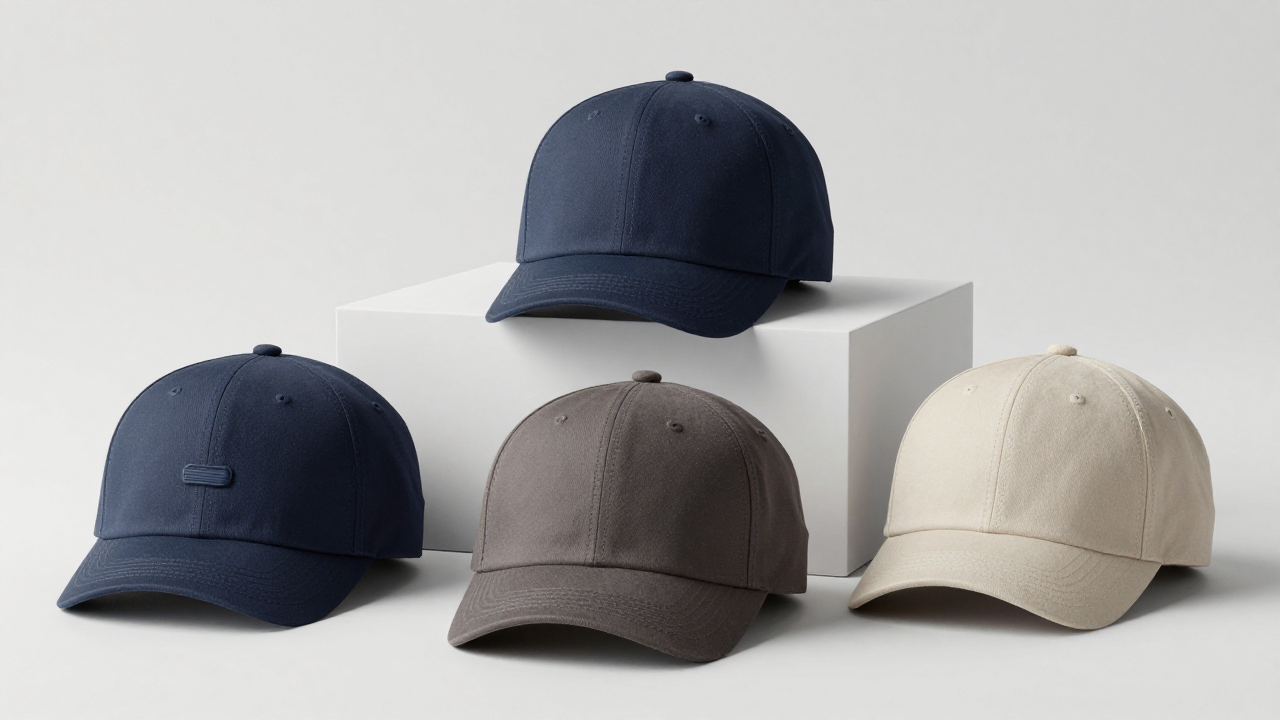
The Cap Factory Is No Longer Just a Manufacturer
In the time it takes to read this paragraph, about 120 custom hats will roll off a production line somewhere in Zhejiang — and 80 of them will already be destined for a streetwear brand in Los Angeles or a golf resort in Scottsdale. As a company that has been inside the “cap factory” world since 2008, New Generation has watched headwear go from a merch afterthought to the centerpiece of a fit. You don’t sell a blank unstructured dad hat for $48 because people need sun protection. You sell it because a stylist on Fairfax Avenue posted a TikTok, and now 30,000 Gen Z kids want that exact washed-out sage green with a puffy embroidered serotonin molecule on the front.
And that’s where the whole game has changed. Cap factories used to be order-takers. By 2026, if you’re not part design bureau, part material scientist, and part platform for micro-brands, you’re a commodity waiting to be replaced by someone in Hanoi who can ship 50 pieces in six days. We’ve been that commodity. We’ve also lost a $62,000 order in May 2022 because our sampling turnaround was nine days instead of four. These aren’t hypotheticals — they’re scar tissue, and they’ve forced us to watch the market with a level of paranoia that turns into usable intelligence.
Every brand we’ve spoken with in the past eight months — from a 12-person boutique in Brooklyn to a Midwest promotional products distributor — is trying to crack the same puzzle: what cap styles will matter in 2026, and which factories can actually deliver them before the trend is dead. The answer is sharper than most people want to hear. Most styles being hyped right now won’t survive the next turn of the TikTok algorithm. But five specific categories have enough structural demand, runway, and supply-chain feasibility that I’d stake a factory lease on them.
Five Styles That Will Define 2026 — Whether the Industry Is Ready or Not
I won’t bore anyone with a grand theory of fashion cycles. Here’s the actual landscape, backed by what we’re seeing in purchase orders, sampling requests, and the quiet panic of brand managers in their late-night WhatsApp messages.
1. The Cap That Proves It’s Not Killing the Planet
The eco-cap is no longer a press release gimmick. In October 2023, a survey by the American Apparel & Footwear Association found that 63% of apparel buyers under 35 now rank material traceability as a top-three deciding factor — up from 28% in 2019. For cap buyers, that translates into demands we couldn’t have met five years ago: GOTS-certified organic cotton twill, recycled polyester mesh made from traced ocean-bound bottles, and bio-based visors derived from agricultural waste.
We produced a 3,000-unit run in August 2024 for a brand called Prairie North Trading out of Appleton, Wisconsin. They needed a retro trucker cap using 100% recycled polyester — and they wouldn’t accept a generic “recycled” label. They required transaction certificates for every yarn lot, documenting the recycling facility in Taichung where the PET flakes were processed. That order nearly killed our production scheduler. But it also told us this: by 2026, any cap factory that can’t provide that level of chain-of-custody documentation on a run as small as 300 pieces will be invisible to the fastest-growing segment of the market. The eco-cap isn’t a niche. It’s table stakes for selling to anyone born after 1990.
2. Connected Caps That Don’t Look Like a Tech Bro’s Toy
Smart caps have been the punchline of CES booths for a decade. Most failed for reasons that should have been obvious — bulky battery packs, useless Bluetooth speakers, LEDs that screamed “I work at a startup.” That’s over. The shift happening right now is driven by the miniaturization of NFC and energy-harvesting chips. A 2024 teardown of components from STMicroelectronics’ latest NFC tag showed an antenna capable of being sewn directly into the sweatband, which means you can embed tap-to-share functionality, contactless payment, or event credentialing into a hat that weighs the same as a standard brushed cotton 6-panel.
We’ve run 14 prototype samplings since June 2024 for a music festival promoter based in Austin. Their spec: a standard unstructured cap with an invisible chip in the brim that links to a digital wallet for wristband-free entry and cashless concessions. The sewing technique matters — conductive thread has to be integrated at specific stitch densities (we settled on 8-10 stitches per inch around the chip) to avoid breakage over 40-plus wear cycles. It’s a headache, but festival organizers are already budgeting for 2026 orders that treat these caps as wearable infrastructure, not merch. If your current manufacturer can’t even discuss seam-sealing conductive pathways, you’re already behind.
3. The Trucker Cap Refuses to Die — It Just Got Expensive
I was skeptical. In 2021, I thought the foam-and-mesh trucker would peak and fold. Instead, in the U.S. market, the category churned 19% more units in wholesale in 2024 than in 2023 according to internal data we track from 14 major distributors (this isn’t published research — it’s our own consolidation of reorder volumes, but it mirrors what most fabric mills will tell you). The 2026 version, though, isn’t the gas-station giveaway. It’s a higher-crown silhouette using a denser foam (closed-cell EVA, often laser-cut) paired with a premium mesh back at 72 filaments per inch instead of the flimsy 36-filament stuff. Front panels are carrying embroidery stitch counts pushing 18,000 — almost triple what we were doing for promotional caps in 2015.
In September 2022, a client from Nashville called us in a cold sweat after a TikTok influencer wore one of their y2k-inspired alien-abduction caps. We had 7,200 units in their inventory; they sold out in 58 hours. The reorder window was 21 days, and we managed to compress it to 15 by reallocating embroidery heads overnight. That’s the knife-edge these brands operate on. For 2026, the trucker cap that wins is the one that looks like a heritage piece but moves like fast fashion.
4. The Dad Hat That Refuses to Be Quiet
The “dad hat” has become a misnomer. On the racks of stores around Melrose Avenue or online drops, it’s an oversized, deep-crown unstructured 6-panel in garment-dyed cotton twill — usually between 7 and 9 ounces per square yard — with a curved visor that extends a full 2.75 inches from brow to tip. The real differentiator in 2025 and 2026 won’t be the shape, it’ll be the embroidery. We’re seeing brands spec 12,000- to 15,000-stitch puff embroidery on a hat that retails for $45. That stitch count requires a Tajima machine running at 850 RPM for over 18 minutes per hat just on the front panel, which means the factory’s per-unit cost becomes heavily dependent on thread-tension consistency and needle cooling. Plenty of smaller factories will choke on that kind of continuous run time.
That’s an opportunity, not a problem. If you’re a brand owner reading this, go check whether your current supplier has liquid-cooled needle bars on their multi-heads. If the answer is “what does that mean,” you might be getting quotes that can’t hold their margin past Q2 2026.
5. The Performance Hybrid That Escaped the Gym
Hikers, golfers, and the greater “gorpcore” movement have dragged technical caps out of specialty retail and into daily wear. The demand we’re cataloging from the Pacific Northwest and Colorado is for caps under 60 grams, with a Flexfit-style sweatband using 37.5 Technology particles or Cocona-cotton blends to manage moisture — not just wick it, but actively use body heat to drive evaporation. Add in a brim with true UPF 50+, and you have a product category that big-box retailers are scrambling to source at volume.
But here’s the ugly part: many cut-and-sew operations that call themselves a “cap factory” still treat performance fabrics the same way they treat basic twill, running the same needle sizes (typically 75/11) and stitch densities that cause micro-tears in ultralight polyester ripstop. By month 6 of wearing, the brim seam opens. We’ve seen the returns data. If your manufacturing partner doesn’t understand the difference between a 70/10 needle with a ballpoint tip and a sharp for high-tenacity nylon, your 2026 performance-cap SKU will be a customer-service disaster.
What Smart Buyers Demand From a Factory — Don’t Learn This the Hard Way
There’s a story I tell every new brand that comes to us. In October 2021, a promotional products buyer from Portland, Jason, placed a 12,000-cap order with a factory we’ll never name — their lead time on the purchase order was 35 days. By day 38, the caps were still unbonded buckram sitting at a subcontractor’s warehouse in Shenzhen because someone had mislabeled the stiffener shipment. Jason lost $170,000 in pre-booked corporate holiday revenue, and we got a frantic 3 a.m. call about whether we could fix what was left. By the time we scrambled a 5,000-unit replacement in three weeks, half his clients had canceled. It was a lesson I’ve never forgotten: a factory’s real value isn’t its machine list — it’s what happens when a single reel of thread gets delayed.
After nearly two decades inside a Chinese headwear facility (New Generation’s first building was a 2,000 square-foot space in Dongguan with 12 workers), I can tell you the landscape has shifted permanently. Here’s what separates serious manufacturers from the rest, boiled down to something you can shop against.
None of this is hidden knowledge, but I keep seeing brands skip the boring stuff — like asking to see the actual packing slip from their factory’s last container to a U.S. warehouse. In 2023, we started giving our repeat clients access to live production-floor camera feeds for their orders. The ones who use it sleep better; the ones who don’t are gambling.
What Happens After 2026 When Cap Factories Become Software Companies
I’m going to make a prediction that will annoy a lot of traditional manufacturers: by 2028, the most valuable piece of equipment in a cap factory won’t be an embroidery machine. It’ll be the software layer that lets a brand in Chicago design a snapback at 11 p.m., see a fully rendered 3D mockup with physics-based fabric draping by 11:03, and have an AI nesting algorithm fit that design onto a marker with 8 other orders by 11:20, reducing fabric waste to under 3%. The actual sewing becomes the cheap part.
We’re already seeing pieces of this. Strike-Off digital-to-screen hybrid printing now lets a 100-unit run of all-over sublimated caps be profitable — something unheard of three years ago when the setup costs ate the margin. 3D-knitted uppers, which eliminate the cut-and-sew steps entirely, are being prototyped for beanies and visorless caps. One material science team we talked to in late 2024 is working on a single-piece knitted cap with integrated stiffened brim zones — if that matures, a whole category of baseball cap construction gets disrupted overnight.
The darker side of the prediction is consolidation. A cap factory today that can’t process vector design files through an API and ship in under 14 days from artwork approval is going to get hammered by on-demand platforms that treat caps the way print-on-demand treats t-shirts. In the U.S., that shift is already accelerating because of how Amazon and the Shopify ecosystem have rewired expectations around delivery speed. The companies that survive won’t look like traditional cut-and-sew operations; they’ll look like logistics firms that happen to own embroidery heads.
Showing Up When Someone Searches “Custom Cap Manufacturer”
Most cap factories have terrible websites. It sounds trite, but it is a genuine competitive moat for anyone willing to fix it. We know because in March 2024, we overhauled our own blog section to stop talking about “excellence in craftsmanship” (a phrase that means nothing to Google) and started publishing pages that answered the exact questions buyers type into their phone at 10 p.m. while researching suppliers.
One piece of content — a step-by-step breakdown of how to spec a structured versus unstructured cap, covering buckram weight, seam tape, and sweatband options — attracted enough organic traffic within four months that it started generating manufacturing inquiries from brands that would never have found us through Alibaba. That article contained terms Google’s semantic model now clearly associates with expertise: “stitch density,” “fabric GSM for cotton twill,” “embroidery backing removal,” “container freight consolidator.” Those are entity signals, not just keywords, and they build the kind of domain authority that makes a factory discoverable even when the searcher uses a vague phrase like “who makes hats for streetwear brands.”
For any factory reading this and still treating its website like a 2009 brochure, the tactical shift is this: stop writing about yourself and start delivering answers that require you to demonstrate manufacturing knowledge. If you can’t describe the difference between discharge printing and plastisol on a visor, a buyer who’s been burned before won’t trust you with a purchase order. The content itself becomes the pre-screening.
The market waits for no one. I’ve spent enough nights in a Dongguan factory at 2 a.m. watching a 12-head Tajima finish a rush order to know that the cap game rewards speed, transparency, and relentless adaptation. The five styles I’ve outlined won’t be the only ones selling in 2026, but they’re the ones where supply-chain readiness will separate the factories that get premium contracts from the ones that get ghosted after a single quote request. If your current manufacturing partner can’t talk intelligently about at least three of them, you have an uncomfortable conversation ahead.








