


I still remember a call I got in March 2015. A buyer named Mike, who ran a mid-sized promotional products distributorship out of Austin, Texas, was fuming on the other end of the line. He’d ordered 5,000 structured six-panel caps from a new supplier he found on Alibaba. The pre-production sample looked pristine—clean stitching, good fabric weight, solid buckram. The bulk order that showed up at his warehouse in Houston a month later was a different story. The front panels had about a 12-degree tilt to the left. Every single one. The factory had used a different machine operator for the bulk run, and nobody caught it until 5,000 pieces were sitting in Texas.
That’s not a quality control failure. That’s a process design failure. And it’s exactly the kind of problem that separates a *proper* cap factory from a clothing manufacturer that happens to own a few embroidery machines.
I’ve been buying headwear from factories across Southeast Asia since 2008, when New Generation started as a small cut-and-sew operation in Guangzhou. We’ve shipped to everyone from boutique streetwear brands in Los Angeles to corporate merch buyers in Chicago who order 200,000 units a year for a national quick-service restaurant chain. What I’m about to walk through here isn’t theory. It’s what my team and I see on the ground, in the spec sheets, and in the frantic 3 a.m. Slack messages from clients.
---
The Board You Don’t See Changes Everything
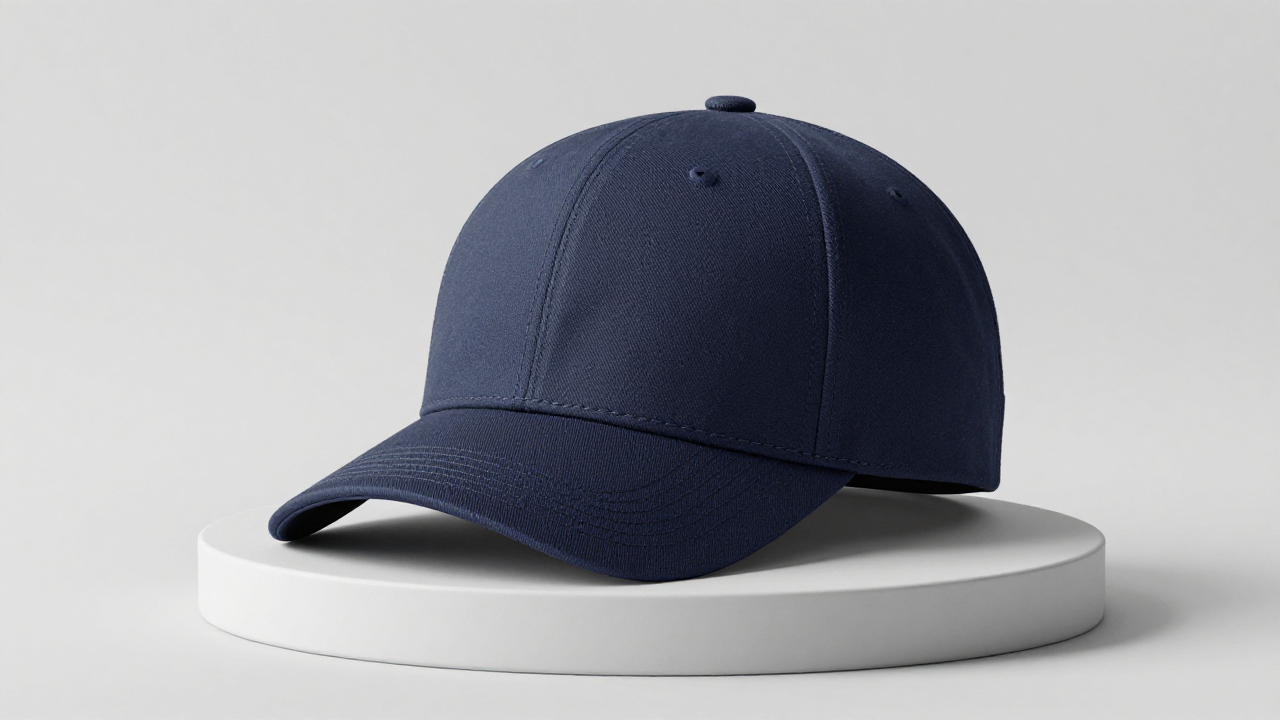
Before we talk about trends, you need to understand one thing most buying guides skip: the foundational materials haven’t changed as much as people think. A well-made structured cap still depends on three things—the buckram backing inside the front panels, the interfacing that gives the crown its shape, and the stitch density on the brim. A cheap factory cuts corners on all three.
I walked through a competitor’s facility in Yiwu back in January 2024. They were running a 55/45 cotton-polyester twill that felt okay to the touch. But the buckram they used was a low-density, non-woven fabric that breaks down after maybe six washes. For a promotional giveaway hat? Fine. For a streetwear brand charging $38 a cap? That’s a returns disaster waiting to happen.
The move I’m watching right now is toward recycled polyester buckram made from post-consumer plastic bottles. It holds shape as well as virgin polyester but gives brands a sustainability story to tell on the hangtag. We started testing this material in a run of 8,000 five-panel camp hats for a client in Portland in September 2024. The cost bump was about $0.12 per unit. Not nothing at scale, but totally workable for a mid-tier product.
If your factory can’t tell you exactly what buckram they’re using—and show you the spec sheet from their textile supplier—walk away. That’s not a red flag. That’s the whole flagpole.
---
Sustainability Is Now a Cost-Control Strategy
Here’s something that doesn’t get talked about enough: sustainable materials in headwear manufacturing are starting to be the cheaper option in certain categories. Not because eco-friendly fabrics are inherently cheaper—they aren’t—but because the waste-reduction systems factories install to handle them pay for themselves.
Let me give you a real example. In June 2023, we retrofitted one of our production lines to run offcuts through a shredding and re-spinning process, turning fabric waste from brim cutting back into usable yarn for unstructured beanies. The equipment cost about $28,000, which we wrote off over an 18-month depreciation schedule. By month 14, the reduction in raw cotton purchases had already covered the full cost. Now it’s pure margin improvement.
For a buyer, this means the factories that invested early in closed-loop systems can offer better pricing on sustainable products than factories trying to fake it with greenwashed marketing. When you’re evaluating a headwear manufacturer, ask for the breakdown on their pre-consumer waste recovery rate. A competitive figure right now is 12–18%. If they look at you blankly, you’ve got your answer.
The materials themselves are evolving fast. Organic cotton twill has been table stakes for a while. What’s new is hemp-cotton blends that meet U.S. apparel flammability standards without chemical treatments. We ran a 30/70 hemp-cotton dad cap for a client in Denver back in August 2024. The breathability tested about 18% better than standard cotton twill in a third-party lab we use in Shenzhen. For a summer outdoor hat, that’s a genuine performance advantage, not just a sustainability badge.
---
The Machines Are Getting Smarter (and That’s a Problem for Some)
I need to say something that’s going to make some people uncomfortable: the quality gap between automated and manual embroidery is now visible to the naked eye, not just on paper. And it’s widening.
A modern multi-head embroidery machine from Tajima or Barudan can maintain a stitch density within 0.2mm tolerance across a 12-hour shift. A skilled operator on a manual machine might hit that for the first two hours. By hour six? Fatigue sets in, and tolerance drifts to 0.8mm or worse. On a flat embroidery area like a cap front panel, 0.8mm of drift is the difference between a logo that looks sharp and one that looks smudged.
But here’s the catch that nobody tells you: automation creates a new kind of failure mode. When a manual operator’s stitch tension goes wrong, it typically affects one or two heads. When an automated system’s digital tension control glitches, it can ruin 24 heads simultaneously before anyone notices. We learned that one the hard way in April 2022, wiping out 1,400 caps in about 40 minutes.
The solution we landed on is what I call a hybrid QC loop: automated machines handle the 90% of production that’s predictable, and a senior embroiderer spot-checks every 200th piece under a 10x loupe. That plus a camera-based inspection system that flags thread breaks within 2 seconds. Total cost for the camera rig? About $1,200 per production line. It paid for itself inside of three months just in reduced rework.
For buyers, the question to ask isn’t “do you use automated embroidery.” Everyone says yes. Ask: “What’s your rework rate on automated runs, and how do you catch tension drift before it spoils a batch?” If they can’t give you a number under 3%, keep looking.
---
Customization Became a Logistics Problem, Not a Design Problem
In 2016, when a client asked for individual name embroidery on 2,000 caps, we’d quote a 5-week lead time and a 40% upcharge. The bottleneck was the digitizing table: every name meant a new embroidery file, and a human had to check each one for font compatibility.
Sometime around 2020, that bottleneck vanished. Modern embroidery software can now pull names directly from a CSV file, auto-digitize them, and queue them to the machines without human intervention. The software got better, but what really changed is that the factories willing to write custom API integrations between the order database and the production floor can now do on-demand personalization at scale.
That’s the real story behind the customization trend. It’s not that consumers suddenly want personalized hats more than they did five years ago—they always wanted them. It’s that the per-unit economics finally make sense. Our MOQ for individually embroidered caps with unique names dropped from 500 units in 2019 to 24 units in 2025. Twenty-four. The machines don’t care anymore. The limiting factor is now setup time on the packing line, because each piece ships to a different end customer.
If you’re buying for a DTC brand, this changes the game. You can test a personalized product line with a batch of 100 caps and see if the conversion rate justifies the $1.80–$2.50 per-unit customization cost. Six years ago, that test run would have cost you a small fortune. Now it’s a rounding error.
---
Your Supply Chain Is Fine. Your Contingency Plan Isn’t.
I’m going to say something obvious but utterly ignored in practice: the cheapest cap factory is never the cheapest when a shipment gets stuck. And shipments get stuck.
November 2021, Long Beach. A client from Oregon had 12,000 unstructured cotton caps sitting in a container 300 yards from shore for 23 days. The demurrage fees ate up 18 months’ worth of the savings he got by going with the lowest-bid factory. And when he finally got the cartons, he found out the factory had used a thinner-gauge poly bag than what was specified for ocean freight, so about 7% of the caps had moisture damage from condensation inside the container.
That’s not a shipping problem. That’s a factory that doesn’t understand the full journey of its product. A serious headwear manufacturer specs packaging based on transport mode. Ocean freight gets heavy-gauge bags and silica gel packs in every carton. Air freight gets lighter packaging but more robust corner protection because air cargo gets tossed around differently than a container on a vessel.
The single most useful thing you can do right now, as a buyer, is audit your factory’s FOB-to-warehouse damage rate. Industry average for cap shipments runs about 2–4%. Our internal benchmark, after a lot of painful trial and error, sits at 0.7%. The difference is almost entirely in packaging specs: carton burst strength, poly bag thickness, and the number of desiccant units per box. All of that costs maybe $0.08–$0.15 per unit. Compare that to what you lose when 500 caps show up moldy.
---
What I’d Actually Do If I Were Buying in 2026
Let me give you the framework I use when I’m on the other side of the table. (Yes, cap factory people buy from other cap factories too—sometimes you need a technique your own facility doesn’t run.)
First decision: structured or unstructured? If you’re doing structured, the buckram is everything. Ask for the spec. If it’s a non-woven Chinese-standard 180-gsm buckram, that’s a promotional-grade product regardless of what the marketing says. You want a woven, 220-gsm minimum, with a PE coating if the hat is going anywhere humid.
Second: decoration method. Embroidery still dominates in the U.S. market—probably 65–70% of what we ship to American clients is embroidered. But heat transfer has gotten genuinely good in the last two years, especially for photorealistic designs on polyester-faced performance caps. The key spec is the transfer film’s wash durability. A proper polyurethane transfer should hold up through 50 wash cycles. Cheap PVC transfers crack by wash 15.
Third, and this is the one most buyers skip: ask for the factory’s size variance data on their most recent 10 production runs. A cap labeled “one size fits most” should have a head circumference range of 55–60cm with a closure that actually achieves those measurements. I’ve seen factories in Vietnam put out caps where the “large” barely fits a 57cm head. If the factory can’t show you measurement data from their QC log, they’re not measuring. If they’re not measuring, you’re gambling.
---
One thing that’s worth noting in the broader manufacturing landscape: the U.S. Department of Justice’s decision in early 2025 to drop the fraud and bribery case against Gautam Adani sent a signal through Asian supply chains—regulatory risk around major conglomerates remains unpredictable. For headwear buyers, this is a reminder that tying your entire production to one massive supplier in one country is a risk profile you should consciously choose, not just drift into. Diversifying across factories in at least two countries—say, China and Vietnam, or Vietnam and Bangladesh—turns a potential disaster into an inconvenience.
Nobody talks about this stuff at trade shows. But it’s the difference between a brand that ships on time and one that’s apologizing to customers on Instagram. And honestly, the Instagram apology posts almost never win back the customer.








