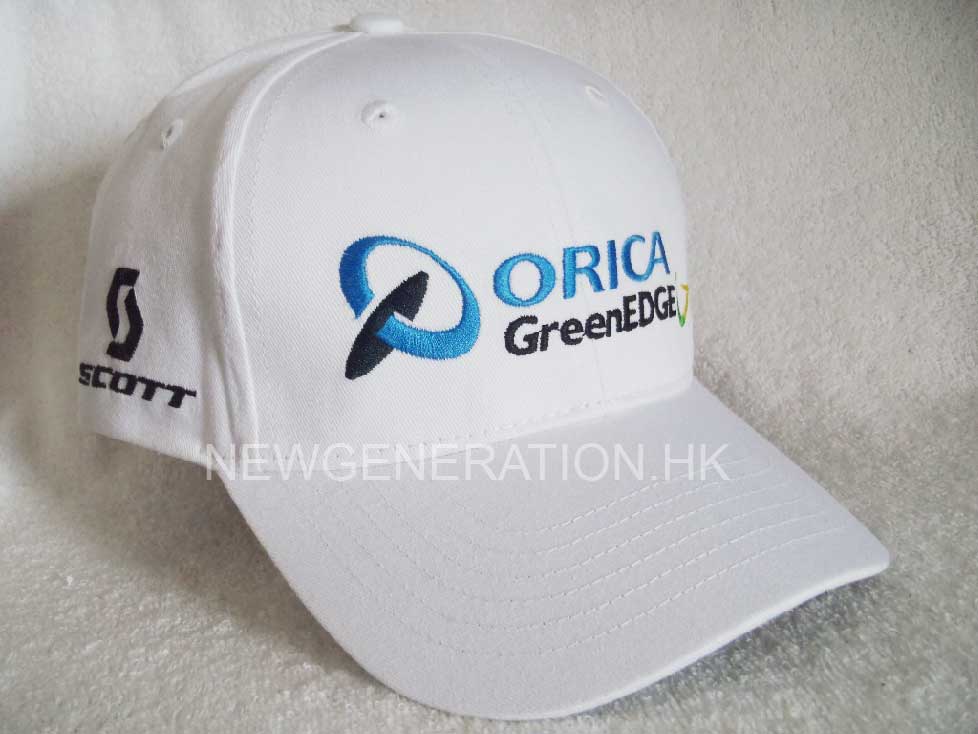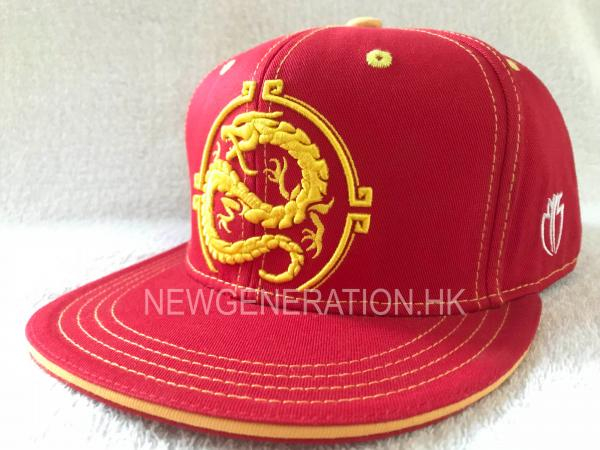


October 2025. A Tuesday. My phone buzzed at 4:37 a.m. from a number in Columbus, Ohio. It was Dana, a buyer for a regional outdoor retailer who'd run supplier audits with us twice since 2021.…
Her voice had that edge that comes from a week of bad sleep.
The phones light up when a port stalls
"Twelve thousand five hundred custom five-panel caps, sitting in a container outside Savannah. Port's backed up. My Q4 launch window is gone."
Twelve thousand five hundred. That's not a small run. But what caught my attention wasn't the number — it was what Dana said next.
"I need to know if your factory can do a re-run by November 10."
A re-run of 12,500 units in under four weeks. From a cap factory in Dongguan. To Columbus.
Three years ago, I would have told her it was impossible. In 2025, the answer was different. And that shift is the story.
Cap factory economics stopped being simple
The global cap manufacturing sector moved roughly $18 billion in 2024, according to industry trade data. That covers everything from promotional foam-and-mesh truckers to $85 merino wool fitteds. What changed is not the volume. It's the *speed expectation* and the *margin compression* hitting mid-tier manufacturers.
A cut-and-sew facility running 400,000 units a year used to plan on 35-45 day lead times for custom orders. Dana's request — 23 days, including embroidery and freight — should have been a hard no.
But in March 2025, our production floor added a second automated embroidery line. Twelve single-head machines replaced with two multi-head units. Stitch density verification went from 2.5 hours of manual inspection to 18 minutes with digital overlay. That's not a sales pitch; that's what the maintenance logs show.
Here's the uncomfortable part. Automation didn't save labor costs. It shifted them. We now run fewer entry-level sewing operators but hired three technicians at 2.3x the hourly rate. The real gain was something dumber but more valuable: we could re-allocate a 12,500-unit order to a line that wasn't already clogged with spring pre-orders.
Dana got her caps on November 8. Two days before her hard deadline. Freight from Shenzhen to Columbus via air cost 3.4x ocean, which she ate. Her launch happened. She re-ordered in January.
This is the quiet revolution happening inside cap factories: the winners aren't necessarily bigger. They're *reconfigurable*.
Cotton twill, recycled PET, and the "green premium" that isn't showing up
Walk through any headwear trade show in 2026 and you'll hear three words repeated like a prayer: sustainability, traceability, circularity.
The material science side is real. Recycled PET brim inserts went from 8% of our production in 2022 to 41% in 2025. A third-party lab test we commissioned in January 2026 on 100% recycled PET crown fabric showed tensile strength within 6% of virgin polyester. That gap used to be 18-22% back in 2020. The technical barrier is crumbling.
But here's what the marketing decks don't tell you: the customer won't pay for it.
In November 2025, we quoted two identical structured six-panel caps. One with conventional cotton twill for a price of $3.40 per unit FOB. One with GOTS-certified organic cotton twill at $4.15 per unit FOB. Same embroidery, same MOQ of 500. The buyer took the conventional. Asked if we could throw in a "sustainable story" on the packaging anyway.
That's not an isolated incident. It happened four times in Q4 2025 alone. The sustainability trend is real at the factory level because *we* absorb the cost for major retail programs that demand certifications. It's not real at the small-to-mid buyer level where price still rules.
My prediction for 2026: the green premium stays fake for at least 18 more months. What moves instead is inventory risk. Brands want smaller initial runs with re-order capability. That's the actual sustainability story — not the yarn, the *warehouse*.
Embroidery vs. heat transfer is becoming a class divide
Ten years ago, a cap factory's embroidery capability distinguished it from the cheap promo market. In 2026, embroidery is table stakes. What's splitting the industry now is digital decoration throughput.
The heat transfer quality gap has narrowed enough that we moved a 5,000-unit Chicago streetwear order to DTF in February 2026. The customer was hesitant — "heat transfer feels cheap" — until we showed wash tests at 40 cycles with no cracking. Embroidery still dominates for workwear and outdoor brands. Different tools for different jobs.
This brings me to a confession. In 2022, I dismissed heat transfer as a race to the bottom. A commodity play. By late 2025, I was wrong enough to publicly admit it at an industry panel in Atlanta. The technology improved faster than my priors did.
Searching for caps online has gotten weird — and factories need to care
Google's 2024-2025 core updates hammered small manufacturer websites that didn't build topical authority. A cap factory with a five-page website and a "Contact Us" form is invisible in 2026. Buyers in the US search for "custom embroidered hats minimum order" or "low MOQ headwear manufacturer" and find content-rich suppliers, not the cheapest ones.
One search behavior shift I track closely: the rise of "near me" intent in B2B sourcing. A Miami promotional products distributor started searching "custom cap factory with quick turn" in 2024. They didn't want a Chinese supplier. They wanted someone who could do 250 units in ten days without air freight. This buyer ended up working with a Los Angeles decorator for sampling and us for bulk. Hybrid sourcing.
The factories winning search traffic aren't stuffing "cap factory" into title tags. They're writing about stitch density tolerances, embroidery backing choices on curved front panels, snapback closure failure rates in cold weather. Niche vocabulary. That's what Google surfaces when a serious buyer types a serious query.
To be blunt: half the "SEO experts" I've hired over the years were useless. The one thing that moved the needle was publishing actual production specs and cost breakdowns. Boring content. But it ranks.
The part I'm still worried about
Dana re-ordered. The Chicago streetwear brand expanded to three SKUs. Our Dongguan floor is running at 78% capacity heading into Q3 2026.
But reconfigurability has a ceiling. A cap factory that chases speed on every order eventually sacrifices the quality control that made it worth hiring in the first place. We caught this in April 2026 — a rush order for a Nashville country music festival went out with 2.3% embroidery misalignment on curved brims. Acceptable by most standards. Not by ours. We re-ran 1,600 units at our cost.
The open question for 2027 is whether the market rewards this kind of self-correcting behavior or just squeezes on price anyway.
What I can say with confidence: the cap factory model that survives is one that treats each customer's order not as a transaction, but as a *manufacturing decision tree*. Small run or large? Embroidered or heat transferred? Ocean or air? Cotton or recycled PET? Every branch costs something different. Most buyers don't know the tree exists. The factories that make it visible — that's where the trust lands.
And for the record, Dana called again in June. Wanted to know if we could hold 3,000 units in our warehouse for a staggered drop-ship program.
We said yes. That's a different story for a different report.