


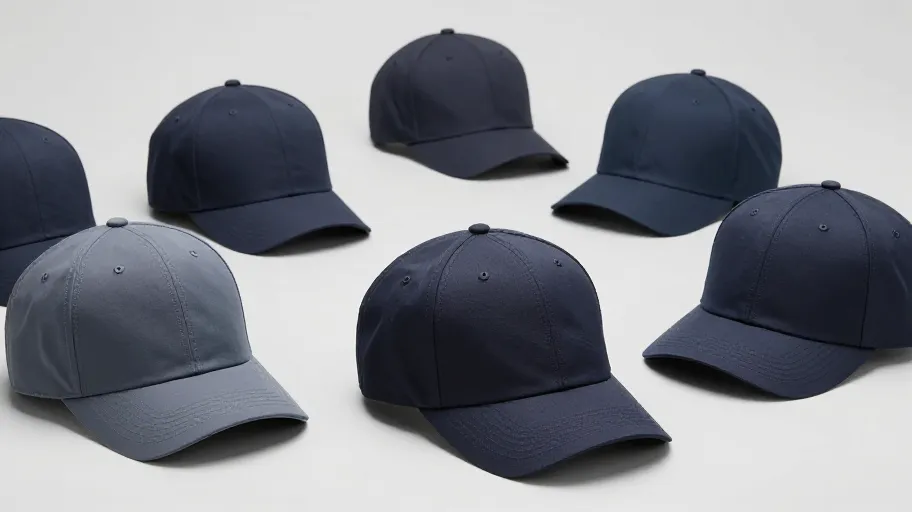
Choosing between 5-panel and 6-panel caps isn’t just about style—it’s a strategic move. Fewer panels mean faster production, lower costs, and quicker access to sample free baseball caps. Here’s how it impacts your brand’s bottom line.
Why Panel Count Changes Everything for Brand Buyers
The number of fabric panels on a cap directly affects how fast it can be made, how much it costs, and how easily you can test designs. Five-panel caps require 20–30% less seam work than six-panel styles, meaning factories can produce more units per day with the same labor. This means shorter lead times and faster time-to-market because fewer seams reduce stitching complexity and alignment errors during assembly.
For brand teams launching limited drops or influencer collabs with tight deadlines, this efficiency is critical. One Ho Chi Minh City factory reported a 28% increase in daily output after switching from 6-panel to 5-panel runs across three campaigns—without adding staff or shifts. That kind of throughput means your brand can respond to trends in real time instead of chasing them.
How 5 Panels Cut Costs Without Sacrificing Quality
A 5-panel cap typically costs $0.40–$0.70 less per unit to produce at scale, even with identical materials and trims. That’s because reduced seam volume lowers labor intensity, which accounts for 35–45% of total manufacturing cost in headwear. For a 10,000-unit order, that’s $4,000–$7,000 in direct savings—funds you can reinvest into premium fabrics, upgraded packaging, or expanded marketing efforts.
But cost isn’t the only win. Modern 5-panel designs use advanced front panel molding to achieve structured silhouettes that rival traditional 6-panel rigidity while being lighter overall. This means better performance and comfort without compromising perceived value. Brands in athleisure and urban outdoor spaces now rely on these capabilities to build technically advanced headwear that performs on trails and city streets alike.
Free Samples Are Your Best Validation Tool
Getting sample free baseball caps from a manufacturer lets you physically assess fit, curvature consistency, and stitch quality before committing to full production. Digital mockups can’t reveal subtle misalignments or fabric drape issues that only show up once stitched. A 2024 supply chain benchmark found brands using free samples to validate 5-panel prototypes cut design approval cycles by an average of 11 days compared to those relying solely on renders.
This matters when you're under pressure to launch quickly. One Los Angeles lifestyle brand needed 2,000 co-branded caps in eight weeks for a summer pop-up series. By choosing a 5-panel design and working with a Vietnam-based cap factory offering free initial samples, they finalized fit and logo placement in just 10 days. With a 6-panel version, extra pattern checks would have delayed approval past deadline. Faster iteration wasn't convenient—it was mission-critical.
Agility Over Tradition Building Responsive Supply Chains
Efficiency in 5-panel construction enables operational agility that reactive brands simply can’t match. When your go-to cap manufacturer supports rapid 5-panel production and offers sample free baseball caps for continuous testing, you gain the ability to run micro-batches, test regional preferences, and pull back on underperforming SKUs before full rollout. This responsiveness separates proactive brands from those stuck in outdated workflows.
Looking ahead, simplified designs align better with emerging trends like AI-driven forecasting and on-demand manufacturing. One Dhaka factory implemented a zero-waste nesting algorithm specifically for 5-panel layouts, achieving a 92% material utilization rate—nearly 15 points above the industry average for 6-panel patterns. Lower defect rates and less fabric waste also support sustainability goals beyond just energy reduction.
The Strategic Choice Behind Every Cap Order
Panel count is no longer just about aesthetics. It’s a strategic variable in your sourcing equation. Choosing 5-panel doesn’t mean settling for less—it means optimizing for what matters most today: speed, control, and the ability to act decisively. Structurally simpler caps enable lower MOQs (as low as 300 units), faster sampling cycles, and greater flexibility in fabric sourcing—critical advantages for small brands and DTC labels testing new colorways or artist collaborations.
In markets where TikTok trends spark global demand overnight, having a headwear program built on efficient, validated designs gives you a real edge. And when you partner with manufacturers who offer free samples and scalable 5-panel production, you’re not just ordering caps—you’re building a responsive brand infrastructure. In the race between relevance and obsolescence, efficiency wins every time.
#cap manufacturers china, #headwear manufacturers china, #cap factory








