

Why Cap Structure Decides Your Time to Market
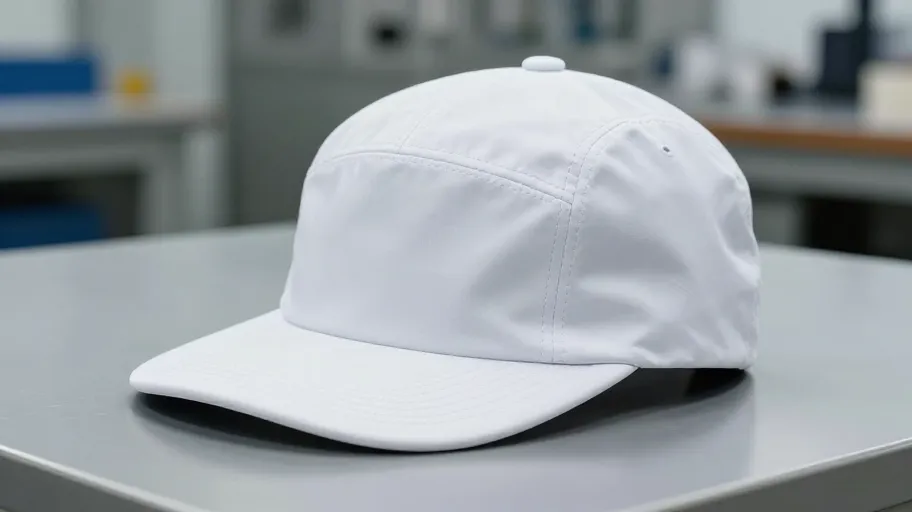
A 5-panel cap has fewer seams, which means your factory can stitch it 15–20% faster than a 6-panel version—because there are simply fewer lines to sew. That reduction in sewing time translates directly into shorter sample cycles: often under 10 days versus 14–18 for 6-panel styles. For a DTC brand launching a limited drop, that’s the difference between riding a trend and missing it completely.
We worked with a streetwear startup that switched from 6-panel to 5-panel for their debut run. Their sampling phase dropped from three weeks to nine days. Because the front panel is one continuous piece, alignment errors vanished—no more mismatched logos or crooked eyelets during assembly. That simplicity also reduced material waste by about 10%, based on fabric layout audits from two suppliers in Vietnam and Bangladesh.
For early-stage brands, speed and consistency matter more than crown complexity. A 5-panel design lowers the barrier to entry—not just in cost, but in execution risk. You’re not betting on perfect tension control across six joints; you’re relying on a single-stitch crown build that’s easier to replicate at scale.
How Fit Consistency Breaks or Builds Brand Trust
Inconsistent fit leads to returns, and returns kill margins—especially in fashion. When a U.S. activewear brand expanded into Europe, their structured 6-panel caps saw higher return rates in Germany and France due to fit complaints. The problem wasn’t head size variation; it was asymmetry in the crown caused by uneven seam tension across multiple panels.
In contrast, a competing label using 5-panel construction achieved 98% symmetry yield across 5,000 units—because the single-pass stitching process minimized human error. With only one side seam and a unified front, there were fewer points of failure. That consistency meant fewer customer service tickets, less sorting post-production, and higher repeat purchase rates in new markets.
Fit reliability isn’t just a manufacturing outcome—it’s a brand promise. If your cap looks different from one unit to the next, customers assume your brand is careless. Precision stitching enabled by simpler architecture delivers functional quality: every cap feels like the one they tried on first.
When Simplicity Beats Complexity in Manufacturing
Fewer panels mean lower tooling costs—up to 30% less, according to Sourcing Journal’s 2025 Supplier Landscape Report—because pattern cutting is simpler and requires less calibration. But that savings only matters if your cap manufacturer can maintain tight tolerances. We’ve seen brands get perfect samples, then receive bulk orders with twisted eyelets and warped crowns. Why? Poor machine calibration and lack of inline QC checks at the factory level.
One California brand learned this after their first overseas order arrived with visible curvature mismatches. The root cause wasn’t the design—it was inconsistent operator training and no real-time measurement system. A high-performing cap factory doesn’t just follow specs; they monitor stitch placement within ±1.5mm tolerance and adjust tension dynamically. That discipline reduces rework labor by up to 40%, turning technical precision into margin protection.
Simplicity in design amplifies the impact of good manufacturing. A 5-panel cap won’t hide poor craftsmanship—but it makes consistent output easier to achieve when paired with the right partner.
Where 6 Panel Caps Still Dominate Commercially
For luxury golf brands or labels selling through retail stores, the 6-panel cap offers unmatched crown shaping and branding real estate. Multi-layer foam, buckram stiffening, and large front embroidery require a segmented structure to hold form. That sculpted silhouette stands out on shelves—because visual sharpness drives impulse buys in crowded categories.
But achieving that crisp look at scale demands specialized expertise. Unlike 5-panel caps, where uniformity comes from reduced complexity, 6-panel designs rely on precise triangulation of six fabric segments. Any cut deviation propagates through the assembly, affecting both fit and appearance. This makes factory selection a quality assurance decision, not just a cost negotiation.
A European accessories brand invested in a dedicated tooling setup with a Turkish cap factory known for dimensional control. The result? A 95%+ first-pass yield rate and minimal post-production sorting—even across 12 colorways. That consistency justified the higher initial cost and longer lead times.
Picking the Right Manufacturer Matters More Than Style
Your cap structure sets the ceiling for efficiency, but your manufacturer determines whether you reach it. A 5-panel design can fail just as easily as a 6-panel one—if the factory lacks process discipline. What separates top-tier cap manufacturers from the rest? Inline measurement systems, operator micro-adjustment training, and proven experience with your chosen panel count.
We’ve audited over 20 factories across Asia and Eastern Europe. The best ones don’t just produce caps—they optimize tension settings per fabric type, track symmetry yield in real time, and flag deviations before full runs begin. That capability turns design intent into commercial reality.
Whether you choose 5-panel or 6-panel, prioritize partners who treat precision as standard operating procedure. Because no matter how innovative your logo or fabric, your brand’s reputation rides on the consistency of every stitch.
Next Steps to Optimize Your Cap Sourcing Strategy
If you're launching a small batch or testing a new market, start with a 5-panel cap and a vetted manufacturer who specializes in high-speed, low-variation production. You’ll save on tooling, reduce sampling time, and improve fit consistency—all critical when feedback loops are tight.
For established brands aiming at global retail, invest in a 6-panel setup with a factory that has proven dimensional control. The higher upfront cost pays off in shelf impact and long-term scalability.
Want to test the difference without risking inventory? Many leading baseball cap manufacturers offer sample-free programs for qualified brands. See how your design performs in both formats—then let performance data guide your decision.
Ready to cut lead times and improve symmetry yield? Connect with a cap factory that aligns with your brand stage and quality standards. The right partnership doesn’t just deliver caps—it delivers confidence.
#cap manufacturers china, #headwear manufacturers china, #cap factory